In Arizona, primary responsibility for keeping a rental habitable sits with the landlord, but the lease can shift specific duties to the tenant, and in an HOA community a third party may control the exterior where the rodents actually live. Most disputes we see come down to which of those three is responsible for the part of the property the animals are using.
This is general information, not legal advice. Busy Bee is a pest control company, not a law firm. Read your lease and your CC&Rs, and consult an Arizona attorney or a tenant legal aid service for advice on your situation.
The landlord side
The Arizona Residential Landlord and Tenant Act requires landlords to maintain rental property in a fit and habitable condition, complying with building codes, making necessary repairs, and maintaining electrical, plumbing, heating and cooling systems (A.R.S. § 33-1324). A significant rodent infestation, and particularly the structural gaps that let rodents in, generally falls within that duty because sealing a building envelope is a repair obligation.
The Act also allows landlord and tenant to agree in writing that the tenant will handle specified duties, for single-family homes, or by separate signed agreement in multi-unit properties. That is why so many Arizona leases contain a “tenant is responsible for pest control” clause. Those clauses have limits: they cannot waive the landlord’s building-code obligations, so a clause making a tenant responsible for routine pest service does not obviously make them responsible for sealing a hole in the roofline.

The tenant side
Tenants have obligations too under A.R.S. § 33-1341, keeping the unit clean and safe, disposing of waste properly, not damaging the property, and promptly notifying the landlord in writing when something needs repair. That last one matters more than tenants realise: written notice is what starts the clock and creates the record.
Where an infestation is clearly driven by tenant conditions, accumulated garbage, stored pet food, hoarding, responsibility shifts considerably, and a landlord may be able to charge back the cost.
If you are a tenant with rodents
- Put it in writing immediately. Not a text or a phone call. Written notice, sent by certified mail or another traceable method, keeping a copy.
- Document thoroughly. Dated photographs of droppings, damage, entry points and any health concern.
- Describe the structural cause if you can see it. “There is a two-inch gap at the soffit on the north side” is a repair request. “There are rats” is easier to deflect.
- Keep a log of every contact and response.
- Get advice before withholding rent or repairing and deducting. Arizona has specific procedures and getting them wrong can expose you to eviction. Talk to legal aid or an attorney first.
The HOA layer
This is the piece that surprises people. In many Valley communities the HOA controls common areas, greenbelts, retention basins, shared block walls and sometimes roofs in attached housing. If rodents are nesting in a common-area palm, a shared wall, or a greenbelt adjacent to your unit, neither you nor your landlord may have authority to treat it.
In that case the request goes to the HOA in writing through whatever process the CC&Rs specify. Practically, the fastest path is usually a written request from the owner rather than the tenant, since owners are the members. Note also that some CC&Rs restrict exterior modifications, which can include the exclusion hardware and roofline sealing that actually solves the problem, so approval may be needed before work proceeds.
What we can do in a rental or HOA situation
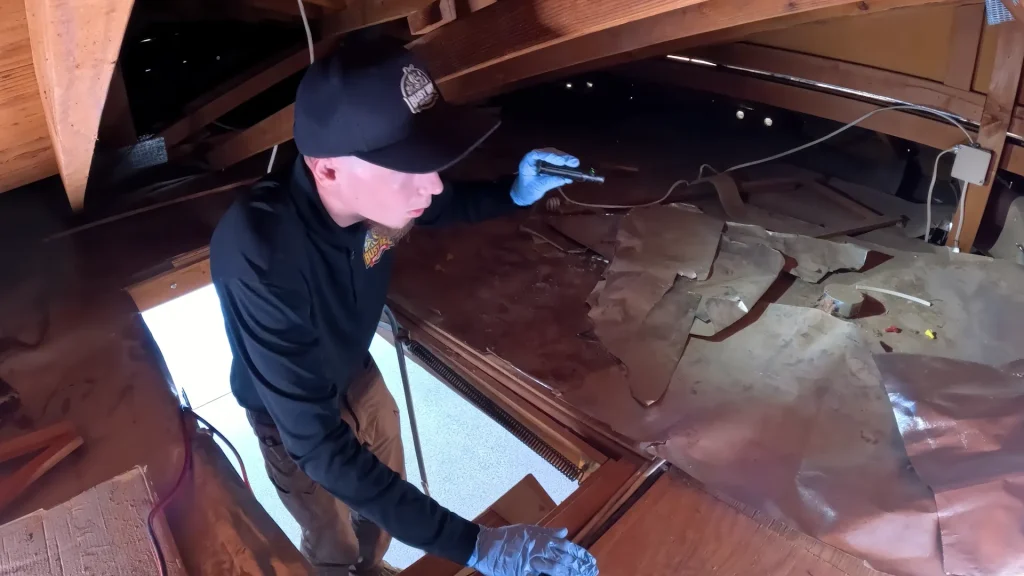
We work with landlords, property managers, tenants and HOAs regularly. A few practical notes: we need authorisation from whoever controls the property to perform work, particularly for exclusion work that modifies the structure. We can inspect and provide written documentation identifying the structural cause, which is frequently what resolves a stalled dispute. It converts an argument into a repair scope. And where a property is shared, we will say plainly whether the source is inside the unit or outside it.
Frequently Asked Questions
Is the landlord or tenant responsible for pest control in Arizona?
Landlords carry the primary duty to keep rental property fit and habitable under A.R.S. § 33-1324, which generally covers structural repairs that let rodents in. Leases can shift specified duties to the tenant in writing, but such clauses cannot waive the landlord’s building-code obligations. Read the lease and seek legal advice for your specific situation.
What should a tenant do first about a rodent problem?
Give the landlord prompt written notice by certified mail or another traceable method, keep a copy, and document the problem with dated photographs. Written notice is what creates the record and starts the process; a phone call generally does not.
Can my landlord make me pay for rodent control?
Possibly, depending on the lease and the cause. Arizona allows landlord and tenant to agree in writing that the tenant handles specified duties, and a landlord may charge back costs where the infestation results from tenant conditions such as accumulated waste or stored food. It is less clear that such a clause covers structural sealing.
Who handles rodents in an HOA common area?
Typically the HOA, since it controls common areas, greenbelts, shared walls and sometimes roofs. Submit the request in writing through the process in your CC&Rs. Requests from owners usually move faster than requests from tenants, since owners are the members.
Can I have exclusion work done on a rental or in an HOA?
You need authorisation from whoever controls the property, the owner for a rental, and possibly HOA architectural approval where CC&Rs restrict exterior modifications. We will not modify a structure without it, but we can inspect and document the cause for whoever needs to approve the work.