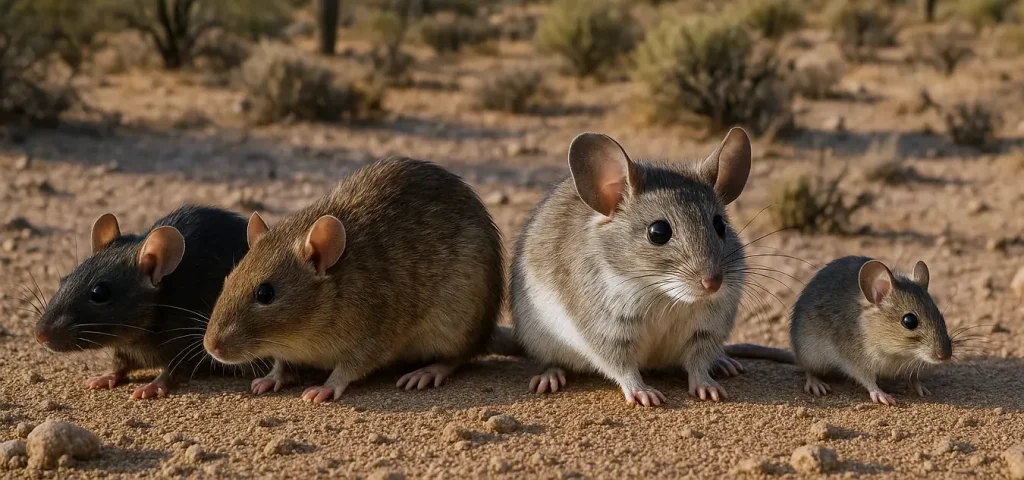
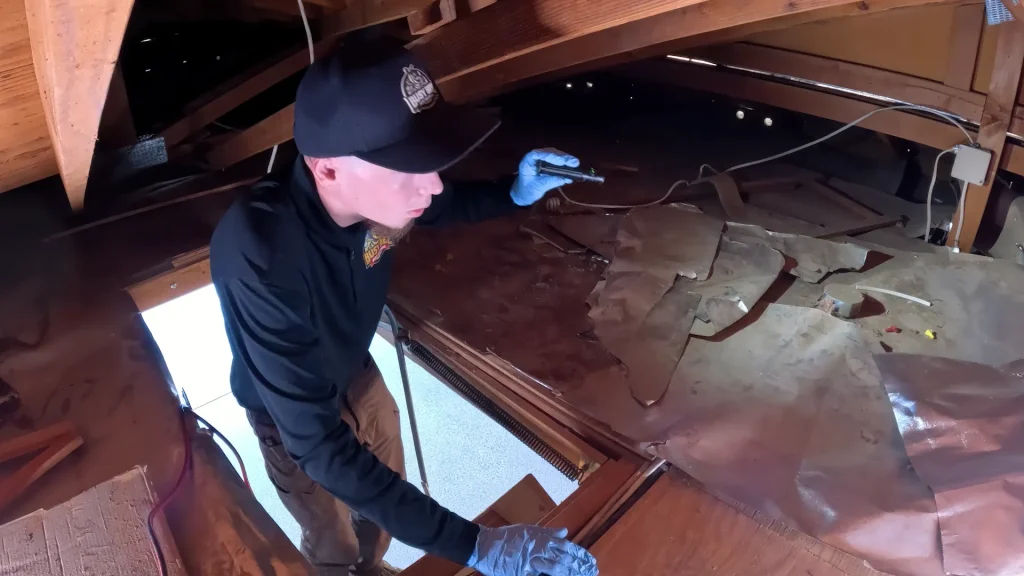
Rodent-contaminated attic insulation is both a health question and a performance question, and the health question has a specific answer: never dry-sweep or household-vacuum rodent droppings. Disturbing dried droppings and urine aerosolises particles, and that is the documented transmission route for hantavirus.
What hantavirus is, and how much to worry
Hantavirus Pulmonary Syndrome is a rare but serious respiratory illness. In the United States it is associated primarily with the deer mouse, which is present in Arizona, most often in garages, sheds, outbuildings, cabins and structures at the desert edge rather than in dense central-city housing.
Transmission occurs by inhaling aerosolised particles from dried droppings, urine or nesting material, typically when someone sweeps or vacuums a contaminated space. Cases are uncommon, but the illness is serious enough that the precaution is worth taking every time rather than assessing risk case by case. Arizona also reports plague and, more commonly, salmonella and leptospirosis exposure from rodent waste.
This is general health information, not medical advice. If you have cleaned a contaminated space and then develop fever, muscle aches or breathing difficulty, contact a healthcare provider and tell them about the exposure.
What rodents do to insulation performance
Separate from contamination, there is a straightforward energy cost:
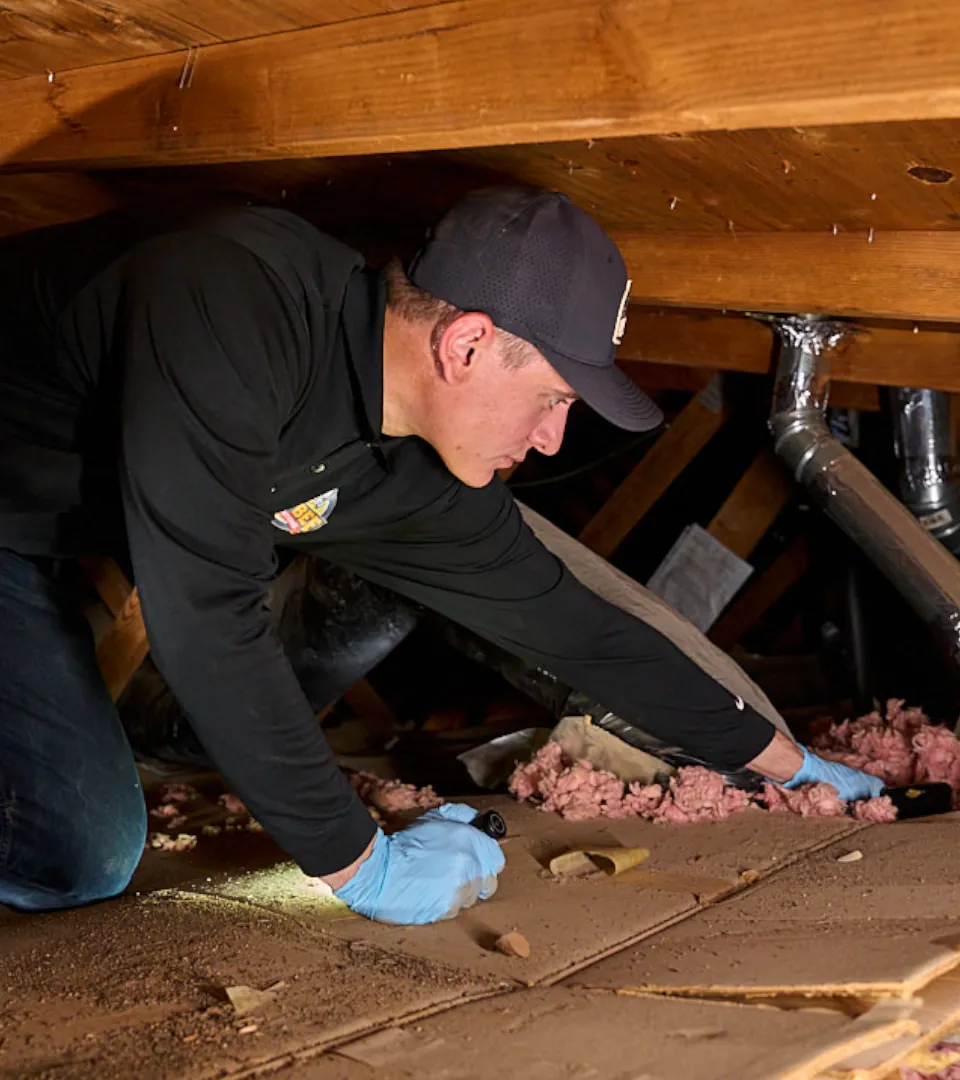
- Compaction. Rodents flatten blown insulation along their runways. Loose-fill insulation works by trapping air, so compressed insulation loses R-value permanently. Fluffing it back up does not restore it.
- Tunnelling and displacement. Runways and nest chambers create channels where there is effectively no insulation at all.
- Nesting removal. Rodents shred and carry off insulation to build nests, thinning coverage.
- Urine saturation. Saturated insulation stays compressed and holds odour indefinitely.
In a Phoenix home, where the attic drives a large share of summer cooling load, meaningful insulation loss shows up on the utility bill.
When insulation needs replacing and when it does not
Not every rodent job requires an insulation replacement, and we will tell you when it does not. Replacement is generally warranted when:
- Contamination is widespread rather than confined to a few runways
- Insulation is visibly compacted across large areas
- There is urine saturation or persistent odour after sanitation
- Nesting material is extensive
- A carcass decomposed in the insulation
Where contamination is localised, targeted removal of the affected material, HEPA vacuuming and disinfection is usually sufficient and considerably cheaper.
How the work is done properly
The correct sequence is: clear the rodents first, then seal, then clean. Cleaning an attic that still has an active population and open entry points means paying to do it twice.
The decontamination itself involves HEPA-filtered vacuuming rather than sweeping, appropriate PPE including a fitted respirator, removal of contaminated material in sealed bags, disinfection of the deck and framing, and odour neutralisation. Rodents leave scent trails that draw replacements, so neutralising them is part of why the work lasts.
This is not DIY-friendly work. Attic temperatures in a Valley summer are dangerous in their own right, and the respiratory precautions matter.
Frequently Asked Questions
Can I vacuum rodent droppings in my attic?
Not with a household vacuum, and not by sweeping. Both aerosolise particles from dried droppings and urine, which is the documented transmission route for hantavirus. HEPA-filtered equipment, a fitted respirator and appropriate PPE are the correct approach.
Does attic insulation need replacing after rats?
Not always. Replacement is warranted when contamination is widespread, insulation is compacted across large areas, there is urine saturation or persistent odour, or nesting is extensive. Localised contamination can often be handled with targeted removal, HEPA vacuuming and disinfection.
Is hantavirus a risk in Arizona?
Hantavirus is present in Arizona and is associated primarily with the deer mouse, which turns up most often in garages, sheds, outbuildings and desert-edge structures. Cases are uncommon, but because the illness is serious the standard precaution, never dry-sweep or household-vacuum droppings, is worth applying every time.
Do rodents in the attic raise my power bill?
They can. Rodents compact blown insulation along runways, tunnel through it, and carry it off for nesting, all of which reduce R-value. In Phoenix, where the attic drives much of the summer cooling load, significant insulation loss is visible on utility bills.
Should cleanup happen before or after the rodents are removed?
After. Clear the population first, then seal the entry points, then clean. Decontaminating an attic that still has active rodents and open entry points means paying for the same work twice.