

Pack Rat Removal in Phoenix, AZ
Professional Nest Elimination & Property Protection
Safe, professional solutions for pack rats (woodrats) in the Phoenix area. We locate active middens, target colonies at the source, and help prevent re-nesting around homes, yards, and vehicles.
Posted on Google
 Denise Huffman0 days ago
Trustindex verifies that the original source of the review is Google.
Posted on Google Olegario Morales0 days agoBryan was here on time and completed his work on time fast and friendly will be recommending to family and friendsPosted on Google
 Patty J1 days agoIan is one of the most personable and professional service techs with whom I have had the privilege of doing business. He announced his arrival in advance and went above and beyond to remedy my little packrat issue. I would definitely recommend Busy Bee for this type of service!Posted on Google
 Laurie Bowman1 days agoThe gentleman that showed up was so kind and so nice! Although I did not have a beehive when he showed up, but it still made me feel safe and secure with him checking everything for me. In the future, I will definitely use you guys. You’re the best !!Posted on Google
 John Gardner1 days agoQuick, professional, amazing service.Posted on Google
 Adrienne Campbell1 days agoPunctual, polite professional technician explained what he would need to do, but was surprised after going up a story and a half to remove the vent and discover a 500 count of paper wasps and their nest. He was prepared with protective gear and positive attitude.Posted on Google
 Doug Tobin1 days agoPosted on GoogleDoug Tobin1 days agoService was quick and all of my questions were answered. ThanksPosted on Google
 Nina Brokaw2 days agoFast response. Gave reasonable options. Polite, informative. Will use again if needed and recommend to others.Posted on Google
 Amanda Frazee2 days agoVery helpful & polite & knowledgeable. Really appreciated the hard work. Learned a bunch as well.Verified by TrustindexTrustindex verified badge is the Universal Symbol of Trust. Only the greatest companies can get the verified badge who has a review score above 4.5, based on customer reviews over the past 12 months. Read more

What Is a Pack Rat (Woodrat)?
Pack rats (also called woodrats) aren’t just desert curiosities. They’re destructive rodents that chew wiring, damage attics, and build massive nests called middens. Pack rat removal is part of our rodent control in Phoenix.
Our team knows how to track them down, remove them safely, and stop them from re-nesting.

What is a pack rat?
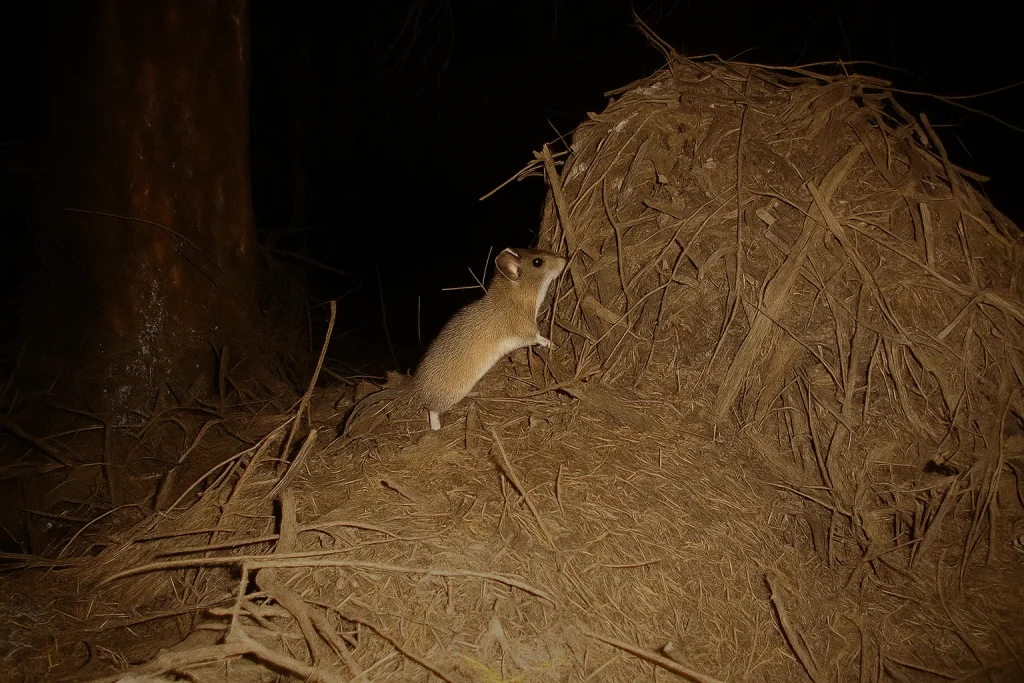
A pack rat is a woodrat, a native desert rodent of the genus Neotoma. In the low desert around Phoenix it is usually the white-throated woodrat. It is a different animal from the roof rat and the Norway rat, the two non-native rats that get into attics and burrow along foundations. The name comes from the way woodrats carry off shiny objects such as coins, jewelry, keys and foil, then drop one when something more interesting turns up, which is also why they are called trade rats. University of Arizona Cooperative Extension notes that woodrats are not legally protected in Arizona, so homeowners can deal with them without contacting wildlife officials first.
What does a pack rat look like?
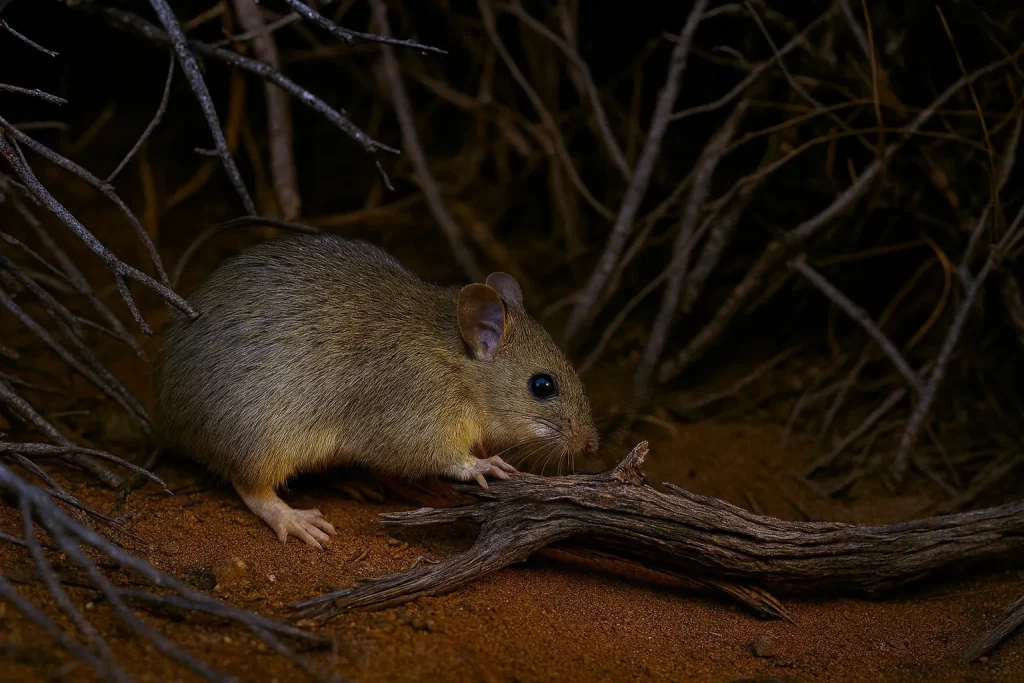
A pack rat has large eyes, large ears, soft grey to tawny fur, and a white throat, belly and feet. The quickest tell is the tail: a pack rat’s tail is covered in fur, while a roof rat’s is nearly bare. Adults are about 8 inches long plus the tail and can weigh up to a pound; the full measurements are in the identification table further down this page. If all you have found is the nest, a heap of sticks, cholla joints and debris under a shrub, against a block wall or under a parked car, that points to a pack rat as well.
How do you get rid of pack rats?
Work from the nest outward, in this order:
- Find the active middens near the house. Pack rats live in and around their nests, so the work starts there: under shrubs and prickly pear, beside AC units and pool equipment, against block walls, under sheds, and in anything that has been parked for weeks.
- Trap or bait at the nest, outdoors. We set traps or locked, tamper-resistant bait stations at the active middens. Never loose bait, and never bait inside a car or the house.
- Take out the nests close to the house. Soak the material with disinfectant before anyone disturbs it, then remove it. Nests out in the open desert are better left alone; the midden section below explains why.
- Close the way in. If a pack rat can fit its head through an opening, its body can usually follow, so garage door corners, gaps under sheds and casitas, and attic-level openings get sealed. See rodent exclusion.
- Remove what drew them in. Woodpiles, stored cardboard, pet food and birdseed left out, and dense brush against the house.
Trapping alone won’t solve it for good, a point the same University of Arizona bulletin makes; removing what attracts pack rats and sealing the openings is what keeps them from moving back in. What each step costs is set out in our guide to rodent control cost in Phoenix. If you were hoping the county would handle it, Maricopa County Vector Control investigates rodent complaints but does not trap or remove animals on private property; see what Maricopa County Vector Control will and won’t do.
How dangerous are pack rats?
The animal itself is not the main risk; the nest is. A midden builds up layers of urine and droppings, and the University of Arizona bulletin warns that hantavirus and other diseases can be present in woodrat nests. The CDC explains that hantavirus spreads when fresh urine, droppings or nesting material from an infected rodent is stirred up and the dust is breathed in, which is why a nest should never be raked apart or swept up dry. Pack rat nests are also where kissing bugs live. University of Arizona Extension notes that their bites can cause allergic reactions and that some people become severely allergic after repeated bites, although Chagas disease from kissing bugs is rare in the U.S. The rest of the risk is to property: chewed wiring in cars, AC units and appliances, and nests built into attic insulation.
Signs of Pack Rats in Phoenix
Pack rats (also called woodrats or trade rats) are notorious for building middens. Dense piles of sticks, cholla, mesquite, cactus, trash, and shiny objects. You’ll see them tucked under shrubs, beside AC units, inside block-wall corners, or under decks and sheds.
Other signs include:
Chewed car wires or home wiring
Gnawed irrigation lines or landscaping damage
Droppings near storage sheds or garages
Scratching or rustling at night near outdoor structures

Pro Tip: Unlike roof rats, pack rats don’t just nest once. They keep collecting debris, which means infestations grow fast if unchecked.
What Is a Pack Rat Midden?
A midden is a pack rat’s nest and pantry in one. From the outside it looks like a heap of sticks, cholla and prickly pear joints, mesquite, leaves and trash, often with a few shiny objects worked in. Inside is the living and food-storage chamber, which builds up layers of urine and droppings over time. The University of Arizona bulletin notes that a nest site can stay in use for many generations, which is why removing the rats without dealing with the nest rarely settles it.
In Phoenix yards, middens turn up in a few predictable places:
- At the base of prickly pear, cholla and palo verde in desert landscaping
- Against block walls, boulders and landscape rock
- Beside AC condensers and pool equipment, and under sheds, decks and casitas
- In the engine bay of a car, RV or trailer that sits for weeks
- In garages and attics, where the nest is often built into stored boxes or the insulation
Removing a midden safely. Don’t rake one apart or sweep it up dry. The CDC’s rodent cleanup guidance is to wear gloves, spray the nest, the droppings and the surrounding area with a disinfectant or bleach solution, let it soak for 5 minutes, then double-bag the material; never vacuum or sweep it. Only take out the middens near the house. University of Arizona Extension advises removing rodent nests under, against or near buildings (within 350 feet) and leaving distant ones alone, so the kissing bugs living in them stay out there instead of moving toward your house. We remove or neutralize the active middens near the home during service.
Why Phoenix Homes Get Pack Rats
Pack rats thrive in desert neighborhoods because they love dense landscaping, cluttered yards, and warm utility spaces. A single midden can house multiple rats, and their habit of chewing wires makes them especially costly pests in Phoenix.
Vehicles & AC Units: Wiring damage can cost thousands
Gardens & Citrus Trees: Irrigation lines, fruit, and young plants are frequent targets
Yards & Rooflines: Nests tucked against walls or shrubs invite long-term infestations
Learn more about pack rats in Arizona from University of Arizona Extension »

Pack Rats in Cars, Engine Bays and AC Units
If something chewed the wiring under the hood of a car parked in the Phoenix area, a pack rat is the most likely culprit. An engine bay is warm, enclosed and close to the ground, and the University of Arizona bulletin lists the engine compartments of seldom-driven cars among the places woodrats nest, noting they are notorious for chewing the wiring of cars and appliances. The nest usually comes first and the chewing follows: hood insulation shredded for bedding, then wiring harnesses, sensor leads and the cabin air filter housing. Our post on pack rats chewing car wiring in Phoenix covers the warning signs and where the damage usually is.
AC units and refrigerant lines. A midden built against an AC condenser or the pool equipment pad puts the unit’s wiring and the foam insulation on the refrigerant lines within easy reach, and the gap where the line set enters the wall can become a way into the house. If you find sticks and cactus packed around the condenser, have the wiring checked as well as the nest removed.
What helps:
- Open the hood regularly on any vehicle that sits, especially near a wash or open desert. Debris found in the first week is a far smaller repair than debris found after six.
- Move and drive stored cars, RVs and trailers often.
- Clear middens from around parking areas, sheds, woodpiles and the AC pad.
- Skip the home remedies. Peppermint oil, dryer sheets and ultrasonic devices have not given reliable results in our experience.
- Never put bait in an engine bay. A poisoned rat dies where you cannot reach it.
If a nest has been in a vehicle, the same CDC cleanup guidance applies, with one addition: air out the engine compartment and cabin, and inspect the air intakes and filters before starting a vehicle that has been sitting.
Our Pack Rat Removal Process
We don’t just set a trap and walk away. Our service is tailored to Arizona pack rats and their destructive nesting habits.
1) Property Patrol & Nest Identification
We walk the perimeter to locate active middens and patrol common hideouts like sheds, block walls, and shrub bases.
2) Targeted Bait Stations
Tamper-resistant bait stations are placed directly next to nests to drop pressure quickly.
3) Follow-Up Visit
We return within a week to check stations, remove activity, and reassess for new nests.
4) Ongoing Protection (Optional)
For high-pressure areas, we offer monthly or quarterly services to keep vehicles, yards, and AC systems safe from new colonies.
Pack rat middens are bulky, and in an attic they are usually built straight into the blown insulation. Once the nest and the debris are out, the surrounding material is often matted flat and no longer insulating much of anything. Where a section has to be replaced we use attic insulation treated with borates, which is the same crew and the same visit rather than a separate contractor.

Why Choose Busy Bee for Pack Rat Removal
-
-
Local Phoenix team; pack rat inspections by appointment
-
Proven methods that combine baiting + follow-up + exclusion
-
1,800+ five-star reviews Valley-wide
-
Guaranteed results with optional ongoing service plans
-
What rodent control costs in Phoenix
Rodent pricing at a glance
| Service | Price | What it includes |
|---|---|---|
| Initial rodent service | $245 | Full-home inspection, entry-point mapping, trap placement and the first removal. No commitment. |
| Follow-up visit | $95 | Clear traps, service exterior stations and verify the repairs are holding. |
| Initial service with year-round plan | $29 | The same initial service. Requires a 12-month year-round pest control plan started at booking. |
| Exclusion and attic cleanup | Quoted | Priced after the inspection, because scope varies with roof type, entry-point count and attic condition. |
Inspections are free. No poison indoors, and every entry point we find gets sealed so rodents do not come back. Every job carries the Busy Bee Seal Guarantee.
Part of our Phoenix rodent control service. The same crews handle rodent exclusion and attic cleanup. Not sure which rat you have? Compare them on our Phoenix rat control page, or read why rats chew car wiring in Phoenix. For mice and the other common species, see our Arizona rodent identification guide.
Pack Rat Identification: Size, Tail and Midden
| Species | White-throated woodrat (Neotoma albigula). The pack rat of the Sonoran Desert |
|---|---|
| Head and body | About 8 inches, plus a tail of 5 to 7 inches |
| Weight | Up to 1 pound |
| Coat | Grey to tawny with a white throat and a white belly |
| Tail | Furred, not bare. The single fastest way to tell a pack rat from a roof rat |
| Midden | Sticks and vegetation piled at the base of a prickly pear or palo verde, with tunnels running a few inches below ground |
| Midden size | Up to 4 feet high and 8 feet across |
| Diet | Prickly pear pads, seeds, leaves and fruit |
| Behaviour | Collects and hoards objects, with a strong preference for shiny ones. Keys, foil, wiring clips |
| Active | At night, year-round |
Pack rats are a desert-edge animal, not an urban-core one. The pressure follows the washes and the open desert: the New River and Agua Fria corridors through Peoria, the McDowell Sonoran Preserve boundary in north Scottsdale, the Cave Creek and Anthem foothills, Fountain Hills, the White Tank base at Verrado, and the San Tan margins at Queen Creek. Homes within a few streets of a wash see the most activity, and it spikes after monsoon flows push animals out of the channel. Our rodent season calendar shows when pack rats are most active in Phoenix. For the northwest Valley, see Glendale rodent control and Surprise rodent control.
Source: Arizona-Sonora Desert Museum, White-throated Woodrat.
Desert-Edge Pack Rats: North Scottsdale, Cave Creek and Buckeye
North Scottsdale
North of the Loop 101 and along the McDowell Sonoran Preserve, homes are built into native desert: boulder outcrops, prickly pear, cholla and palo verde left between lots. That is where Scottsdale shifts from roof rats to pack rats. Typical problems are a midden behind the AC pad, chewed wiring in a car parked outside, or a nest in a casita or garage. More on pack rats in north Scottsdale.
Cave Creek and the north Phoenix foothills
Cave Creek and the Anthem foothills sit on washes and open desert, often on larger lots with sheds, horse facilities and vehicles or trailers parked outside. Pack rats travel the washes, and activity jumps after monsoon flows push them out of the channels. Vehicles that sit and outbuildings are the first places to check. We serve these areas from our Phoenix office on Cave Creek Road.
Buckeye
In Buckeye, pack rat pressure sits where newer neighborhoods meet the desert: Verrado at the base of the White Tank Mountains, Tartesso and Sundance. Homes backing onto open desert or a wash see the most of it, while closer to the Gila River farmland the problem is more often field mice. See pack rat removal in Buckeye.
The same desert-edge pattern runs along the Agua Fria and New River washes in Peoria (see pack rats at the Peoria desert edge), along the San Tan edge of Queen Creek (see pack rats in Queen Creek), toward the Estrella foothills and the Gila River corridor in Goodyear (see pack rats in Goodyear), and on the mountain slopes around Camelback and Mummy Mountain (see pack rats in Paradise Valley).
FAQs. Pack Rat Removal Phoenix
Are pack rats dangerous?
Yes. Besides chewing wires and irrigation, their nests (middens) can harbor parasites and even kissing bugs that cause allergic reactions.
What’s the difference between a pack rat and a roof rat?
Pack rats build stick-pile nests outdoors at ground level. Roof rats are sleeker climbers that infest attics and rooflines.
Do you remove the nests?
We remove or neutralize active middens during service and seal attractants where possible.
How soon will they be gone?
Most infestations are controlled within 1–2 weeks with follow-up. Ongoing service prevents re-nesting.
What does the Busy Bee Seal Guarantee cover?
If rodents get back in through an entry point we sealed, we return and fix it under your plan. Every seal point is noted during the work, so there is a record of exactly what was covered.
Ready for Professional Pack Rat Removal in Phoenix?
Don’t wait until they chew through wires or move into your garage.
Busy Bee Pest Solutions. Phoenix
Address: 14819 N Cave Creek Rd Ste 2, Phoenix, AZ 85032
Phone: 623-289-3375
Hours: Open 24 hours, seven days a week
Get a free rodent inspection
Tell us what you are hearing and where you are hearing it. A technician calls you back the same day, and the inspection is free.
Prefer to call? (623) 289-3375 · Book a free inspection