

New service · Phoenix metro
TAP Insulation in Phoenix, AZ: Attic Insulation That Doubles as Pest Control
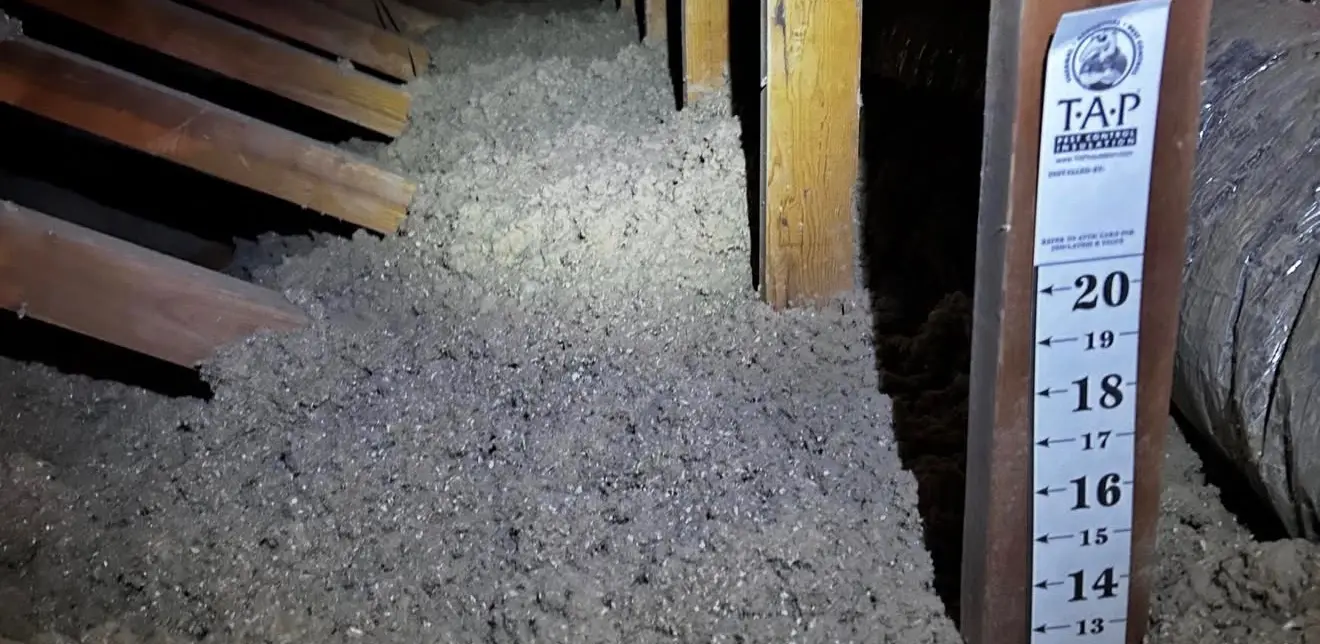
Thermal, Acoustical, Pest Control insulation is borate-treated cellulose blown into your attic. It is an EPA-registered pesticide and an Energy Star qualified insulation at the same time, so one attic visit lowers your summer cooling load and works on the insects living up there.
If you are still working out what your attic needs rather than which product goes in it, start with our overview of attic insulation in Phoenix. If you are comparing quotes on TAP specifically, start with the section below. It covers the R-value to aim for in this climate, how blown-in cellulose behaves in a 150 degree attic compared with the alternatives, and why the condition of the attic decides more than the product name does.
⭐ Locally owned, Phoenix based Certified installers EPA-registered product Energy Star qualified
Posted on Google
 Nina Brokaw1 days ago
Trustindex verifies that the original source of the review is Google.
Fast response. Gave reasonable options. Polite, informative. Will use again if needed and recommend to others.Posted on Google Amanda Frazee1 days agoVery helpful & polite & knowledgeable. Really appreciated the hard work. Learned a bunch as well.Posted on Google
 Wilhelmina Noche1 days agoRyan was very punctual and very good explaining to us the process of removing the bee hive . He also assured us that we can call him anytime until the bee problem is resolved. Thanks Ryan and Busy Bee Pest Solutions.Posted on Google
 Kathy Derflinger1 days agoPosted on Google
 George Violette1 days agoEvan is great! Excellent communication. Easy to work with. Highly recommend him and company.Posted on Google
 Jamie Boscardin1 days agoCarter was great, extremely helpful and professional.Posted on GoogleKathy Derflinger2 days agoTricky little rat he’s in the pantry and should be fat from all the boxes he went through.Not Carter but the missing rat.Posted on Google
 Jen Beach3 days agoCarter was great! Very knowledgeable, friendly, personable and helpful with explaining and taking care of our bee infestation. Great company!Posted on Google
 angela gentry3 days agoGreat service! So knowledgeable and friendlyPosted on Google
 Ricardo3 days agoRyan came out to my home and solved a ground hog issue that would have completely ruined my beautiful yard. He was a true life saver. Thx RyanVerified by TrustindexTrustindex verified badge is the Universal Symbol of Trust. Only the greatest companies can get the verified badge who has a review score above 4.5, based on customer reviews over the past 12 months. Read more

The order of operations
Insulation is the last step, not the first
We already seal attics and we already clean them. Blowing new insulation into an attic that still has an open entry point or a contaminated floor just buries the problem. TAP is the third step, and it only happens after the first two are done. The sealing is what keeps rodents out. The insulation is insulation.
STEP ONE
Seal the entry points
Roof line, eaves, vents, gaps at the fascia. Closing the building up is what keeps rodents out, and it has to happen first. That is exclusion work, and it has to hold before anything else is worth doing.
STEP TWO
Clean out what is up there
Droppings, nesting material and insulation that has been soiled comes out during attic cleanup. We cut out and remove just the affected sections rather than gutting an entire attic.
STEP THREE
Blow in TAP
New borate-treated cellulose brings the attic back up to depth and leaves a treated layer that keeps working on insects after we drive away.
Before the machine starts
Your house gets masked off first
Removal work moves a lot of dust, and the hoses have to run from the attic hatch out to the truck. Every path they take gets covered, taped, and sealed before anything is switched on. This is the part nobody photographs, and it is the part that decides whether you are cleaning up after us for a week.
The masking, the removal and the install are all done by our own insulation crew, supervised by Ethan, our in-house insulation expert.


Choosing attic insulation in Phoenix: what actually matters
Most attic insulation quotes in Phoenix are won or lost on four things, and the brand of insulation is not one of them.
The R-value you are aiming for. The Department of Energy puts this climate zone at R-38 to R-49 for attics. A house built before the mid-1990s with its original insulation is usually sitting somewhere around R-11 to R-19, which is why the upstairs rooms never quite catch up in August. Any quote should tell you the depth measured on the day and the depth being installed, not just a product name.
Depth beats rating. An R-49 number on a bag means nothing if the material goes down at half the depth, gets walked on, or settles into the joist bays and leaves the tops of the joists bare. Coverage has to be even, it has to run out to the eaves, and it has to carry over the top of ductwork rather than stopping short of it.
How the material behaves in a 150 degree attic. Blown-in cellulose flows into the gaps around wiring, plumbing penetrations and the awkward spaces behind knee walls, which is where batts leave a gap at every truss and junction box. Spray foam is a different job with a different scope: it goes to the underside of the roof deck, it changes how the attic is ventilated, and it is not something you undo cheaply. None of the three is universally right. What matters is whether the installer measured before recommending.
Whether the attic is ready at all. This is the one that gets skipped. New insulation over an active roof leak, over contaminated material, or under an open roofline is money spent on something that has to come back out. That is the whole reason our order of operations starts with sealing and cleaning rather than with the blower.
The insulation we install is TAP, which is the same blown-in cellulose with a borate treatment added. The rest of this page is about what that changes and what it does not.
What it actually is
What TAP insulation is: recycled paper, treated with borates
TAP insulation is blown-in cellulose insulation made mostly from post-consumer paper and treated with boric acid. The borate is what makes it a registered pesticide: insects that crawl through it and groom themselves ingest it. It sits loose on the attic floor and around the joists, so it fills the gaps batts leave behind.
It is installed once. There is no reapplication schedule, no spray, and nothing to re-treat on a quarterly visit.

TAP at a glance
| Material | Borate-treated cellulose |
| Recycled content | 87.5% post-consumer paper |
| Pesticide status | EPA-registered |
| Energy rating | Energy Star qualified |
| Where it goes | Attic floor, over or in place of existing |
| Reapplication | None |
| Also does | Sound dampening between floors |
Phoenix specifically
Your attic hits 150°F on a 112° afternoon
That heat does not stay in the attic. It radiates down through the ceiling all evening, which is why the AC keeps running well after sunset. Depth of insulation is the only thing between that attic and the rooms below it, and a lot of Valley homes built before the mid-1990s are sitting at roughly half of what is recommended today. The Department of Energy recommends R-38 to R-49 for attics in this climate zone.
How the three attic options compare
| TAP (borate cellulose) | Blown fiberglass | Fiberglass batts | |
|---|---|---|---|
| R-value per inch | 3.2 – 3.8 settled | 2.2 – 2.7 settled | 2.5 – 4.0 nominal |
| Depth to reach R-38 | About 10 – 12 in. | About 14 – 17 in. | About 10 – 15 in. |
| Fills around joists and wiring | Yes: blown in loose, conforms to the deck | Yes: blown in loose | No: cut to fit, leaves gaps at obstructions |
| Treated for insects | Yes: EPA-registered borate | No | No |
| Made from | Mostly post-consumer paper, treated with boric acid | Spun glass fiber | Spun glass fiber in rolls or pre-cut pieces |
R-values per inch from the U.S. Department of Energy’s Building America Solution Center. Depth figures are calculated from those ranges; actual depth depends on the product and how it is installed.
150°F+
Typical Phoenix attic temperature on a 112° day
Up to 20%
Possible savings on heating and cooling costs from sealing and insulating, depending on climate zone and home condition
Source: EPA / ENERGY STAR
R-38 to R-49
Department of Energy recommended attic R-value for the Phoenix climate zone
Most Valley homes built before the mid-1990s sit well below it

Savings vary by home. Age of the roof, existing R-value, duct condition, and how well the attic is sealed all change the result, which is why the technician measures your existing depth before quoting anything.
What the borate handles
What pests does TAP insulation control?
TAP works on self-grooming insects, and only on insects. They walk through the treated cellulose, clean themselves, and ingest the borate. Here is the full range of what the label covers:
AntsCockroachesCricketsSilverfishFirebratsEarwigsMillipedesCentipedesPill bugsSowbugsBookliceDarkling beetlesLady beetlesStink bugsBoxelder bugsTermitesand other listed insects
Where it works, and where it does not. TAP treats the attic and the wall voids it is installed into. It does nothing on the exterior of the home, along your foundation, or in the yard, so it sits alongside your regular service rather than replacing it.
TAP does not control rodents. Rats and mice are not on the label, and the borate has no effect on them. Rodents are kept out by trapping and by sealing the entry points they are using, which is separate work we do before any insulation goes down.
Is your house a candidate
Is your attic a candidate for TAP insulation?

Good fit
- ✓Built before the mid-1990s with original insulation
- ✓You can see the tops of the ceiling joists from the attic hatch
- ✓Upstairs rooms run noticeably hotter than downstairs
- ✓You have had an insect problem in the attic or wall voids
- ✓Insulation is thin, settled, patchy, or has been walked flat
- ✓You are already having exclusion or attic cleanout work done
Fix this first
- ×Active roof leak or water staining on the sheathing
- ×Knob-and-tube wiring or open junction boxes
- ×Live rodent activity, or entry points at the roof line still open
- ×Bathroom or dryer vents exhausting into the attic
- ×Mold or heavy contamination that needs remediation
- ×Attic already at recommended depth and in good shape
How it gets installed
How attic insulation is installed: two options
The technician goes into the attic, measures the existing depth, checks the condition of what is already there, and tells you which of these your house needs. Both are priced per job.

Option A
Blow over the existing insulation
If what is up there is dry, clean, and undamaged, we leave it and add TAP on top to bring the attic up to depth. Faster, less disruptive, and you keep the R-value you already paid for.

Option B
Remove and replace
If the existing insulation is contaminated, matted, or soaked, it comes out first. The attic gets cleaned and sanitized, then TAP goes down on a bare deck. This is the usual path after a rodent job, and when an attic cleanout has already been done.
Pricing is quote based. There is no square-foot price on this page because the number depends on attic size, existing depth, access, and whether a cleanout is involved. The inspection is how we get you a real figure instead of a guess, and financing is available if you would rather spread it out.
Questions we get
TAP insulation, answered
What is TAP insulation?
TAP stands for Thermal, Acoustical, Pest Control. It is loose-fill cellulose insulation made from recycled paper and treated with boric acid, then blown into an attic. It is registered with the EPA as a pesticide and qualified by ENERGY STAR as an insulation, so one install does both jobs.
Does TAP do anything about rats or mice?
No. Rats and mice are not on the TAP label and the borate does nothing to them. Rodents are dealt with by trapping and by sealing the entry points they are using, which is separate work. If you are hearing something in the attic, start with a rodent inspection rather than insulation, because new insulation blown over an open entry point just gets nested in.
How much does TAP insulation cost in Phoenix?
It is quoted per job rather than priced by the square foot. The figure depends on attic size, how much insulation is already up there, how easy the attic is to get into, and whether the old material has to come out first. The inspection is free and the quote is written before any work starts.
What R-value should a Phoenix attic have?
The Department of Energy recommends R-38 to R-49 for attics in this climate zone. A technician measures your existing depth against the attic card to work out where you currently stand.
Is TAP safe with kids and pets in the house?
Borate is the same class of compound used in laundry boosters and eye wash. It is an EPA-registered pesticide at the concentration used in TAP, and it stays in the attic, sealed away from living space. Nothing is sprayed, and there is no re-entry interval to wait out.
How long does the pest control part last?
The borate does not break down, evaporate, or wash out of an attic. As long as the insulation stays dry and in place, the treated layer keeps working. There is no annual retreatment.
Do I still need my regular service if I get TAP?
Yes. TAP treats the attic and wall voids. It does nothing for scorpions along your foundation, ants in the kitchen, or anything on the exterior of the home. Think of it as covering the one area a perimeter treatment cannot reach.
How long does the install take?
A straightforward blow-over on an average Valley home is usually a single day. If the attic needs a full removal and cleanout first, plan on longer, and the technician will tell you which one you are looking at before any work starts.
Will it help with noise?
Cellulose is denser than fiberglass batts and fills gaps rather than sitting over them, so it does dampen sound between floors and from outside. That is the "acoustical" in the name, though it is a side benefit rather than the reason most people call.
Free attic inspection
Request a quote for attic insulation in Phoenix
Tell us the address and what is up there now. A technician measures your existing depth, checks for entry points and moisture, and writes the quote before any work starts. Prefer to talk it through? Call 623-289-3375.
Now booking Phoenix metro
Have the attic looked at before next summer
A technician measures what is up there, checks for entry points and contamination, and gives you a written quote covering the seal, the cleanout, and the insulation as one job. 👉 No obligation, and no charge for the look.
Serving Phoenix, Mesa, Chandler, Scottsdale, Gilbert, Tempe, Peoria, Glendale, Goodyear, Queen Creek, Buckeye, Sun City, Paradise Valley and the surrounding Valley.
Meet the Team
The licensed technicians who actually show up at your door. Bees and wasps, rodents, attic cleanouts and insulation, all handled by the same crew.

Evan

Shaun

Ryan

Victor

Carter

Bryan

Ian

Cliff

Cartreal

Ethan
Insulation Team Supervisor
Our insulation expert

Miguel
Get a free attic inspection
Tell us what is going on up there. A technician measures the existing depth, checks for entry points and contamination, and puts a written quote together covering the seal, the cleanout and the insulation as one job. No charge for the look.
Prefer to call? (623) 289-3375 · Book a free inspection