

Roof Rat Removal in Phoenix, AZ
Attic & Roofline Experts
Night scratching overhead? Droppings in the garage? In Phoenix that is usually roof rats. We trap them out of the attic, then seal the tile edges, vents and utility penetrations they used, as part of our rodent control in Phoenix. Roof rat removal starts with a free inspection; the initial service is $245 and each follow-up is $95.
Roof rat trapping and permanent roofline sealing for Phoenix homes.
Quick facts: roof rat removal in Phoenix
- Roof rats are the most common rat in Phoenix homes. They climb block walls, citrus and palms onto tile roofs and enter through tile edges, soffit returns, roof vents and AC line-set penetrations, so the noise is overhead after dark. Norway or pack rat? See rat control in Phoenix. Roof rat removal is part of our rodent control in Phoenix.
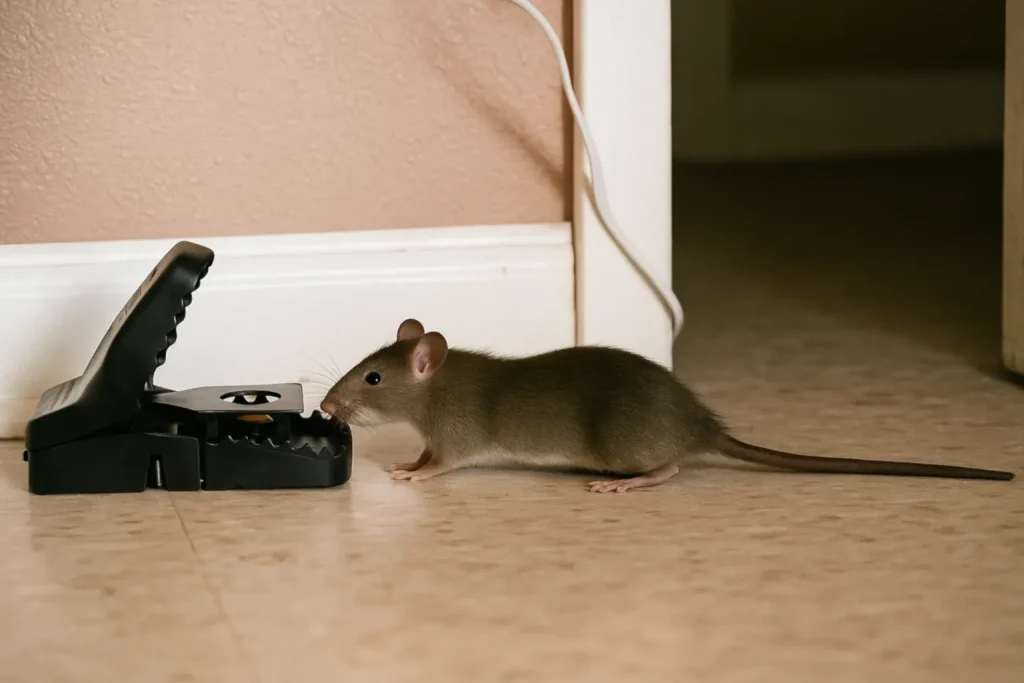
- Identification: 5 to 10 ounces, slender build, tail longer than the head and body, droppings about half an inch long with pointed ends.
- First visit: a Rodent Specialist completes a free 61-point structural entry audit, roofline first, with every entry point mapped.
- Methods: snap traps in the attic and interior, locked stations outside, no poison inside the house.
- Packages: Control is $245 for the initial service and $95 per follow-up. Solve adds full roofline exclusion with a 2-year warranty and Restore adds attic sanitization and insulation; both are quoted after the inspection. The $29 first visit is a promo for new customers who start a 1-year pest control plan.
- Timeline: activity usually drops within days and most attics are quiet within 1 to 2 weeks.
Signs of Roof Rats in the Attic and Around Phoenix Homes (What You’ll Notice)
Noticing these signs? A Phoenix roof rat exterminator can confirm the problem and outline the repairs at the free inspection.
- Noises at night in the attic or along eaves and soffits
- Droppings in attics, garages, near water heaters
- Gnawing and shredded insulation around roof access points
- Fruit damage on citrus trees; hollowed or eaten fruit
- Grease rub marks on rafters, pipes, conduit, or fascia
If you’re noticing two or more of these, schedule an inspection. Roof rats multiply quickly and will exploit new openings if left unchecked.
Want to understand roof rats first? Read our guide to getting rid of roof rats in Phoenix.
Mice or another rodent as well? See all of our rodent services.


Why Roof Rats Thrive in Phoenix
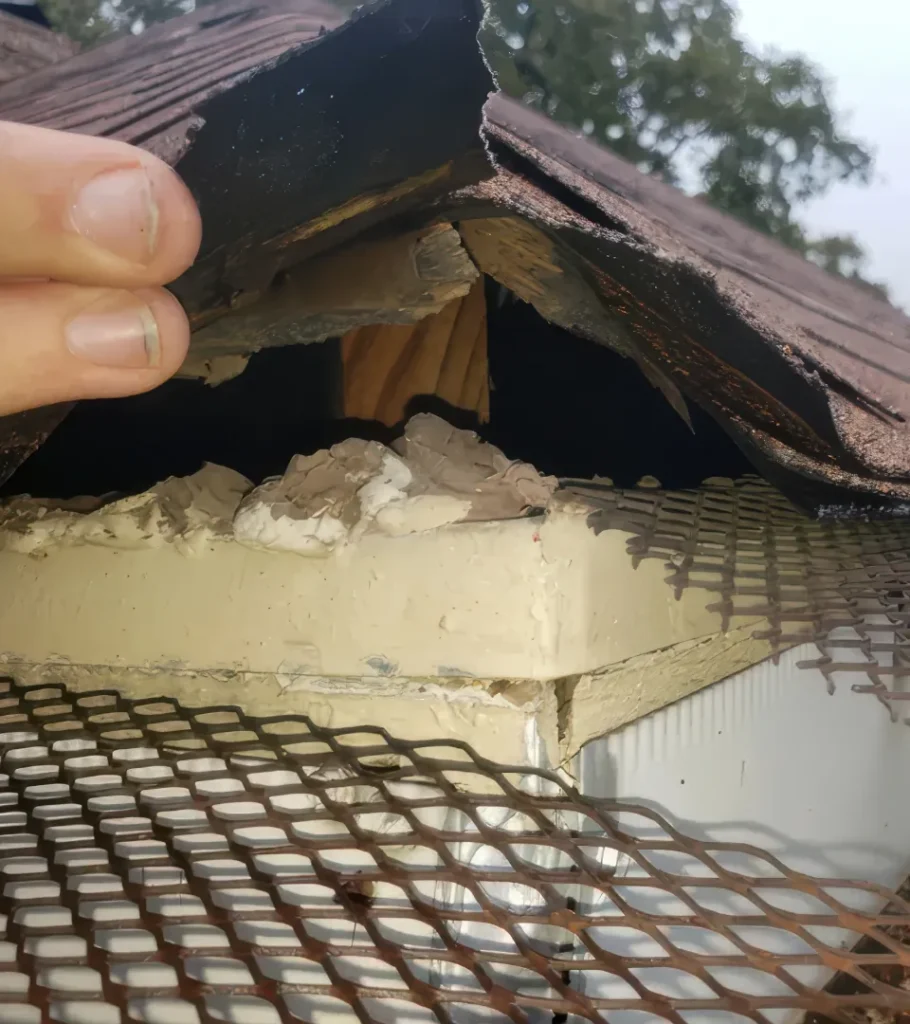
The Phoenix roof rat problem stems from tile-roof gaps, citrus trees, and block walls that make movement easy. Together, these create a perfect storm of habitat: tile roofs with micro-gaps, mature citrus and landscaping for food, utility lines and block walls to move along, and dry, unused attics for nesting. Especially after monsoon season or during cooler months. Our calendar shows when roof rat season peaks in Phoenix, month by month. Older roof transitions and open soffit vents make things easier for them too. Water matters as much as food: drip emitters and pool equipment pads are the steadiest water on many Phoenix lots (see rodents in pool equipment and drip lines).
That’s why our program always includes exclusion, because trapping alone won’t stop new rats from finding the same openings.
Palm rats are roof rats
Around Phoenix, roof rats are often called palm rats, and the nickname is a good guide to where they live. They nest in the dead-frond thatch of untrimmed fan palms, feed on backyard citrus, and use both as a bridge onto the roof. University of Arizona Cooperative Extension notes that roof rats (also known as black rats or ship rats) were documented in Phoenix in 2001 and have settled into old-growth citrus, palm trees and other mature landscaping. Maricopa County Vector Control adds that citrus gives them food and water at once, and that they eat queen palm fruit in summer when citrus isn’t available. What to trim, skirt and pick in your own yard is covered in roof rats in citrus trees and palms.
After a monsoon storm
Monsoon wind works on the same parts of the roof that roof rats use. A gust that shifts a tile or knocks out an old mortar bird-stop reopens the channel under the first course of tile, and flying debris can tear the insect screen on a roof or gable vent. Walk around the house within a few days of a big storm and look up at the roofline, or use our list of what to check after a monsoon storm.
How We Get Roof Rats Out of a Phoenix Attic
Roof rat removal is roofline work first and attic work second. This is the order we follow on Phoenix tile roofs.
1) Roofline-First Inspection
We start on the roof: bird-stops missing under the first course of tile, soffit returns where two roof planes meet, roof and gable vents, and the AC line-set chase into the wall. In the attic we follow the grease rub marks roof rats leave on joists and pipe runs. Every entry point is noted and pinned to a location, and you get a written repair plan.
2) Snap Traps on the Attic Runways
Roof rats avoid new objects for several days, so traps go on the runways they already use, not scattered across the insulation. Inside: secure snap traps only, never poison in the attic or walls, so no rat dies where it cannot be recovered. Outside: locked, tamper-resistant stations cut the supply coming off block walls, citrus and palms.
3) Permanent Roofline Exclusion
Once the attic is quiet, we reset open bird-stops, screen soffit and gable vents with heavy-gauge hardware cloth, flash tile-to-fascia transitions and seal the line-set penetration with sealants rated for Arizona heat and UV. The goal: a tight roof system that stays tight.
4) Trim the Bridges, Sanitize and Follow Up
We point out the citrus limbs and palm fronds touching the roof so they can be cut back, offer targeted sanitization where rats were active, and return to clear traps and confirm the seal is holding.
Roof rats living in an attic usually soil the insulation with droppings and urine or flatten it along their runways. Once the rats are trapped out and the roofline is sealed, our attic cleanup removes the soiled sections and sanitizes the attic, and TAP insulation, a borate-treated cellulose that also treats the attic for insects, brings it back to depth. That attic work is what our Restore package adds.
If you find droppings in the attic or garage before we get there, don’t sweep or vacuum them. The CDC’s rodent cleanup guidance is to put on gloves, spray the droppings and urine with a bleach solution or registered disinfectant until very wet, let it soak for 5 minutes, then wipe it up with paper towels, because sweeping and vacuuming put tiny droplets into the air.
Ready to start today? Call 623-289-3375 or Book Your Free Roof Rat Inspection.
Phoenix Neighborhood Focus & Hotspots
- Arcadia & Biltmore: Classic citrus-corridor behavior. Roof rat control often requires eave gap sealing.
- Paradise Valley Village & Desert Ridge: Long roof runs, complicated transitions
- Ahwatukee & South Mountain foothills: Utility penetrations and soffit ventilation are common weak spots
- Central & North Phoenix: Mixed roof materials, older fascia details; flashing upgrades often solve recurring entries
Don’t see your neighborhood listed? We service all of Phoenix. We’ll tailor the exclusion plan to your home’s roof type and construction.
Roof rats across the Valley
Outside Phoenix, roof rats follow the older irrigated neighborhoods with mature citrus and palms. Local details are on our city pages: roof rat removal in Mesa (tile eaves and citrus), roof rats in Tempe (pre-1980 roofs and the Town Lake area), roof rats in Chandler (lake communities), roof rats in Gilbert (greenbelts and mature-canopy streets) and roof rats in Goodyear’s Palm Valley.
Why Phoenix Homeowners Choose Busy Bee Pest Solutions
- Roof rat inspections by appointment across Phoenix neighborhoods
- Removal + Exclusion (we don’t just trap; we seal what we find)
- AZ-Rated Materials (chew-resistant mesh, UV/heat-stable sealants)
- Written Documentation of entry points and repair work
- Guaranteed Results . If activity returns, we come back under your plan
“They knew exactly where roof rats were getting in, sealed the roofline, and we were rodent-free within a week.”. Phoenix homeowner
Already had another company treat for roof rats and still hearing activity overhead? We offer a free second opinion rodent inspection that documents what was missed before you spend anything further.
Serving Scottsdale? South of Shea Boulevard it is almost always roof rats; see roof rat removal in Scottsdale. In the West Valley, roof rats are established in central Glendale and around Bell Road in Surprise; see roof rats in Glendale and roof rats in Surprise.

Roof rat removal is one part of our full rodent service. The same crews handle rodent exclusion and attic cleanup. When insulation has to come out, TAP insulation is what goes back down. For what the work costs and what adds to a total, see our guide to rodent control cost in Phoenix.
Roof Rat Identification: Size, Tail Test and Droppings
| Weight | 5 to 10 ounces |
|---|---|
| Build | Slender, with a pointed muzzle, large eyes and large ears, noticeably smaller than a Norway rat |
| Coat | Blackish to brownish-grey with a paler belly |
| Tail | Longer than the head and body. Pulled forward, it reaches at least the snout |
| Droppings | About half an inch, pointed at the ends |
| Nests | Attics, wall voids, ceiling voids and cabinets. Almost always above ground |
| Litters | Three to five litters a year, up to eight young per litter |
| Smallest opening | A half-inch gap, including under a door |
| Active | Mostly at night |
| Confused with | The Norway rat, whose tail is shorter than its body and reaches only the middle of the skull when pulled forward |
Roof rats reached the Valley through the irrigated older core and spread outward along it. The Arcadia citrus corridor is the best-known example: mature citrus, olive and fan palms on flood-irrigated lots give roof rats food, water and a continuous canopy at roof height, so they can live an entire life cycle without crossing open ground. The same conditions run through central Tempe, west Mesa, Old Town Scottsdale and the older Chandler neighbourhoods.
Sources: UC IPM Pest Notes, Rats; University of Arizona Cooperative Extension, Commensal Rodents.
Not sure it is a roof rat? Compare roof, Norway and pack rats on our rat control in Phoenix page.
Rodent packages
| Package | Price | What it includes |
|---|---|---|
| Control | $245initial service, then $95 per follow-up | Free 61-point inspection, snap traps indoors, locked stations outside, the first removal and follow-up visits until activity stops. Pay per visit. |
| Solve | Quotedafter the free inspection | Everything in Control plus full exclusion of every entry point, all follow-ups included, photos of the work on request and a 2-year warranty. |
| Restore | Quotedafter the free inspection | Everything in Solve plus attic remediation: droppings and nests removed, sanitization, and contaminated insulation replaced or topped up. |
Inspections are free and every quote is in writing. New customers who start a 12-month pest control plan get the initial visit for $29 (see the $29 rodent promo). Full details on Phoenix rodent control packages.
FAQs. Roof Rats in Phoenix
Are roof rats different from Norway rats in Phoenix?
Yes. Roof rats are agile climbers that prefer attics, eaves, and rooflines. Norway rats are ground-burrowers. Phoenix homes see roof rats more often.
(See also: Maricopa County “Roof Rat Control Around Homes” PDF) (Maricopa County. Roof Rat FAQ)
How long until the attic noise stops?
Many homeowners notice a significant drop within a few days. Full resolution typically takes 1–2 weeks when removal + exclusion + follow-ups are done well.
Do you use poison inside the house?
No. We use secured snap traps indoors, not hidden rodenticides, to prevent odor or decay behind walls.
Will you seal tile-roof gaps?
Absolutely. Our exclusion encompasses tile-to-fascia transitions, eave returns, attic/soffit vents, and utility penetrations, all designed for Arizona’s climate.
Do you provide photos of what you sealed?
Yes. Photos of the work are available on request, and you’ll receive notes so you can see exactly what was done.
How do I choose the best roof rat exterminator in Phoenix?
Look for a licensed provider that offers both roof rat removal and permanent exclusion. Busy Bee documents every entry point sealed so you see exactly what’s been fixed.
What does the Busy Bee Seal Guarantee cover?
If rodents get back in through an entry point we sealed, we return and fix it under your plan. Every seal point is noted during the work, so there is a record of exactly what was covered.
How much does roof rat removal cost in Phoenix?
Roof rat removal on our Control package is $245 for the initial service and $95 per follow-up. Solve adds full roofline exclusion with a 2-year warranty and Restore adds attic sanitization and insulation; both are quoted after the free 61-point inspection. New customers who start a 1-year pest control plan pay $29 for the initial visit.
What traps do you use for roof rats in Phoenix?
Monitored snap traps set on the attic runways and along the routes to the entry points, checked on each follow-up visit. We do not use poison bait in attics or walls, because a rat that dies inside the structure causes odor and fly problems. Locked, tamper-resistant stations are used outside only.
How do I get rid of roof rats in my attic?
Three steps, in this order: trap the rats already inside, seal every roofline entry point (tile edges, soffit returns, roof vents and AC line-set penetrations), then remove the food and climbing routes such as fallen citrus and palm fronds touching the roof. Skipping the sealing step is the reason roof rats return. Our Solve package covers all three and carries a 2-year warranty. See our step-by-step guide for how each step is done.
How do roof rats get into attics in Phoenix?
Roof rats climb. They go up block walls, citrus trees and palms onto tile roofs, then slip in through tile edges, soffit returns, roof vents and gaps around AC line sets, which is why the noise is overhead after dark. A free inspection finds every entry point, and rodent exclusion seals them once the rats are trapped out.
More roof rat and rodent questions are answered in our rodent FAQ.
Learn More About Phoenix Roof Rat Problems
The Phoenix roof rat problem stems from tile-roof gaps, citrus trees, and block walls that make movement easy, especially in neighborhoods with mature landscaping and older construction. For more prevention tips and official guidance, see the resources below.
Wondering whether the county will handle it? Our guide to Maricopa County Vector Control and roof rats covers what the county actually does with a rodent complaint, what it does not provide, and where a private company has to take over.
- “It’s roof rat season in AZ. How to keep them out of your yard and house”, Arizona Republic article with tips and local insight (azcentral.com)
- “Roof Rats”. Mesa, AZ official resource on signs, prevention, and control (mesaaz.gov)
- “Roof Rats”. Paradise Valley official page on elimination and control measures (paradisevalleyaz.gov)
- “Roof Rat Control Around Homes” PDF. Maricopa County Vector Control best practices (Maricopa County. Roof Rat FAQ)
- What Are the Most Common Rodents in Arizona? Identification Guide for Homeowners . Busy Bee Pest Solutions Blog (Arizona rodent identification guide)
Get a free rodent inspection
Tell us what you are hearing and where you are hearing it. A technician calls you back the same day, and the inspection is free.
Prefer to call? (623) 289-3375 · Book a free inspection