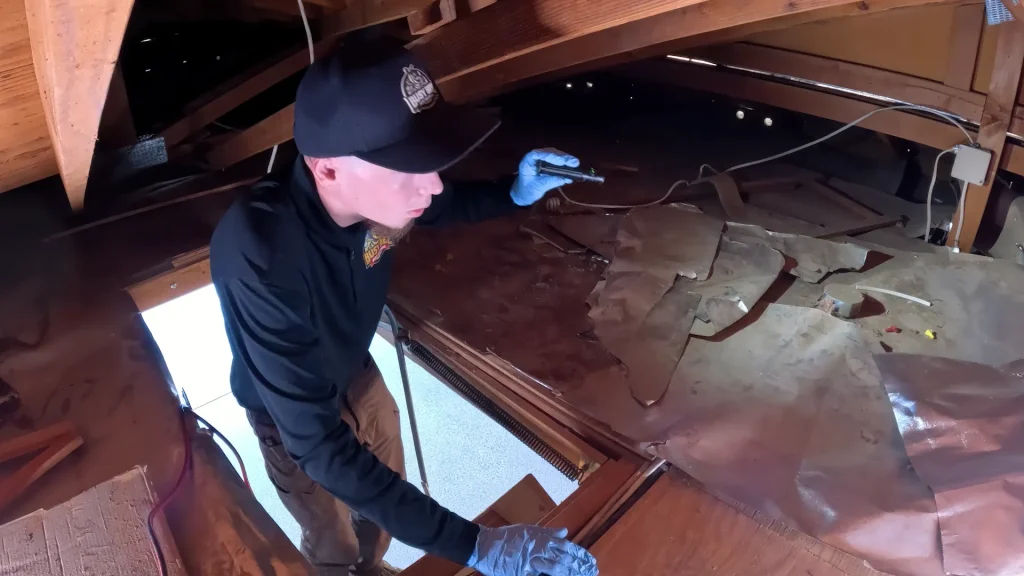
Citrus trees and unskirted fan palms are the two biggest roof rat generators in residential Phoenix. Citrus supplies year-round water and food; palms supply dense, protected nesting material within jumping distance of a roofline. A mature yard with both is effectively a rat nursery attached to your house. If rats are already on the roof, see roof rat removal in Phoenix and our rodent control in Phoenix services.
Why citrus is such a reliable food source
Roof rats are frugivores by preference. In the Valley they hollow out oranges and grapefruit from the side, leaving a clean rind shell still hanging on the branch, one of the most distinctive signs there is. Because different citrus varieties ripen at different times, a yard with mixed citrus can feed a rat population from roughly November through May without interruption.
Fallen fruit matters more than fruit on the tree. Windfall left on the ground provides both food and moisture, and moisture is the limiting factor for rodents in a desert. A single unharvested tree can support a colony through the dry months.
Why palms are worse than most homeowners realise
An unskirted Mexican fan palm, one where the dead fronds have been left to form a thatch below the green crown, is close to perfect roof rat habitat. It is dense, elevated, hidden from predators, and shaded. We routinely find multiple nests in a single untrimmed palm.
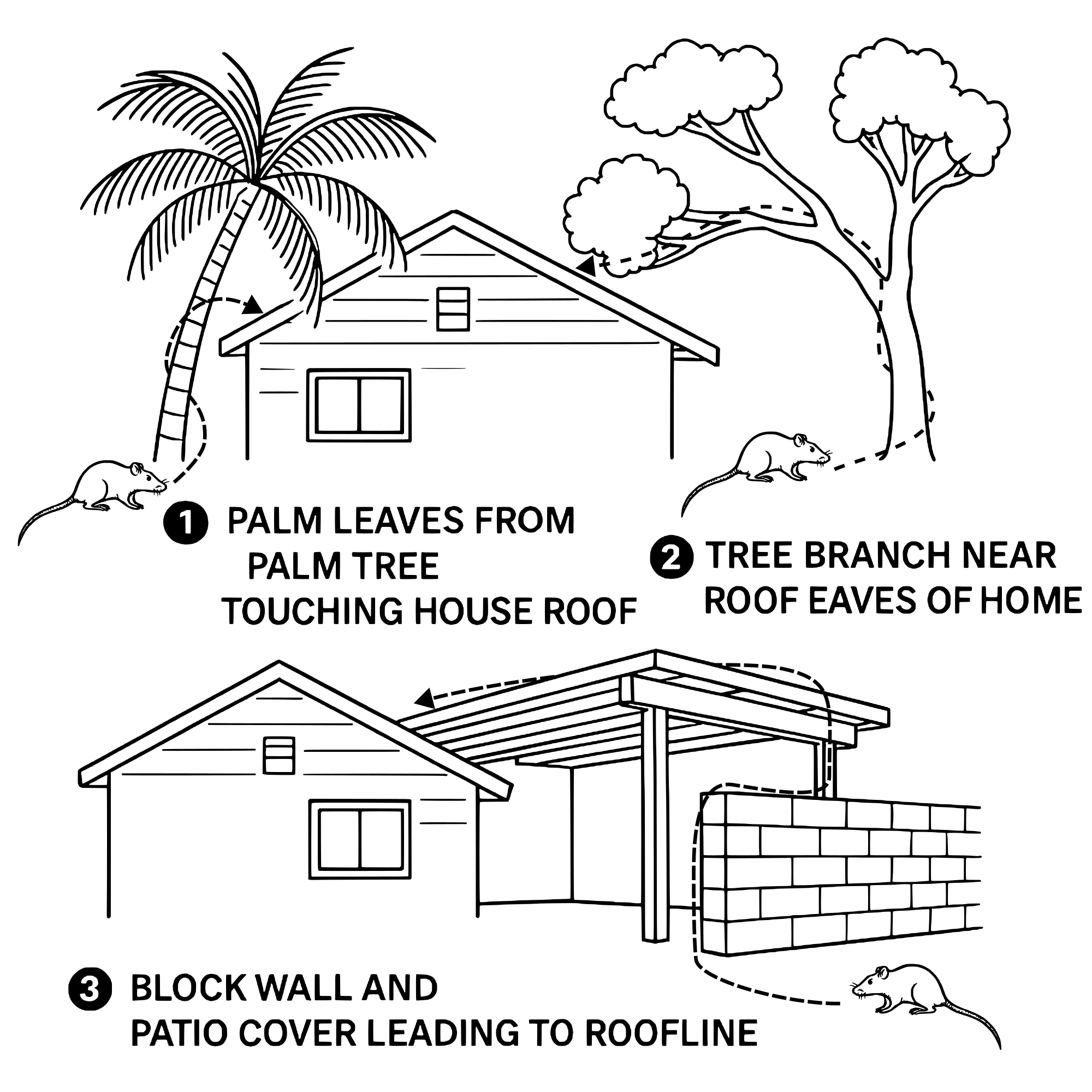
Queen palms and date palms produce fruit as well, which adds a food source to the shelter. And because palms are usually planted close to the house for shade, the crown often sits within a rat’s jumping range of the roof, roughly four feet horizontally, and further downward.
The bridge problem
This is the part most homeowners miss. Rats do not have to climb your walls if your landscaping hands them a bridge. Any of the following will do it:
- Citrus or ficus branches overhanging or touching the roofline
- A palm crown within about four feet of the eave
- Bougainvillea or trumpet vine growing up a block wall to the fascia
- Oleander hedges grown tall enough to meet the roof edge
- Irrigation lines and utility conduit running up an exterior wall
Trimming these back is the single highest-value thing a Phoenix homeowner can do without hiring anyone.
What to do with your trees
- Skirt your palms annually. Remove the dead frond thatch entirely. This is not cosmetic. It eliminates the nest site.
- Cut back branches to at least four feet from the roof. Six feet is better. Rats are capable jumpers and judge distance well.
- Harvest citrus promptly and pick up windfall. Fruit rotting on the ground is a water source in a place where water is scarce.
- Do not compost citrus waste in an open pile near the house.
- Consider trunk guards on isolated trees. A smooth metal band roughly 18 inches wide at 4 feet stops climbing on trees that are not bridged from elsewhere.
Do I have to remove my trees?
No, and we would not advise it. Mature citrus and shade trees are worth a great deal in a Phoenix yard, both in property value and in cooling. The goal is to break the bridge and remove the nesting thatch, not to strip the landscape. A well-maintained citrus tree four feet clear of the roof is not a meaningful risk; a neglected one touching the fascia is.
Tree work is one step in our Phoenix roof rat guide, which also covers trapping, sealing the roofline and cleaning the attic.
Frequently Asked Questions
How do I know rats are in my citrus tree?
The clearest sign is hollowed-out fruit, a rind shell with the flesh eaten from inside, still on the branch. You may also find droppings on block wall caps beneath the canopy, gnawed rind on the ground, and greasy rub marks where branches meet the wall.
Do palm trees cause roof rats in Phoenix?
Palms do not cause rats, but unskirted palms give them somewhere to live. The dead frond thatch below the crown is dense, elevated and hidden, and it is one of the most common nest sites we find in the Valley. Annual skirting removes the habitat.
How far do roof rats jump?
Roughly four feet horizontally from a standstill, and considerably further when dropping downward from a height. Trimming branches and palm crowns to at least four feet from the roofline, six is safer, removes the bridge.
Will trimming my trees fix an existing infestation?
It removes the habitat and the access, which prevents the problem recurring, but it does not remove rats already inside the structure. If there is activity in the attic it has to be trapped and the entry points sealed. Trimming is prevention, not treatment.
When is roof rat pressure worst in Phoenix?
There are two peaks. Activity climbs through October and November as overnight temperatures drop and rats move from landscaping toward structures, and again after monsoon storms when runoff and vegetation growth shift populations.
Solar panels give roof rats the same kind of shelter. See Roof Rats Under Solar Panels in Phoenix.