Most people book a rodent inspection after a few nights of scratching overhead, or after finding droppings in a kitchen drawer. Then they wonder what the visit actually involves, how much of the house someone needs to see, and whether they are about to be sold something before anyone has looked in the attic.
Here is what a Busy Bee rodent inspection covers, starting where the audit starts, on the roofline, and what you have in your hands at the end of it. The inspection is free, as it is on every Busy Bee service, and you get a written quote before any work is scheduled.
What the 61 points are
The inspection is a structural entry audit. A Rodent Specialist checks 61 specific points across the attic, roofline, eaves, vents, utility penetrations, garage and exterior, and maps every opening found.
The reason for doing it that way is simple. Trapping removes the rodents inside; sealing the gaps is what keeps the next ones out. Rats and mice get into a house through gaps, and the same gaps let the next ones in after the first ones are gone. The audit is how those gaps are found, all of them, before anyone decides what the job is.
An inspection answers three questions: what is it, how is it getting in, and how much of the house has it reached.
The roofline comes first
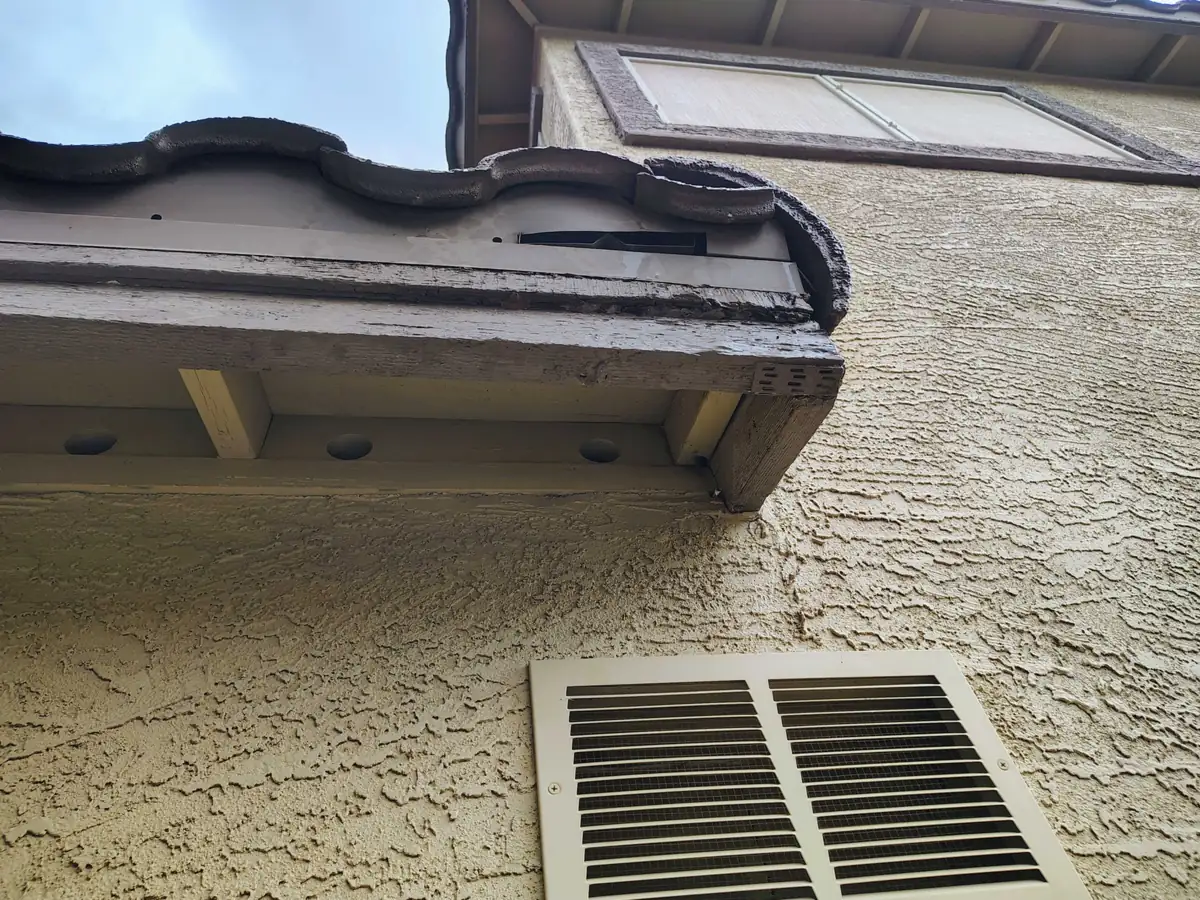
The audit starts on the roofline. This is where roof rats get in, and in most Valley neighborhoods roof rats are the main problem.
- The first course of tile. On concrete and clay tile roofs, the open ends of the tiles at the eave are closed with a bird-stop or a mortar strip. Those break down in the sun over the years and leave a path into the cavity under the tile.
- Soffit returns and eave corners, where the eave turns or meets a wall.
- Roof vents and gable vents, especially light-gauge screens that are torn, rusted or pushed in.
- Where two roof planes meet, and where a roof meets a wall or parapet.
- The space under solar panels, if the house has them.
- Rub marks. Rats leave dark, greasy marks where their bodies brush the same edge every night. A rub mark beside a gap is often the clearest sign of which gap is in use.
Our article on the five rodent entry points we find most in Valley homes goes into each of these in more detail.
The attic
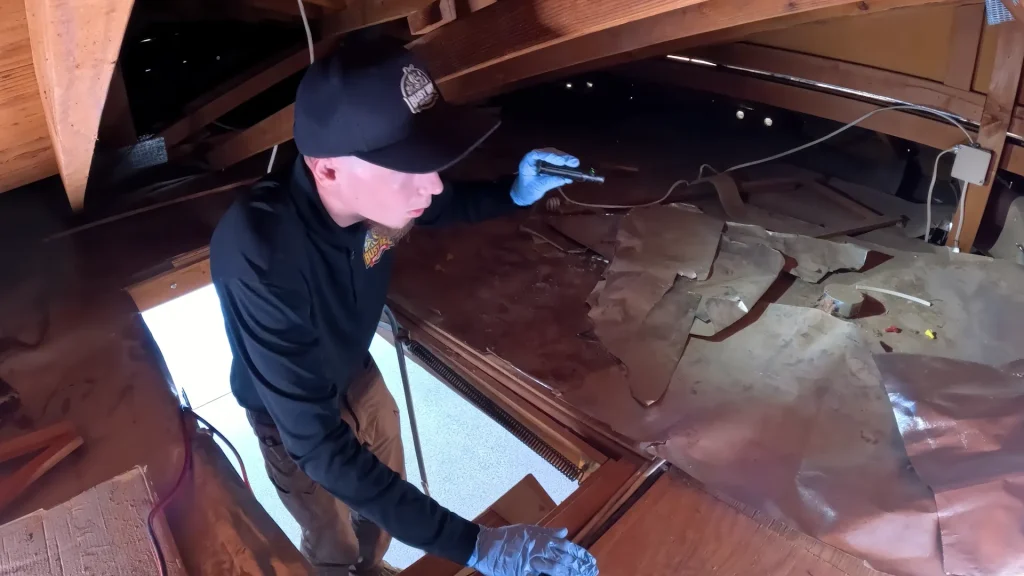
The attic is checked from the hatch and, where it can be done safely, from inside. The Specialist is looking for:
- Droppings, their size and how fresh they are. Old droppings from a problem that ended years ago look different from this week’s, and that difference decides a lot about the job.
- Runways pressed into the insulation, nests and stored food.
- Damage to ductwork, wiring and insulation.
- Urine staining and odor, which decide whether cleanup needs to be part of the job.
- The inside of the entry points found from outside, to confirm which ones are actually in use.
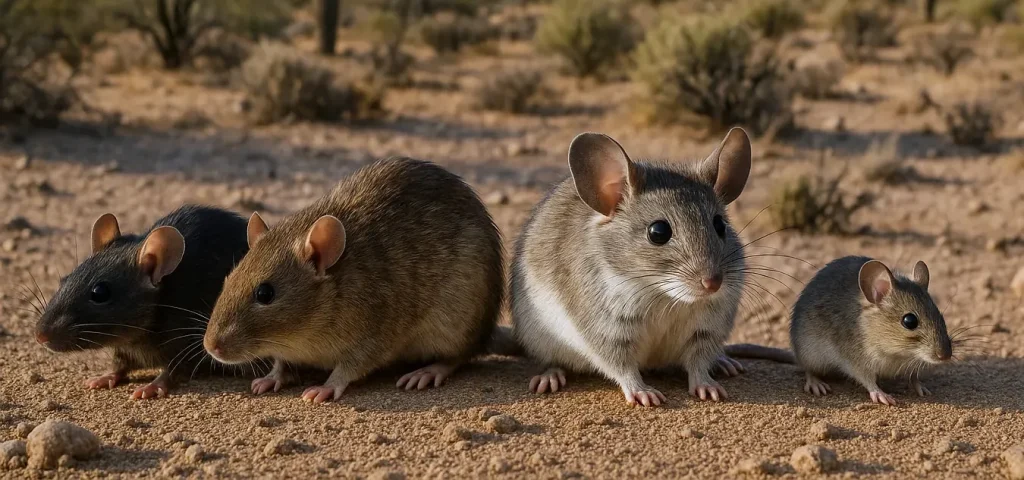
Droppings also identify the species. Roof rat droppings are about half an inch long; mouse droppings are about a quarter inch. The species changes where traps go and which gaps matter most.
To make this part easier, clear a path to the attic hatch. In many Valley homes the hatch is in a closet ceiling or the garage, so move anything stacked underneath it.
Ground level and the garage
The audit also covers everything you could reach from the ground.
- The garage door. The bottom seal, and especially the two bottom corners, where heat-hardened rubber shrinks and cups. If daylight shows at the corners with the door closed, there is a way in.
- Utility penetrations. Where gas, water, electrical and cable lines enter the walls, and where the air conditioning line set passes through.
- Weep screeds and slab transitions. The joint where the stucco meets the foundation, which cracks and opens on older homes.
- Doors. Gaps under side doors, garage entry doors and pet doors.
- Inside the garage. Stored cardboard, bird seed and pet food, gnawing on stored items, droppings along the base of the walls.
For mice, the number that matters is about a quarter inch, roughly the width of a pencil. For rats it is about half an inch. Plenty of ground-level gaps on Valley houses are bigger than both.
The yard
The yard explains a lot about the house.
- Food. Citrus, especially fruit left hanging or lying on the ground. Bird feeders, pet food left out overnight, open compost, bins that do not close.
- Water. Dripping hose bibs, irrigation heads that weep between cycles, pool edges, pet bowls. In a dry winter, water matters as much as food.
- Cover and nesting. Untrimmed palms with a skirt of dead fronds, oleander and dense hedges against the walls, woodpiles and stacked material.
- Routes. Branches within jumping distance of the roof, utility lines running to the house, block walls that connect yards to rooflines.
The yard shows how much pressure the house is under. It shapes the plan as much as the gaps do, because a house surrounded by food and cover will keep being tested after it is sealed.
The written findings and the quote
Every opening found is written down, with its location on the house noted. That record matters for three reasons. You can see exactly what was found without climbing a ladder yourself. The quote is built from it, point by point. And it becomes the checklist the sealing work is measured against later. Photos of the work are available on request.
The written quote lays out what the job involves. On most homes that is some combination of:
- Trapping, to remove the rodents already inside: monitored snap traps indoors and locked, tamper-resistant stations outside. No poison bait in the attic or walls.
- Exclusion, sealing every entry point found with chew-resistant materials such as metal mesh and heat-rated sealant. This is done after trapping, never with rodents still inside.
- Cleanup, if the attic needs it: droppings and nests removed, and contaminated insulation replaced when needed.
You get the quote before any work is scheduled, so you can read it and decide at your own pace.
What to tell the Specialist
What you have noticed is part of the inspection, so it helps to have it ready.
- When you hear it. Noise overhead in the first hours after dark points to roof rats in the attic. Light scratching in a wall near the kitchen at night points more toward mice.
- Where you hear it, room by room.
- What you have found, and where: droppings, chewed packaging, gnawed wiring in a car, hollowed-out fruit on a tree.
- What has already been tried, including any bait put out by you or a previous company. That changes how the attic is handled.
- Your pets. If you have a dog that patrols the yard perimeter, say so. It changes where the outdoor stations go.
What not to do
Do not seal the holes you have found. Closing an entry point with rats still inside traps them in the attic or the walls, where they chew a new way out or die out of reach.
Do not sweep or vacuum droppings. Dry droppings stirred into the air are a health concern, and they are also evidence of how active the problem is. Our article on rodent-contaminated attic insulation explains why.
Do not put out store-bought poison. A rodent that eats bait dies wherever it happens to be, very often inside a wall or the attic, and the smell follows.
Buying a house, or already inspected?
A home purchase is a different situation, with a deadline and a seller involved. Our article on pre-purchase rodent inspections covers what to ask for. If another company has already inspected and you want a second look before committing, see our second opinion rodent inspection.
The short answer
A Busy Bee rodent inspection is a free 61-point structural entry audit that starts on the roofline and covers the attic, garage and exterior. The yard is read for food, water, cover and routes, every opening is mapped and written down, the species and how active it is are worked out from the evidence, and you get a written quote covering trapping, sealing and any cleanup before any work is scheduled. Clear the attic hatch, write down what you have heard and where, and leave the holes and droppings as they are until it has been seen.
Frequently Asked Questions
Is the rodent inspection free?
Yes. Inspections are free on every Busy Bee service, and rodent jobs start with the free 61-point structural entry audit.
What does the 61-point inspection check?
Specific points across the attic, roofline, eaves, vents, utility penetrations, garage and exterior. Every opening found is written down, with its location noted.
How do I book the inspection?
Call 623-289-3375 to book. Rodent inspections are booked by appointment across the Valley, and a technician calls you back.
Do you need to get into the attic?
Yes. The attic shows how far the problem has spread, which entry points are in use and whether cleanup is needed. A clear path to the hatch makes that part quicker.
Should I clean up droppings before you come?
No. Leave them where they are. They show what the rodent is and how active it is, and sweeping or vacuuming dry droppings puts contaminated dust into the air.
Hearing it at night?
Every rodent job starts with the free inspection, and trapping always comes before any sealing or cleanup. Book a free rodent inspection: 623-289-3375.