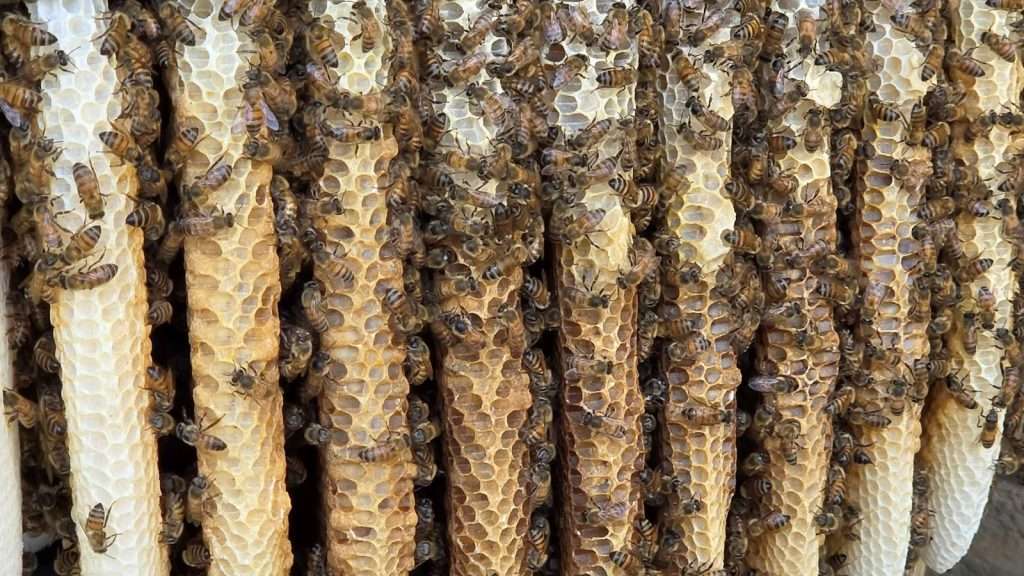
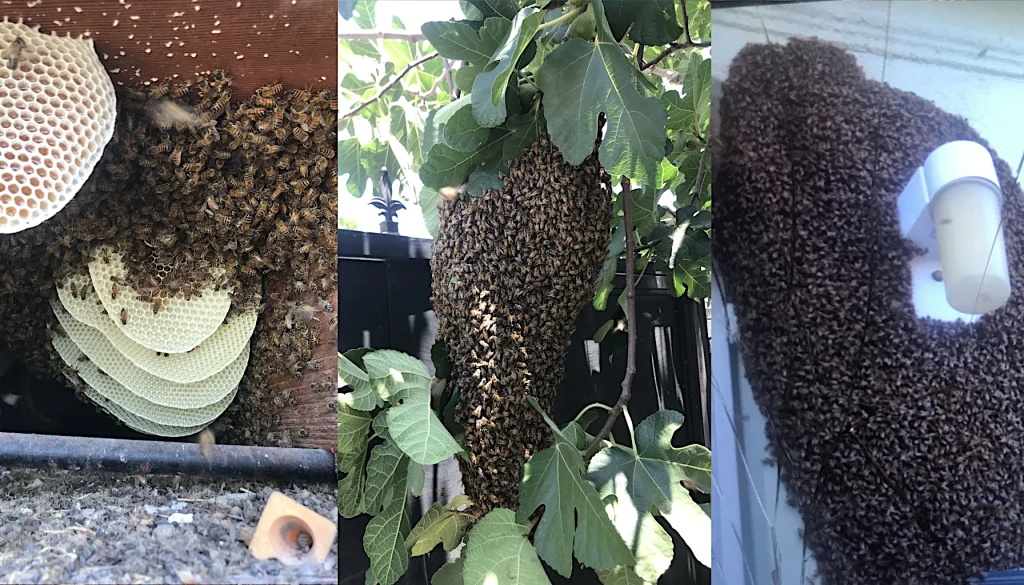
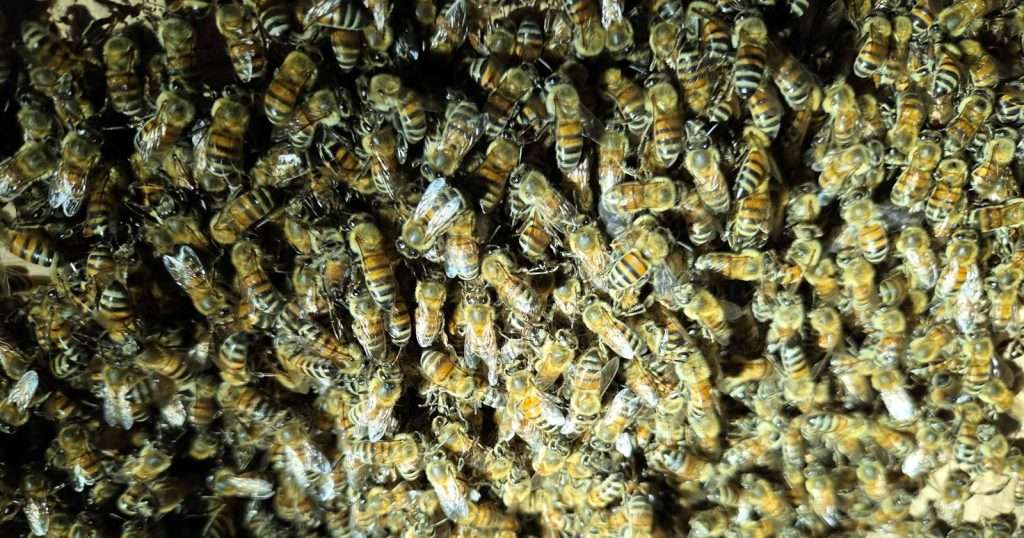
Traffic at the wall drops off in November, and by December there is almost nothing going in and out. Most people take that as the end of it. The bees have gone, the problem solved itself, and the cavity can be sealed up in spring. It is the most common wrong conclusion we deal with, and it costs more than almost any other. A honey bee colony in an Arizona wall does not leave for the winter and does not die back the way it would somewhere cold. It clusters, slows down, lives off what it stored through autumn, and flies whenever the afternoon is warm enough. Then it comes back to full strength in February with a bigger nest than it had in October.
What the colony is actually doing
| Period | Inside the cavity | What you see outside |
|---|---|---|
| November | Stores at their peak. Brood rearing slowing. | Traffic reducing but still obvious on warm days |
| December and January | Cluster formed. Living on stores. Minimal brood. | Little or nothing on cool days. Flight on warm afternoons. |
| February | Brood rearing restarts as day length increases | Traffic climbing again, sometimes sharply |
| March and April | Rapid expansion. Swarm preparation. | Heavy traffic, and possibly a swarm leaving |
The colony is quietest in the exact months when a homeowner is most likely to inspect it, which is why the quiet period is the least reliable moment to judge whether a wall is occupied.
Why an Arizona winter is different
In a cold climate a wild colony in a structure faces a real survival test. Weeks of freezing weather, no forage at all, and a long cluster period. A significant proportion do not make it, and the problem sometimes does resolve on its own.
The low desert does not deliver that test. Winters here are mild, there is winter forage in the Valley, and a colony in a heated wall cavity is better insulated than one in a tree. Survival is the normal outcome rather than the exception.
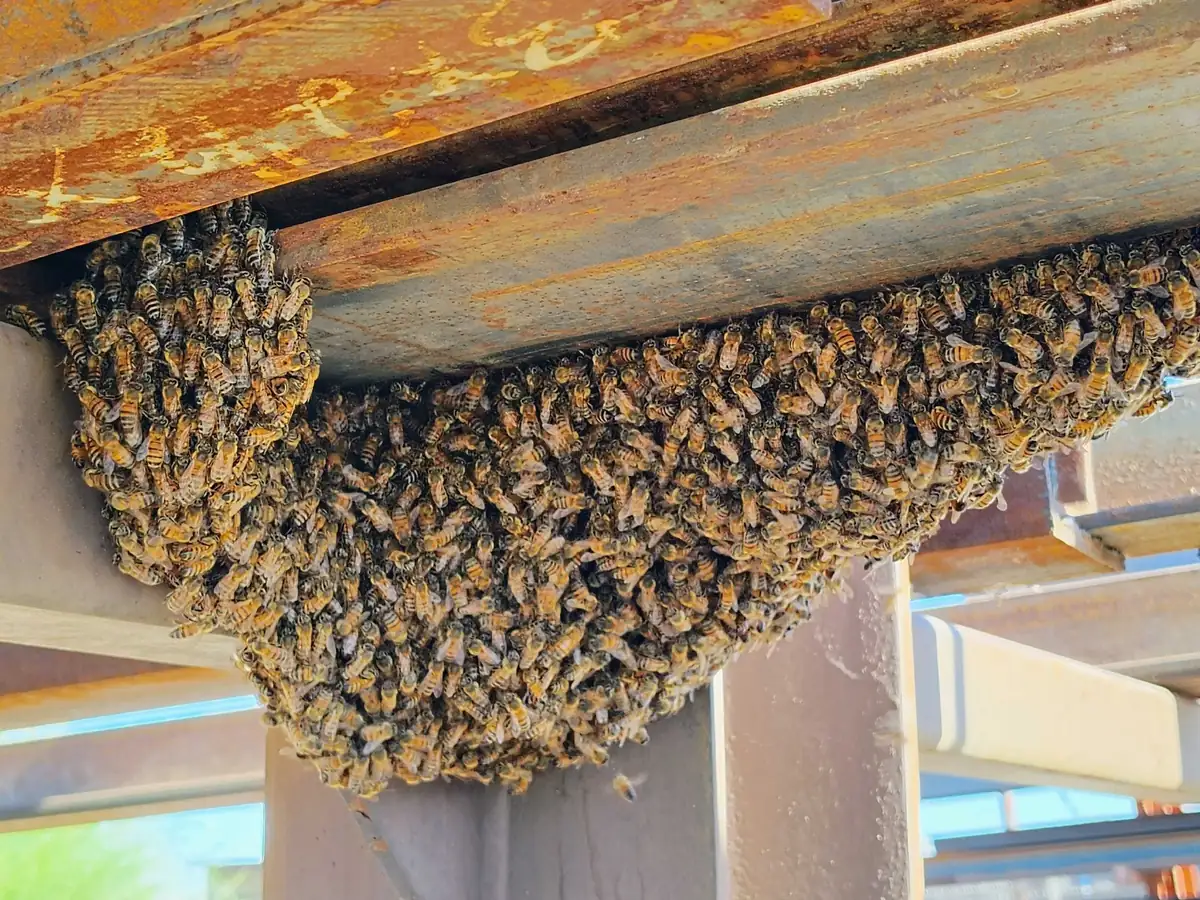
How to check a wall properly in winter
- Pick a warm afternoon, not a cold morning. Above about seventy degrees and after midday.
- Watch for a full ten minutes. Winter traffic is intermittent rather than steady, so a thirty second look proves nothing.
- Put a flat hand on the wall from inside. An established colony makes a noticeable warm patch, and this works even when nothing is flying.
- Listen with an ear against the surface in a quiet house. A cluster is audible.
- Look for staining at and below the entry height, inside and out.
- Look at the entrance itself, from a few steps back. A used entrance is polished and often darkened. An abandoned one collects dust and cobweb.
The last one is the most useful single test. A genuinely empty cavity looks neglected at the entry point within a few weeks.
What winter changes about a removal
It changes the working conditions rather than the job.
- The colony is calmer and less spread out, which is an advantage.
- Stores are at their heaviest, which means more honey to contain and more weight against the cavity wall.
- Cold mornings are unworkable, so timing is narrower.
- A live removal and relocation is harder in winter than in spring, because a relocated colony has less time to establish before the cold and less forage to do it on.
Winter is a perfectly reasonable time to do the work. It is not a reason to wait, and it is not a reason to rush.
What not to do
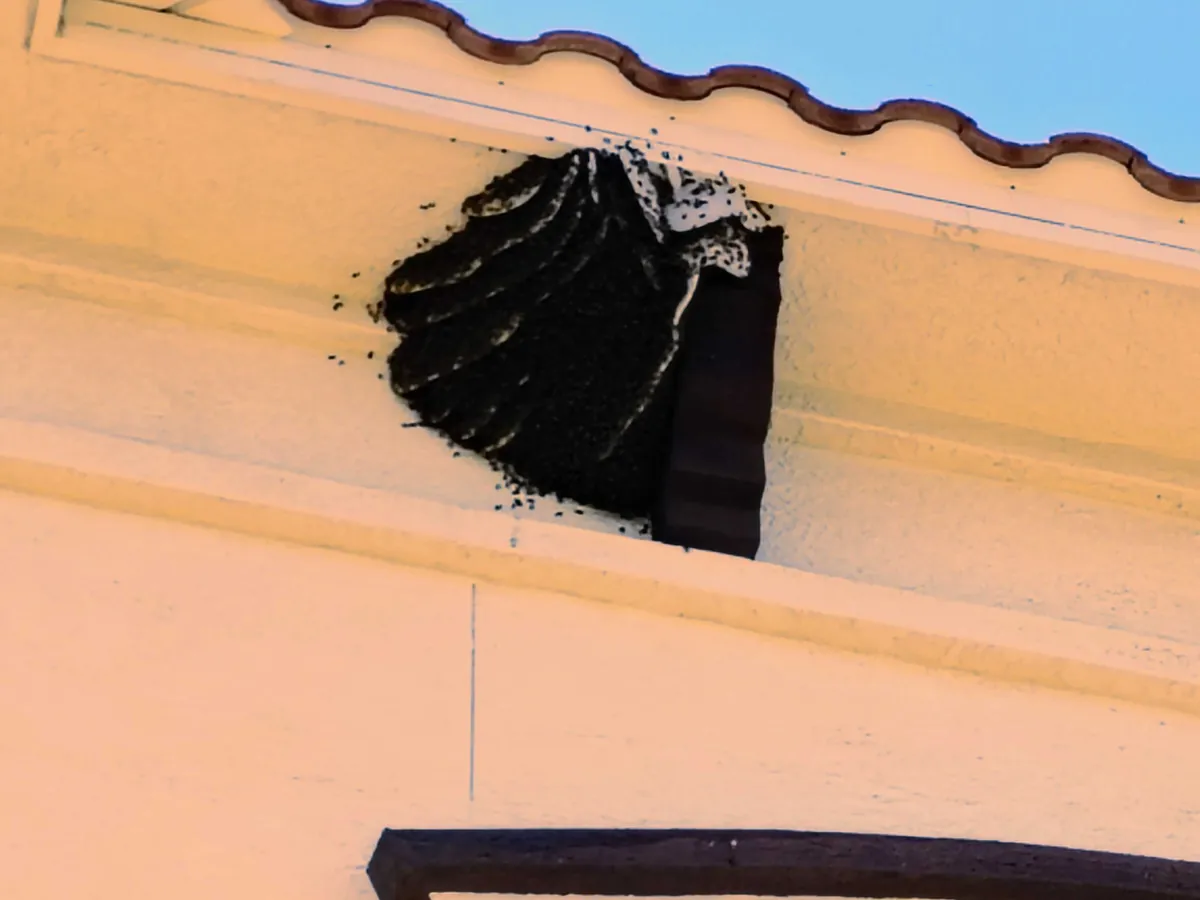
Do not seal the entrance because it has gone quiet. This is the winter version of the most damaging mistake in this whole subject. A clustered colony that loses its entrance does not leave. It works further into the structure and frequently into the living space, and the comb and stores remain in the cavity to collapse and ferment.
And do not treat a colony and leave the nest in place. Without bees maintaining it the comb fails faster, honey runs, and the wax odour that stays behind is exactly what draws the next swarm to the same cavity in spring.
What about the ones that genuinely have gone?
It happens. Colonies abscond, and a small late season swarm that never built up may not survive.
If the checks above all come back negative over two separate warm afternoons, the cavity may well be empty. That is not the end of it though, because whatever is left inside is the thing that matters. Old comb, residual honey and the wax scent are all still there, and an empty cavity that is simply sealed is a cavity that gets reoccupied.
Empty means open it, clean it out, then close it. Not close it.
The short answer
Bees do not leave an Arizona wall for the winter. They cluster, live on autumn stores and fly on warm afternoons, which makes a quiet entrance in December look like an empty one. Check on a warm afternoon, use your hand on the wall, and look at whether the entrance is polished or dusty. If it is occupied, winter is a fine time to deal with it. If it is genuinely empty, the comb still has to come out before anything gets sealed.
Frequently Asked Questions
Do bees leave a wall for the winter in Arizona?
No. Winters here are mild enough that a colony clusters, slows down and lives on the stores it put away in autumn rather than dying back or migrating. It flies on warm afternoons. Survival is the normal outcome rather than the exception.
The entrance has gone quiet. Does that mean they have gone?
Not on its own. Winter traffic is intermittent rather than steady, so a thirty second look on a cold morning proves nothing. Watch on a warm afternoon for a full ten minutes, put a flat hand on the wall to feel for a warm patch, and look at whether the entrance is polished and dark or dusty and cobwebbed.
Is winter a bad time to have a colony removed?
It changes the working conditions rather than the job. The colony is calmer and less spread out, which helps, but stores are at their heaviest and cold mornings are unworkable so the timing is narrower. Live removal and relocation is harder in winter because a relocated colony has less time and less forage to establish on.
What happens if the colony is treated and the comb left in?
Without bees maintaining it the comb fails faster, honey runs and ferments inside the cavity, and the wax odour left behind is what draws the next swarm to the same spot in spring. The nest has to come out whatever else is done.
What if the cavity really is empty?
Then the comb, residual honey and wax scent are all still in there, and simply sealing it produces a cavity that gets reoccupied. Empty means open it, clean it out, then close it.