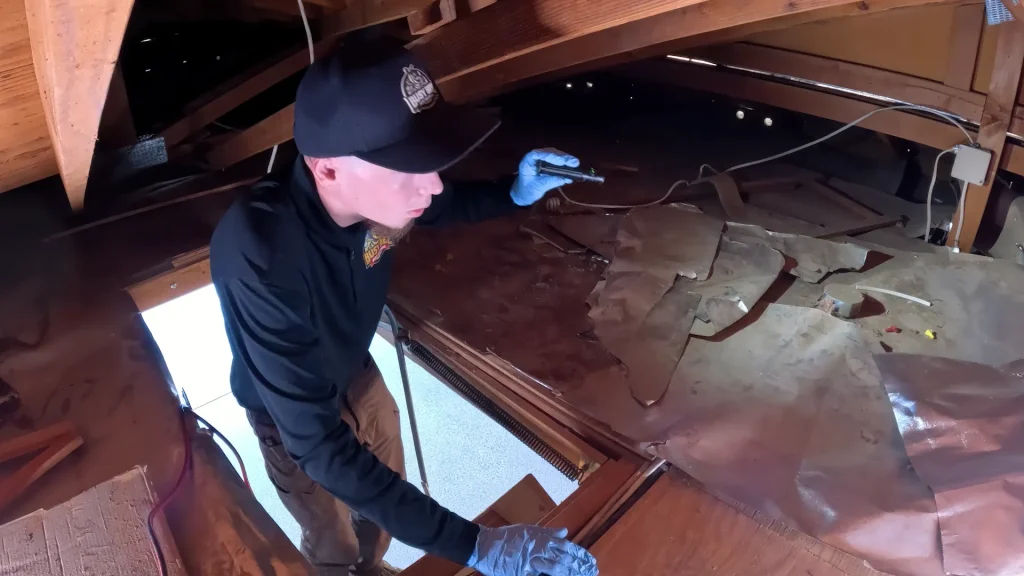
Yes. Roof rats nest under solar panels regularly in Phoenix, and the panels themselves are rarely the problem. The gap between the panel and the roof deck creates shade, shelter from predators, and a protected run straight along the roofline. Once rats are established under an array, the next step is usually the attic. If you suspect rats under your panels, see roof rat removal in Phoenix and our rodent control in Phoenix services.
Why solar arrays attract roof rats in the Valley
A rooftop solar array sits roughly four to six inches above the roof surface. In a Sonoran Desert summer that void is meaningfully cooler than the exposed tile beside it, and it is completely hidden from hawks, owls and coyotes. A roof rat already prefers to travel and nest above ground, so this is close to ideal habitat.
Three things make Phoenix arrays especially attractive:
- Shade and thermal buffering. Panel surfaces exceed 150°F, but the shaded deck beneath stays far cooler than surrounding tile.
- Continuous protected runways. Rats travel the length of an array without ever being exposed.
- Warm conduit and wiring. Junction boxes and DC conduit give off slight warmth on winter nights and provide something structural to nest against.
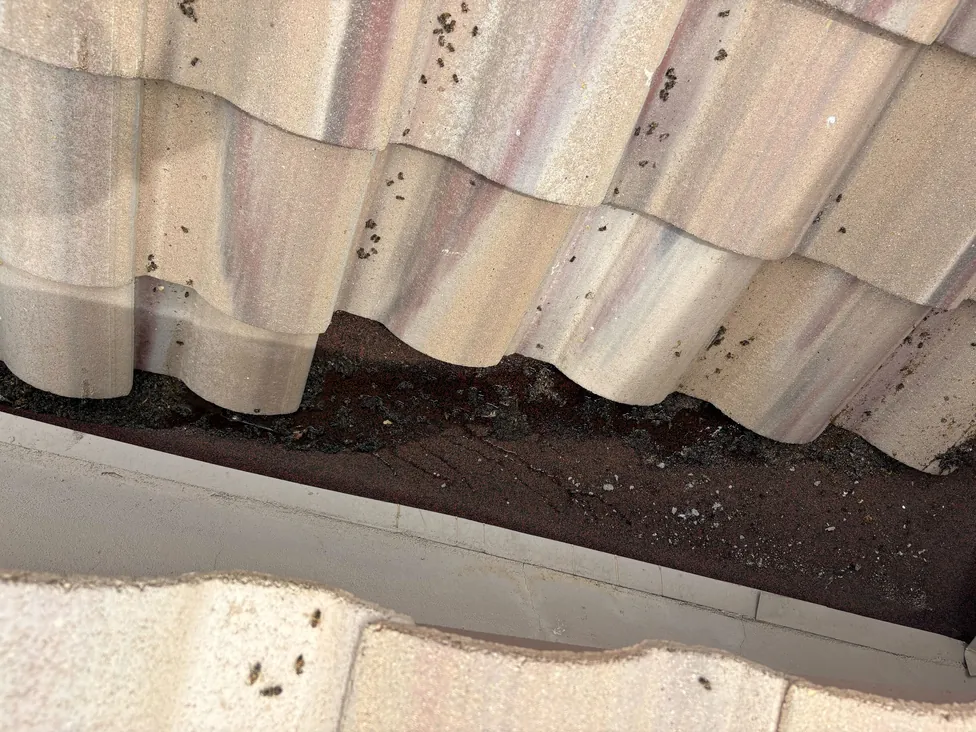
How to tell whether rats are actually up there
You will almost never see them, because roof rats are nocturnal and the array conceals everything. Look for the evidence instead:
- Droppings on the roof tile at the array edge, or on the ground directly below the eave. Roof rat droppings are about half an inch long with pointed ends.
- Chewed insulation on wiring visible where conduit enters the roof, or an unexplained drop in system output reported by your monitoring app.
- Greasy dark rub marks along the roof edge and on the mounting rails, left by fur oils on repeated runs.
- Noise after dark in the attic near an exterior wall, typically starting 30–60 minutes after sunset.
- Nesting debris collecting in the gutter below the array, usually shredded palm fiber, insulation or paper.
The real risk is not the panels
Panel damage is expensive but it is not the reason we treat urgently. The risk is that a solar array is a staging area, not a destination. Rats living under an array are already on your roofline, inches from the vent stacks, tile edges and soffit returns that lead into the attic. In our experience the interval between established rooftop activity and attic activity is short.
Chewed DC wiring also carries a genuine fire and arc-fault risk, and rodent damage is one of the most common exclusions in solar manufacturer warranties. Check your warranty language before assuming a chewed conductor is covered.
Why we do not just seal the array
Critter guard, a rodent mesh clipped around the array perimeter, is the standard product. It works, but only in the correct order. Installing mesh around an array with rats already underneath traps them there. They then chew downward through the roof deck or die in place under the panels, which is a far worse outcome than the original problem.
The correct sequence is inspect, confirm the species, clear the population, then install the guard and close the roofline entry points. That is the same logic behind all our rodent exclusion work. Sealing before clearing creates a problem you cannot reach.
What we do about it
A rooftop rat job is a coordinated roof and attic job. We trap on the roofline and inside the attic simultaneously, because treating only one side pushes activity to the other. Once trapping is clear, we close tile edges and bird-stops, screen vents with heavy-gauge hardware cloth, sleeve any conduit penetration, and fit rodent guard around the array perimeter.
We do not remove or reinstall panels. That is your solar installer’s work, and we will tell you plainly if the array has to come off for us to reach a nest.
Frequently Asked Questions
Does solar panel rodent guard actually work?
Yes, when it is installed after the rats have been cleared. Rodent guard is a physical barrier clipped around the array perimeter and it reliably prevents new entry. Installed over an active infestation it traps animals under the panels, so sequence matters more than the product.
Will rats under my solar panels get into my attic?
Often, yes. Rats under an array are already on the roofline within inches of vent stacks, tile edges and soffit returns. We treat rooftop activity as an early warning rather than a contained problem.
Does homeowners insurance or my solar warranty cover chewed wiring?
Rodent damage is a common exclusion in both. Most solar manufacturer warranties specifically exclude animal damage, and many homeowners policies treat rodent damage as a maintenance issue rather than a covered peril. Read your specific policy and warranty language rather than assuming.
How much does rodent control cost in Phoenix?
Busy Bee charges $245 for the initial rodent service, which includes inspection, entry-point mapping, trap placement and the first removal, and $95 for each follow-up visit. A $29 first visit is available only with enrollment in a year-round pest control plan. Rodent guard installation and exclusion are quoted separately after inspection.
Can I put traps under the panels myself?
We would advise against it. Working on a tile roof is hazardous, tile cracks easily under foot in the wrong place, and traps set among live DC wiring create their own risks. It is also easy to trap the animals into the array rather than out of it.