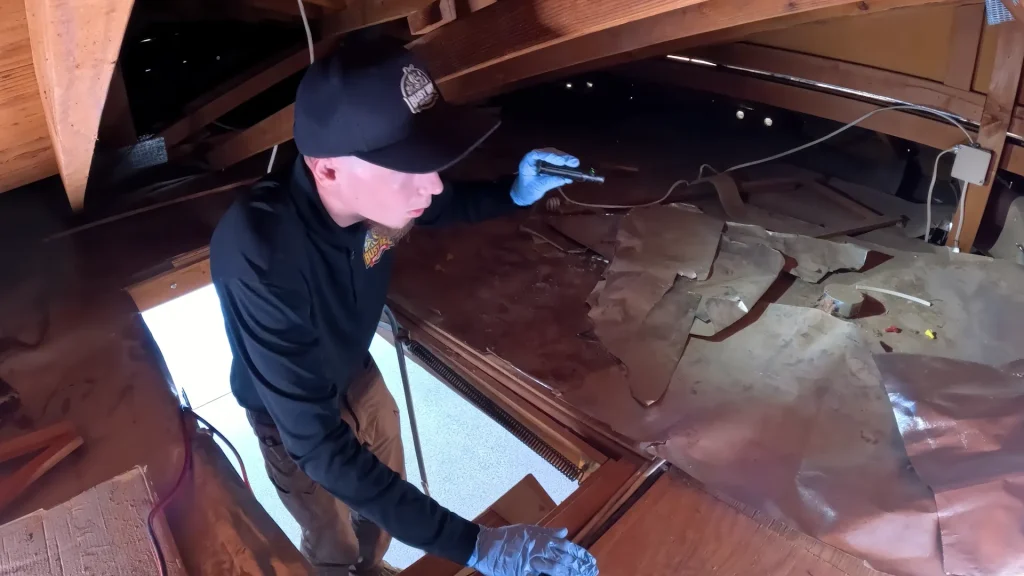
Two houses on the same street, built the same year by the same builder, with the same tile roof and the same block wall between them. One has roof rats in the attic every autumn and the other has never had a single call. That is not luck and it is not the pest control either of them is paying for. Rodents are making a series of very ordinary decisions about food, water, cover and route, and the house that loses is usually the one that scores better on three or four of those at once. Almost all of it is in the yard rather than the building.
They are choosing a territory, not a house
A roof rat does not select a property the way a person picks a hotel. It establishes a territory and works it, and the buildings inside that territory are opportunities within it.
That is why the neighbour matters as much as you do. An untrimmed palm two doors down, a citrus tree nobody picks, a woodpile against a shared wall. All of it feeds a population that will then test every structure in range, including yours.
It also explains the pattern we see most: a street where three houses in a row have activity and the rest have none.
The four things being scored
Food
Backyard citrus is the big one in the Valley, and it runs from late autumn well into winter. After that: bird feeders, pet food left out, chicken feed, dropped dates from an ornamental palm, an open compost heap, and bins that do not close.
Water
In a desert this outranks food more often than people expect. A dripping hose bib, an irrigation head that weeps between cycles, a pool with easy edge access, a leaking evaporative cooler, a pet bowl left out overnight. A reliable water source will hold a population through a season with mediocre food.
Cover
Somewhere to be that nothing can see into. Untrimmed palm skirts are the classic, and dense oleander against a wall is a close second. Then stacked material: pavers, spare roof tiles, timber, pots, anything against the house that has not moved in a year.
Route
The bridge from the territory onto the building. A branch touching the roof or the wall, a canopy within jumping distance of the eave, a block wall running to the house, a downpipe, a trellis, a cable run.
Why identical houses score differently
| Feature | The house with no problem | The house with the problem |
|---|---|---|
| Trees | Cut back clear of the roof and walls | Canopy touching the eave or the block wall |
| Palms | Skirt removed, trunk clean | Dead frond skirt left on |
| Citrus | Picked as it ripens, windfall cleared | Fruit left on the tree and on the ground |
| Irrigation | No leaks, timer checked | A weeping valve nobody has found |
| Storage | Off the ground, away from the wall | Stacked against the house |
| Roofline | Eave channels closed, vents screened | Open channel under the first course of tile |
| Garage | Seal intact, feed in metal bins | Daylight under the door, feed in a paper sack |
None of those are expensive. Most are an afternoon. The gap between the two columns is the whole difference between the two houses.
The things you cannot control
Being honest about this matters, because homeowners who have done everything right and still have activity are usually being told they must have missed something.
- A neighbour’s yard. You can trim to your boundary and no further.
- A wash, a greenbelt or a golf course behind the property. A permanent reservoir of population and cover.
- Construction nearby. Demolition and groundwork displace an established population into surrounding streets, often for months.
- A vacant house on the street. No lights, no traffic, no maintenance and frequently a running irrigation system.
- Common area landscaping. HOA planting is rarely maintained with rodents in mind.
Where you cannot change the territory, the answer shifts entirely to the building. If the pressure outside is fixed, exclusion is the only lever that still moves.
What to do about it, in order
- Walk your own yard first and score it honestly against the four headings above.
- Cut every route. Nothing touching the roof, the walls or the fence line. This single job does more than anything else on the list.
- Fix the water. Walk the irrigation while it runs and look for the head that never quite shuts off.
- Move the stored material off the wall and off the ground.
- Close the roofline. Eave channels, gable vents, the gap under a solar array.
- Then look outward. If the pressure is coming from a wash or a neighbour, say so out loud and plan for maintenance rather than a one off fix.
What not to do
Do not start with bait in the yard. Baiting an open landscape while the food, water, cover and routes are all still there treats the symptom and nothing else, and loose bait outdoors puts the owls, hawks and coyotes doing free rodent control at risk through secondary poisoning. If bait is used it belongs in a tamper resistant station, placed deliberately, after the yard work.
And do not assume a quiet year means it is solved. Rodent pressure in the Valley moves with construction, with vacancies and with how well the street is maintained. A house that scores badly on route and cover will find out again.
The short answer
Rodents pick the house that offers the best combination of food, water, cover and a route onto the structure, and they judge it across the whole street rather than one lot. Most of what decides it is in the yard and costs an afternoon. Cut the routes, fix the leaks, clear the cover and close the roofline, and the identical house next door stops being a fair comparison.
Frequently Asked Questions
Why does my neighbour have no rodent problem when I do?
Usually because of the yard rather than the house. Rodents score food, water, cover and whether there is a route onto the roof. A branch touching an eave, a palm skirt left on, unpicked citrus or a weeping irrigation valve will move one property up the list while an identical house next door stays off it.
What is the single most useful thing I can do?
Cut every route. Nothing touching the roof, the walls or the fence line, and no canopy within jumping distance of the eave. That one job does more than anything else on the list, and it costs an afternoon.
Can rodent pressure come from outside my property?
Yes, and often it does. A wash, a greenbelt, a golf course, a vacant house on the street, nearby construction or unmaintained common area landscaping will all keep a population supplied regardless of what you do. Where the territory cannot be changed, exclusion on the building is the only lever left.
Does water matter more than food?
In a desert it frequently does. A dripping hose bib, a weeping valve or a pool with easy edge access will hold a population through a season with mediocre food. Walk the irrigation while it is running and look for the head that never quite shuts off.
Is it worth putting bait out in the yard?
Not as a first move. Baiting an open landscape while the food, water, cover and routes remain does nothing about the reason they are there, and loose bait outdoors risks secondary poisoning of the owls, hawks and coyotes already doing free rodent control. If bait is used it belongs in a tamper resistant station after the yard work.