

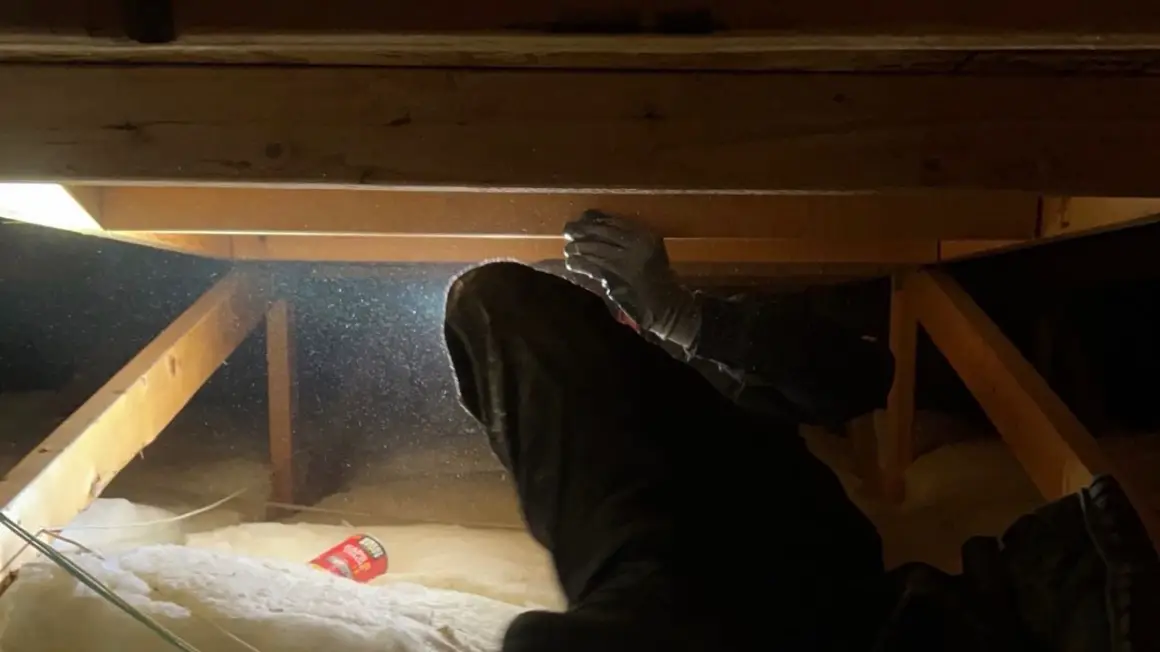
How to Get Rid of Roof Rats in Phoenix (and Are They Dangerous?)
Roof rats reach Phoenix attics from citrus, palms and block walls. Here is how to get them out, keep them out and put the attic right afterwards.
Would rather have it handled? See roof rat removal in Phoenix.
To get rid of roof rats in a Phoenix home, trap the rats that are already in the attic, then seal the roofline gaps they use and cut back the citrus, palms and vines that bridge to the roof. Skip poison indoors: a poisoned rat often dies inside a wall or on the attic insulation, where the smell lasts for weeks.
Quick facts: roof rats in Phoenix
- Most common rat in Phoenix homes. Roof rats climb block walls, citrus and palms onto tile roofs and get in through tile edges, soffit returns, roof vents and AC line-set penetrations, so the noise is overhead after dark.
- How to recognize one: 5 to 10 ounces, slender, with a tail longer than its head and body. Droppings are about half an inch long with pointed ends.
- Smallest opening: a gap of about half an inch.
- Breeding: three to five litters a year, up to eight young per litter.
- The order that works: trap first, seal second, then clean the attic. Sealing before the rats are out shuts them inside.
- TAP insulation does not control rats. It is a borate-treated cellulose that also treats the attic for insects, and it goes in last, once the rats are out and the roofline is sealed.
How to Get Rid of Roof Rats: 5 Steps
1. Confirm it is roof rats
Listen for running or scratching overhead between dusk and dawn. In the attic, look for droppings about half an inch long with pointed ends, dark grease rub marks on rafters and pipes, gnawed wood or wiring and shredded insulation. Outside, look for citrus hollowed out on the tree with the rind still hanging. If you notice two or more of these, it is time to act. Our guide to roof rat signs and droppings covers all nine clues.
2. Find the entry points
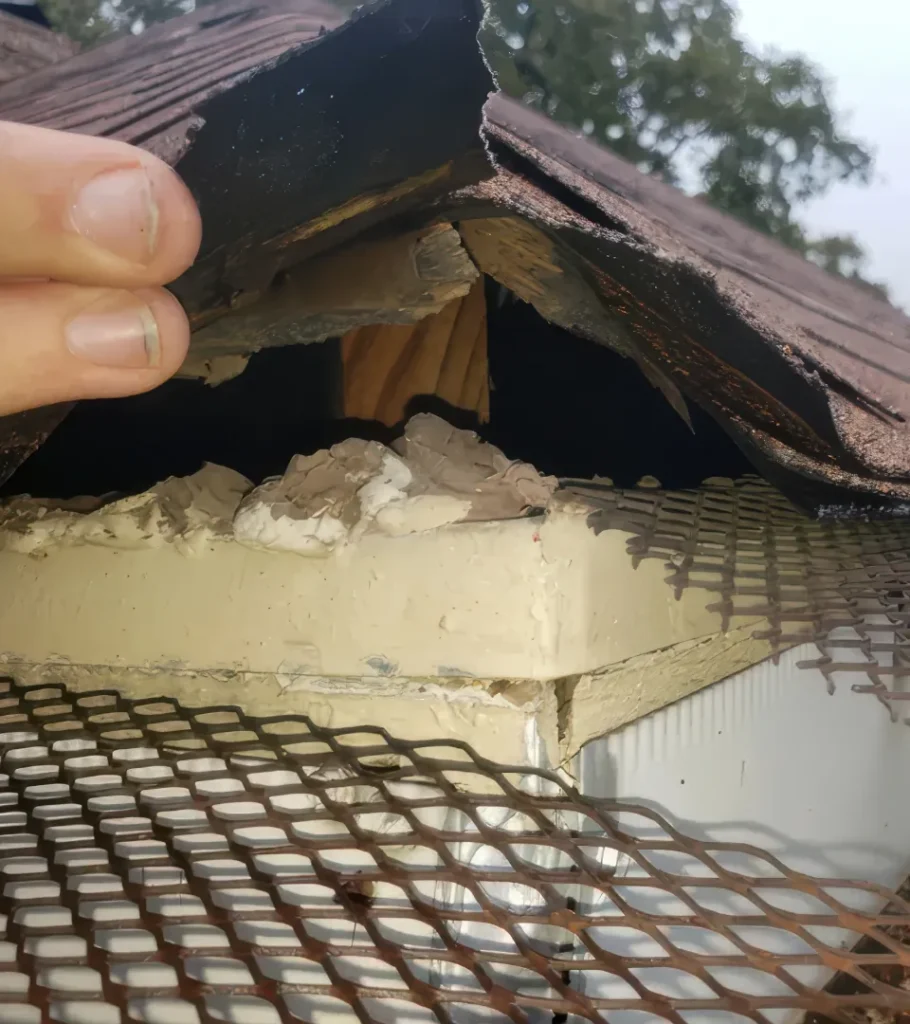
Roof rats get in at the roofline. On Phoenix tile roofs the usual gaps are missing bird-stops under the first course of tile at the eave, soffit returns where two roof planes meet, roof and gable vents with torn or light-gauge screens, and the chase where the AC line set enters the wall. In the attic, the grease rub marks on joists and pipe runs lead back toward the opening. A roof rat needs a gap of only about half an inch.
3. Trap inside, and skip the poison
Set snap traps on the runways the rats already use: along the rub marks, on the joists and near the entry points, not scattered across the insulation. Roof rats avoid new objects for several days, which is why placement on their own routes matters. Keep poison bait out of the attic and walls. A poisoned rat keeps moving for days and dies wherever it stops, often inside a wall void or on top of the insulation, and a dead rat in a wall smells for about three to six weeks.
4. Break the citrus and palm bridge
Rats do not need to climb the house if the landscaping hands them a bridge. Cut citrus and other branches back at least four feet from the roof (six feet is better), skirt fan palms by removing the dead frond thatch where roof rats nest, pick ripe citrus promptly and clear fallen fruit, and keep vines and tall hedges off block walls and fascia. Our article on roof rats in citrus trees and palms covers this step in detail.
5. Seal the roofline once the attic is quiet
Seal only after trapping has cleared the attic, never with rats still inside. Reset the open bird-stops, screen soffit and gable vents with heavy-gauge hardware cloth, flash the tile-to-fascia transitions and seal the line-set penetration with sealants rated for Arizona heat and UV. Use chew-resistant materials rather than foam-only patches. This is the step that keeps the next rats out; see how rodent exclusion in Phoenix is done.


What Roof Rats Do to a Phoenix Attic, and How to Put It Right
Roof rats nest in attic insulation and run the same paths every night. They soil the insulation with droppings and urine, flatten it along their runways so it holds odor and loses much of its insulating value, shred it for nest material, and gnaw wood, wiring and ducts. The droppings and urine also leave scent trails that draw new rodents back to the same attic.
Clean the attic once the rats are out and the roofline is sealed. Dried droppings should never be swept or vacuumed with a household vacuum, because that puts the particles in the air. Our attic cleanup removes droppings, nests and contaminated dust with HEPA equipment, cuts out the soiled sections of insulation, fogs the attic with a hospital-grade disinfectant and documents it with before-and-after photos.
Then bring the insulation back to depth. When insulation has to come out, TAP insulation is what goes back down: a borate-treated cellulose that also treats the attic for insects. It does not control rats or mice; the trapping and sealing in steps 3 and 5 are what keep them out. Attic cleanup and new insulation are what our Restore package adds to trapping and sealing, and both can also be quoted on their own after the inspection.
What Is a Roof Rat?
The roof rat (Rattus rattus) is a slender, agile climbing rat and the most common rat in Phoenix homes. It weighs 5 to 10 ounces and has a pointed muzzle, large eyes and ears, a blackish to brownish-grey coat with a paler belly, and a tail longer than its head and body: pulled forward, the tail reaches at least the snout. It nests above ground, in attics, wall voids, ceiling voids, palms and trees, and is active mostly at night. Roof rats spread through the Valley along the irrigated older neighborhoods, where mature citrus and palms give them food, water and a canopy at roof height.
How it compares with the other rodents in Phoenix homes:
- Norway rat: heavier and bulkier, with a blunt muzzle, small ears and a tail shorter than its body. It burrows at ground level along foundations, block walls and planters, and its droppings are larger with blunt ends. See Norway rat removal in Phoenix.
- Pack rat (white-throated woodrat): a ground-dwelling desert rat that builds middens of sticks and cactus under sheds, boulders, AC units and parked cars, and the usual culprit when car wiring is chewed. See pack rat removal in Phoenix.
- House mouse: much smaller, 5 to 7 inches including the tail, with rice-sized droppings in pantries, under sinks and in garages. It gets through a gap about a quarter inch wide. See mouse control in Phoenix.
For photos of each species, see the Arizona rodent identification guide.

Are Roof Rats Dangerous?
Yes, to your health and to the house. The CDC lists diseases that rodents, rats included, can spread to people through bites and through contact with their droppings, urine and saliva, including leptospirosis, rat-bite fever and salmonellosis. Rodents can also carry fleas, ticks and mites that spread other diseases. In the attic, roof rats soil the insulation and gnaw wiring, which is a fire hazard. Clean up droppings with HEPA equipment, never by dry sweeping.
What DIY Usually Misses
Trimming trees, picking up fruit and setting a few snap traps are all worth doing yourself. Where do-it-yourself roof rat control usually falls short:
- Tile eaves and roof returns. The gaps under the first course of tile and at the soffit returns are up on the roof and hard to see from the ground.
- Sealing too early. Closing holes before the attic is quiet traps rats inside the attic and walls, where they cause odors and more damage.
- Poison. It does not close a single gap, and the rats it kills often die where they cannot be reached.
- Ultrasonic devices and scent repellents. They do not fix how the rats get in.
- One missed opening. Roof rats tend to follow the same route back, so a single gap left open keeps the problem going.
When to Call a Professional, and What It Costs
Call when the noise overhead keeps coming back, when droppings turn up in the attic or garage, when rats return after trapping, or when the entry points are on a roof you cannot safely reach. If another company has already treated and the activity is back, a free second-opinion rodent inspection shows what was missed.
Every rodent job in our Phoenix rodent control service starts with a free 61-point inspection of the attic, roofline, garage and exterior, with a written quote before any work. On the Control package, rodent control is $245 for the initial service and $95 per follow-up visit. Full exclusion (the Solve package) and attic cleanup with new insulation (the Restore package) are quoted after the inspection. See what rodent control costs in Phoenix, or go straight to roof rat removal in Phoenix.
Roof Rat Questions
Q: Can rats climb walls or trees?
A: Yes. Roof rats are agile climbers: they go up block walls, utility lines, citrus trees and palms to reach tile roofs, and they travel along fence tops and overhead lines between yards. They can also jump roughly four feet sideways from a standstill, and further when dropping down, so a branch or palm crown within about four feet of the eave works as a bridge. A smooth metal band about 18 inches wide, fitted around the trunk about four feet up, stops them climbing a tree that is not bridged from somewhere else.
Q: Do roof rats come in the house?
A: Yes. Roof rats nest above ground, and inside a Phoenix home that means the attic, wall voids, ceiling voids and sometimes cabinets. They get in through roofline gaps as small as about half an inch, and droppings in the garage or near the water heater are a common sign that they are inside. See roof rat signs and droppings.
Q: Should I use poison to get rid of roof rats in the attic?
A: No. A poisoned rat keeps moving for days and dies wherever it stops, often inside a wall void, above a ceiling or on the attic insulation, and a dead rat in a wall smells for about three to six weeks in Phoenix. Snap traps on the attic runways keep every rat retrievable, and bait belongs outside only, in locked, tamper-resistant stations.
Q: How long does it take to get rid of roof rats?
A: With trapping, follow-up visits and the roofline sealed, activity usually drops within days and most attics are quiet within one to two weeks. Sealing is usually finished in one visit, although complex tile roofs may need two. Rats that keep coming back usually mean an entry point is still open.
Q: Does TAP insulation get rid of roof rats?
A: No. TAP is a borate-treated cellulose that also treats the attic for insects; rats and mice are not on its label, and the borate has no effect on them. Roof rats are removed by trapping and kept out by sealing the entry points. TAP comes last, after the rats are out, the roofline is sealed and the soiled insulation has been cleaned out, to bring the attic back to depth. See TAP insulation in Phoenix.
Q: Do I need attic cleanup after roof rats?
A: Yes, if droppings, nests or soiled insulation are left in the attic. Rodent droppings can carry hantavirus, salmonella and leptospira, so they are removed with HEPA equipment instead of being swept, and the attic is disinfected. Attic cleanup is quoted after the free inspection, on its own or as part of the Restore package. See attic cleanup in Phoenix.
Q: Will roof rats come back after they are gone?
A: They can if the entry points stay open. Trapping removes the rats inside the house but does nothing about the gap they used, and roof rats tend to follow the same route back. Sealing every entry point after trapping, and keeping branches and palm crowns cut back from the roof, is what keeps the next ones out. See rodent exclusion in Phoenix.
More answers about roof rats, mice, cost and attic cleanup are in our Phoenix rodent control FAQ.
Get a free rodent inspection
Tell us what you are hearing and where you are hearing it. A technician calls you back the same day, and the inspection is free.