Quick Answer
If you’re hearing scratching overhead at night, finding spindle-shaped droppings, or noticing gnaw marks near rooflines, you may have roof rats (common in Phoenix). Avoid poison, don’t seal them inside, and schedule a professional, humane removal and exclusion to stop the problem at the source.
Need help fast? Book humane rodent control or our local service for rodent control in Phoenix.
9 Signs You Have Roof Rats in Your Attic
- Night scratching above ceilings (most activity from dusk to dawn).
- Spindle-shaped droppings (~½ in), pointed at both ends, often on insulation or along attic runways.
- Grease rub marks (dark smudges) along rafters, pipes, or siding where they travel.
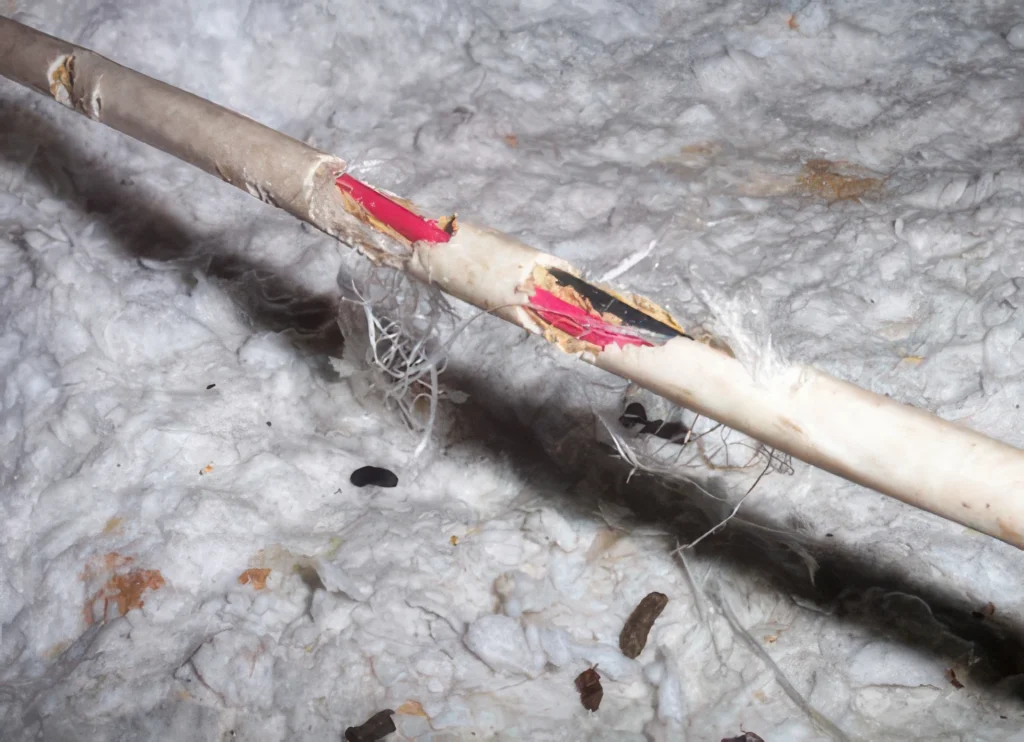
- Fresh gnawing on wood, wiring, PVC, or eave vents; tooth marks look clean and light-colored when recent.
- Nest material (shredded insulation, leaves, paper) tucked into corners or under batts.
- Pet agitation. Dogs or cats fixating on ceilings or specific walls at night.
- Fruit damage outdoors (citrus/ornamentals): hollowed fruit or missing peels near fences/trees.
- Overhead “highway” routes. Fence tops, utility lines, or tree limbs touching the roof.
- Ammonia-like odor from urine in concentrated travel paths.
If you confirm multiple signs, skip DIY poisons and focus on a targeted plan: inspection → trapping → exclusion → cleanup.

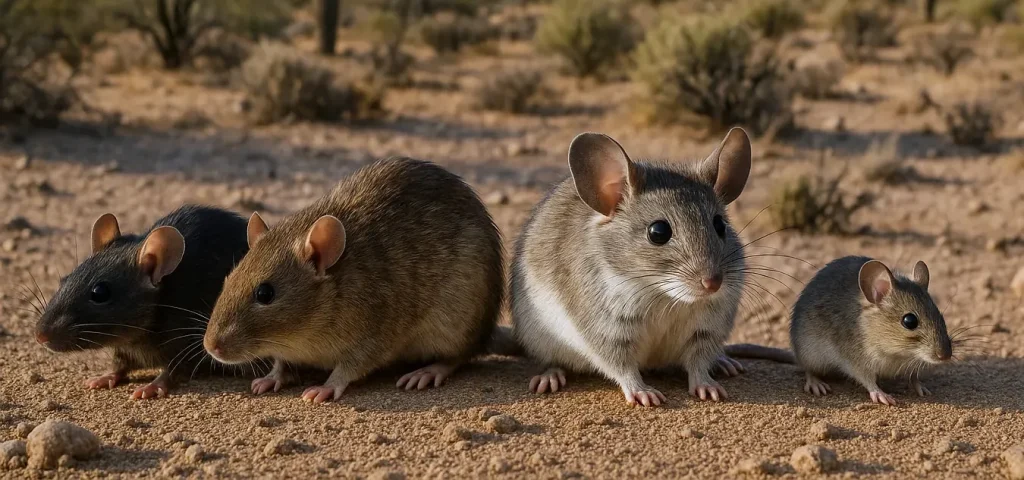
Roof Rat vs. Mouse vs. Norway Rat (Quick ID)
| Feature | Roof Rat (Rattus rattus) | House Mouse | Norway Rat |
|---|---|---|---|
| Size | 12–16 in incl. tail; slender | 5–7 in incl. tail; small | 14–18 in incl. tail; bulky |
| Tail | Longer than body, scaly | Long, thin | Shorter than body, thick |
| Ears/Muzzle | Large ears, pointed muzzle | Large ears, small head | Small ears, blunt muzzle |
| Habits | Arboreal; attics, eaves, trees | Inside walls, kitchens | Ground burrows, crawlspaces |
| Droppings | Pointed both ends, ~½ in | Rice-grain size | Blunt ends, larger pellets |
If you’re seeing activity overhead near eaves or fruit trees, roof rats are most likely. For species-specific help, see roof rat removal in Phoenix. If the animal looks heavier with blunt features, consider Norway rat removal. Desert pack rat issues? See pack rat removal.

What To Do in the First 24 Hours (Do This, Not That)
Do:
- Protect food (sealed containers), remove easy water sources, and tidy pet areas.
- Document evidence with photos (droppings, gnawing, rub marks).
- Schedule an inspection to map entry points and travel routes.
- Start here: Rodent Control – Phoenix
Don’t:
- Don’t seal entry holes yet. You can trap rats inside walls/attic and create odors or property damage.
- Don’t rely on poison. It creates secondary risks, delayed die-off, and doesn’t fix how they get in.
- Don’t chase ultrasonic gimmicks. They don’t solve structural access.
For the full order of work (trap first, seal second, then clean the attic), see our guide on how to get rid of roof rats.
The Busy Bee Process (Humane, Guaranteed)
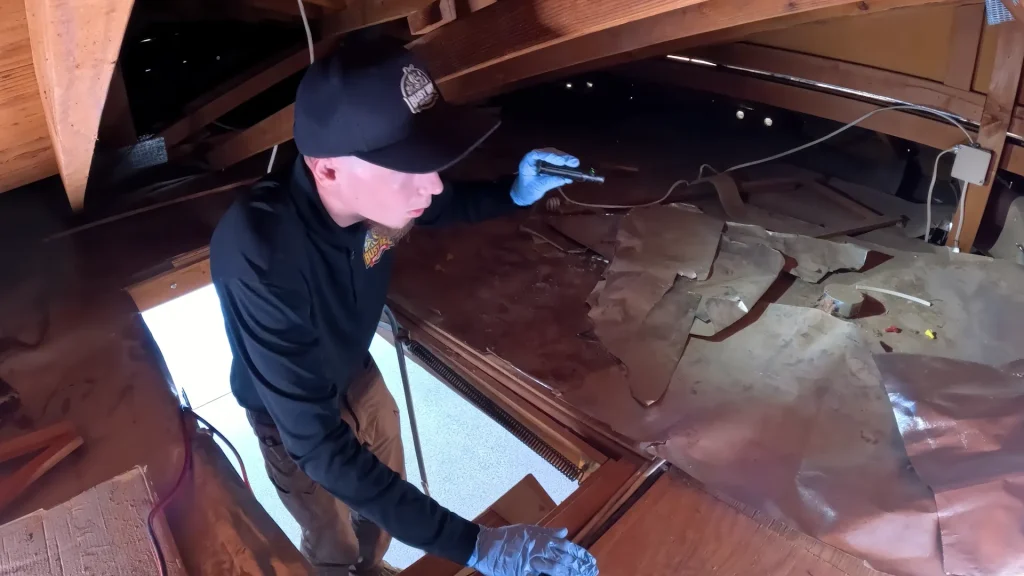
- Inspection & Species ID – We identify runways, food sources, and every ¼-inch gap they use.
- Trapping-first removal – Targeted, humane removal focused on quick results.
- Full exclusion – Seal all entry points (soffits, eaves, roof returns, utility penetrations). Learn more: Rodent Exclusion – Phoenix.
- Attic cleanup & sanitization – Remove soiled insulation, sanitize, and deodorize to erase scent trails and health risks. Details: Attic Cleanup – Phoenix. Where the insulation has to be replaced, TAP insulation, a borate-treated cellulose that also treats the attic for insects, is what goes back down.
- Follow-up & prevention – Trim tree limbs 6–8 ft from roofline, secure pet food, and maintain exterior.
One-and-done only works when exclusion is complete. Otherwise, new rats replace the old ones.

How Much Does It Cost?
Pricing depends on severity, access, and exclusion scope. Minor attic activity with a few entry points costs less than extensive roofline sealing and full remediation. For a clear estimate, schedule an inspection via Rodent Control or Rat Control – Phoenix.
Frequently Asked Questions
How fast can a roof rat infestation grow?
Roof rats breed quickly; ignoring activity even for a few weeks can multiply the problem. Act early for faster, cheaper results.
Will roof rats come back after removal?
They return only if entry points remain. Complete exclusion prevents re-entry and is the difference between a fix and a temporary pause.
Are roof rats dangerous?
They can contaminate surfaces and chew wiring/ducts. Skip poison and go straight to a professional plan that includes cleanup: Attic Cleanup – Phoenix.
Can I handle roof rats myself?
You can tidy, store food properly, and set a few traps, but sealing rooflines and hidden penetrations is technical. For lasting results, use a pro team for removal and exclusion.
What if it’s not a roof rat?
We handle all local species: Roof Rat Removal, Norway Rat Removal, and Pack Rat Removal.
Call to Action
If you’re hearing scratching at night or seeing droppings in the attic, the safest next step is a same-week inspection. We remove rats humanely, seal them out for good, and clean what they leave behind.
👉 Book your inspection:
- Rodent Control – Phoenix
- Or start here: Rodent Control (All Services)
What it costs to fix
Roof rats in the attic are the most common version of this job. Rodent control is $245 for the initial service and $95 per follow-up. The Phoenix rodent control price guide breaks down every line item, including what rodent damage costs to repair if you wait. If you are adding year-round pest control, the initial rodent visit drops to $29 under the $29 rodent special. Trapping ends the infestation you have now; rodent exclusion is what stops the next one.
More answers about roof rats, droppings and attic cleanup are in our Phoenix rodent control FAQ.