

After a Monsoon Storm: How Rodents Get In and What to Check
Wind, runoff and new growth each open a different way into a Phoenix home. Here is where rodents use storm damage, a walk-around checklist for the days after a storm, and when to call.
Something already inside? Trap first, then seal: see rodent exclusion in Phoenix.
After a monsoon storm, rodents usually get into a Phoenix home through damage the storm just caused: a roof tile knocked out of line, a vent screen torn by flying debris, a fascia board pried loose, or a garage door seal that no longer meets the slab. The same storm floods the burrows of Norway rats and washes out the stick nests of pack rats, so the animals most likely to find those openings are already looking for new shelter. Walk the house within a few days of a big storm, find the new gaps at the roofline and at ground level, and have them closed before the cool nights of fall send roof rats looking for an attic.
The National Weather Service office in Phoenix puts the official monsoon season at June 15 through September 30. This page covers the days after any single storm in that window. For how rodent activity changes across the whole year, see our Phoenix rodent season calendar.
The short version
- Gap size: a rat can use an opening of half an inch, and a house mouse one about a quarter inch wide.
- Where: damage at the roofline lets in roof rats; damage at ground level lets in Norway rats, pack rats and mice.
- When: check within a few days of the storm. A fresh opening does not stay unused for long.
- Order: if anything is already inside, it has to be trapped out before the gap is sealed.
How a Monsoon Storm Opens the Way In
Thunderstorm wind gusts in the Southwest almost always exceed 40 mph, and the strongest can top 100 mph, according to the National Weather Service in Phoenix. Wind like that works on the same parts of a Phoenix house that keep rodents out. These are the six places where storm damage most often turns into a rodent entry point.
Lifted or shifted roof tile
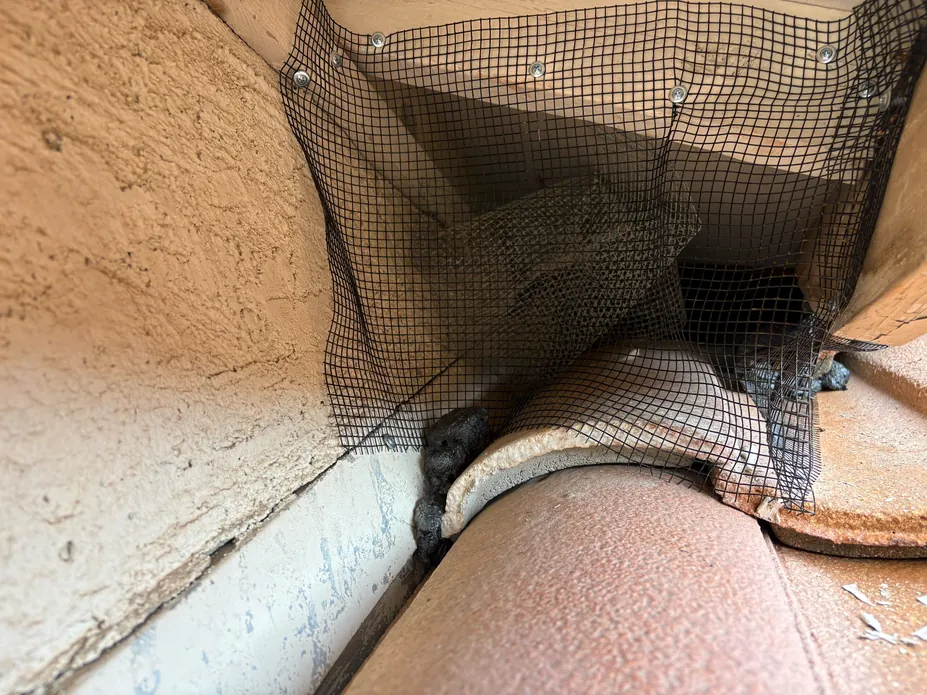
On a tile roof, the open channel under the first course at the eave is the most common way roof rats get into Phoenix attics. It is normally closed with a bird-stop, and on older roofs the original mortar bird-stops crack and drop out after 15 to 20 years. A gust that shifts a tile or knocks a weakened bird-stop loose reopens that channel straight into the roof, at the height roof rats already travel.
Torn or loosened vent screens
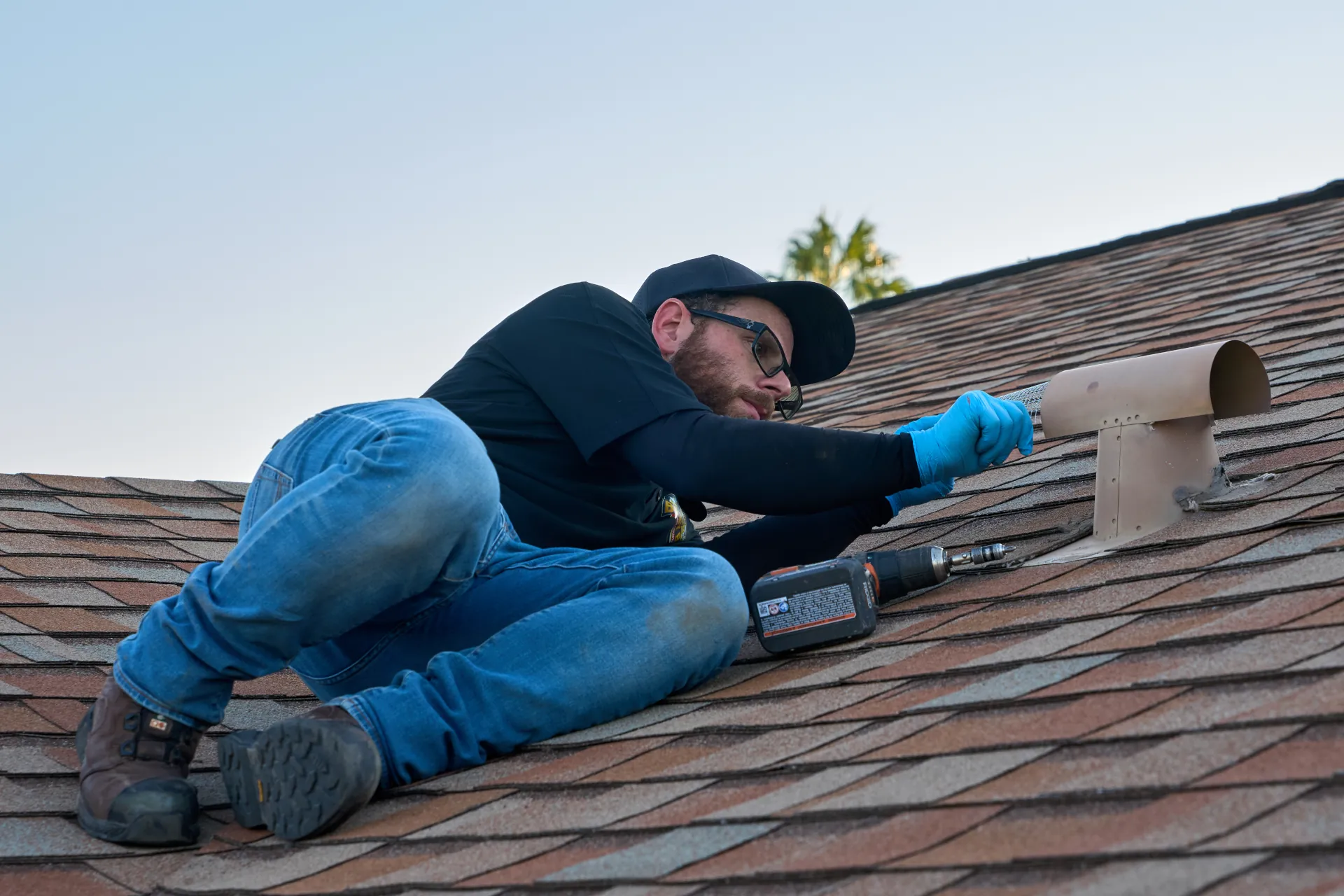
Roof, gable, soffit and dryer vents are often covered with nothing heavier than insect screen, which does not stop a rat even when it is intact. Once wind-blown debris tears it, or one corner pulls free of its fasteners, the vent is simply open. The lasting fix is heavy-gauge hardware cloth fastened over the vent, so the attic still breathes but nothing can chew through.
Loosened fascia and open soffit returns
Wind that gets under the roof edge can pry fascia boards away from the rafter tails and open the seam where the fascia meets the stucco. While you are looking up, check the soffit returns, the triangular voids left where two roof planes meet. From the ground they look solid; from a ladder they are often open into the attic.
Washed-out weep screed and slab cracks
The weep screed is the metal strip along the bottom of the stucco, just above the foundation. Heavy runoff can carry the soil and gravel away from it and leave gaps along the base of the wall, which is exactly the level where Norway rats and mice move. Settlement cracks where the slab meets the wall, common on older stucco, let mice and young rats in the same way.
Garage door seals
Phoenix heat hardens the rubber seal along the bottom of a garage door until it shrinks and cups, which can leave a half-inch gap the length of the door. Storm wind and water push it further out of line, and the bottom corners and side jambs are where it gives first. Half an inch is enough for a rat, and a quarter inch for a mouse.
The AC line-set penetration
Where the refrigerant lines from the AC condenser pass through the wall, the opening is almost never sealed properly by the installer, and it leads straight into the wall cavity. After a storm, check that whatever was packed around the lines is still in place. Foam alone is not enough here; the opening needs chew-resistant material and a sealant rated for Arizona heat and UV.


Flooded Burrows and Washed-Out Middens: Which Rodents Move After the Rain
Storm damage creates the openings. Runoff supplies the rodents. Two species are pushed out of their homes by the water itself, and they are the ones most likely to be at your foundation in the days after a storm.
Norway rats: flooded out of their burrows
Norway rats dig their burrows against foundations and block walls, beside irrigation lines and under woodpiles and debris. When runoff fills the tunnels they need dry ground right away, and because the burrow was already at the base of the house, the closest dry space is often inside it. They get in low: at the corners of the garage door, through openings along the weep screed, and around pipes and conduit that were never sealed.
Signs that point to Norway rats: fresh round burrow holes along the foundation, planters or block walls; gnawing on stored items, trash bins and hoses in the garage; noise at floor level rather than overhead; and droppings half an inch to an inch long with one blunt end.
Pack rats: washed out of their middens
Pack rats, the white-throated woodrats of the Sonoran Desert, pile sticks, cactus and debris into nests called middens, usually at ground level under prickly pear or palo verde and often in or beside a desert wash. The National Weather Service warns that washes flood easily and rapidly, and that runoff from a storm over the mountains can reach the desert floor miles away. A midden in that path is lost, and the pack rat rebuilds on higher, drier ground: under a shed or deck, beside the AC unit, in the corner of a block wall, under a stored trailer or in the engine bay of a car that sits.
Homes within a few streets of a wash or at the desert edge see the most of this. A pile of sticks somewhere it was not before, or chewed wiring under the hood, is the usual first sign. See why rats chew car wiring in Phoenix.
Roof rats and mice: not flooded out, but let in
Roof rats live above the water line, so runoff does not displace them. What a storm gives them is a new opening at roof height and, a few weeks later, new growth to climb (next section). House mice are not flooded out either, but a lifted garage door corner or a new crack at the slab is all they need; see mouse control in Phoenix.
The Growth Flush: When Trees Reach the Roof
Summer rain sets off a burst of new growth in citrus, palms, vines and hedges. A branch that cleared the roof at the start of summer can be lying on the tile by the end of the season, and roof rats use it as a bridge: they climb block walls, citrus and palms onto the roof, then look for a gap at the eave or a vent. In the irrigated older neighborhoods, roof rat activity tends to rise in the two to six weeks after the storms, once storm gaps and new growth line up.
- Cut back citrus and other branches to at least four feet from the roof; six feet is better.
- Skirt fan palms by removing the dead frond thatch, which gives roof rats shaded nest sites next to the roof.
- Pull vines and tall hedges off block walls and fascia.
Trimming keeps new rats off the roof; it does nothing about one already in the attic. If you hear activity overhead, start with roof rat removal in Phoenix or our guide on how to get rid of roof rats.
Post-Storm Walk-Around Checklist
Do this walk in daylight within a few days of a big storm. Look at the roof from the ground, or from a ladder where it is safe, and leave walking on a tile roof to someone equipped for it. Work from the top of the house down, then from the walls out to the yard.
Roofline
- Eave line: a tile out of line, a bird-stop missing, or daylight showing under the first course.
- Vents: roof, gable and soffit vent screens that are torn, bent or loose at a corner.
- Fascia and soffit returns: boards pulled away from the rafters or the stucco, and open triangles where two roof planes meet.
- Branches and palms: anything touching the roof or within four feet of it.
Walls
- AC line set, pipes and conduit: the packing around each penetration still in place, with no gap around the lines.
- Base of the wall: soil or gravel washed away from the weep screed, and new cracks where the stucco meets the slab.
- Block walls: open cap blocks on top, and fresh stick piles in the corners.
Garage
- Door seal: from inside with the door closed, any daylight at the bottom corners or along the side jambs.
- Inside: fresh droppings, gnawed boxes or bags, and chewed hoses or cords.
Yard
- Foundation line: new round burrow holes along the foundation, planters, block walls and irrigation lines.
- Under things: new piles of sticks and debris under sheds, decks, AC units, stored trailers and cars that sit.
- Storm debris: blown palm fronds and yard waste piled against the house; move it away from the walls.
- Leftover water: plant saucers, clogged roof drains and low spots still holding water two days after the storm. In the desert, water is the thing rodents are shortest of.
Make a note of what you find and where. Anything at the roofline or under tile, or any sign that a rodent is already inside, is the point to call instead of patching it yourself.
Signs a Rodent Already Got In
- Running or scratching overhead between dusk and dawn, droppings about half an inch long with pointed ends, and shredded insulation: roof rats in the attic.
- Noise at floor level or inside the garage walls, and droppings half an inch to an inch long with one blunt end: Norway rats.
- Droppings about a quarter inch long in drawers, under sinks or in the garage, and light scratching in walls or behind appliances: house mice.
- Chewed wiring or a nest of sticks under the hood, or a new stick pile beside the house: pack rats.
- Dark grease rub marks along rafters, pipes or the top of a block wall, left by rats using the same route night after night.
If you find any of these, hold off on sealing. Closing the gap with a rodent still inside shuts it in, where it can die in a wall or the attic and leave an odor that is hard to reach. Trap first, then seal.
When to Call
Some of the work after a storm is yours to do: trimming, clearing debris, draining standing water and adjusting a garage door seal. Call for an inspection when:
- the damage is on the roof, under tile or at a vent you cannot reach safely;
- you have found droppings, rub marks or noise, because whatever is inside has to be trapped out before anything is sealed;
- there are new burrow holes along the foundation, or a new stick pile under a shed, AC unit or car;
- wiring in a car has been chewed;
- you sealed a gap yourself after the last storm and the activity came back.
The inspection is free. It covers the roofline, attic, garage and exterior, and you get a written quote before any work starts. Rodent control is $245 for the initial service and $95 per follow-up visit; sealing and attic work are quoted after the inspection.
How Sealing and Attic Cleanup Fit In
Trap first, then seal
Anything already inside comes out first: snap traps on the runways it is using, no poison inside the house, and locked, tamper-resistant stations outside. Only then are the openings closed. On a Phoenix house that usually means resetting bird-stops under the tile, covering roof, gable and soffit vents with heavy-gauge hardware cloth, flashing the joints between tile and fascia, and closing the AC line set and other penetrations with chew-resistant mesh and heat- and UV-rated sealant instead of foam. Most homes are done in one visit, and complex tile roofs can take two. See rodent exclusion in Phoenix.
Storm damage is the strongest case for sealing rather than trapping alone. Traps remove the rats and mice that used the new gap, but the gap stays open for the next storm and for the first cool nights of fall, when roof rats start looking for an attic.
Attic cleanup
Roof rats that reached the attic through storm damage nest in the insulation, soil it with droppings and urine and flatten it along their runways, and the scent trails they leave draw new rodents to the same attic. Once they are trapped out and the roofline is sealed, attic cleanup HEPA-vacuums the droppings, nests and contaminated dust, cuts out the soiled insulation and fogs the attic with a hospital-grade disinfectant. Do not dry-sweep droppings yourself: they can carry hantavirus. Most home attics take two to four hours.
Where TAP insulation fits
Where insulation has to be replaced, TAP insulation goes back down. It is a borate-treated cellulose that also treats the attic for insects, and it lowers the summer cooling load. It does not control rats or mice; blown over an open entry point, new insulation just becomes nesting material. Sealing keeps rodents out, and insulation is the last step, after sealing and cleanup. Our Restore package combines both with trapping and sealing, or either one can be quoted separately after the inspection.
Questions About Rodents After a Storm
Q: Can a rat get in through one lifted roof tile?
A: Yes. A rat needs a gap of only about half an inch, and the channel under the first course of tile at the eave is the most common roof rat entry in Phoenix. If a storm shifts a tile or knocks out a bird-stop there, the channel leads straight into the roof. Have it reset and closed once any rats already inside are trapped out. See roof rat removal in Phoenix.
Q: Why are there rats in my garage after heavy rain?
A: Usually they are Norway rats. They live in burrows against foundations and block walls, and when runoff floods those burrows they move to the nearest dry space, which is often the garage. They come in at ground level, through door corners, weep screed gaps and unsealed pipes. Droppings half an inch to an inch long with one blunt end confirm it. See Norway rat removal in Phoenix.
Q: Should I seal storm damage right away if rodents might already be inside?
A: No. Sealing a gap with a rodent still inside shuts it in, where it can die in a wall or the attic and leave an odor that is hard to reach. Trap first, then seal. If you have heard scratching, found droppings or seen rub marks since the storm, have the house inspected before any gap is closed. See rodent exclusion in Phoenix.
Q: How do I keep pack rats from moving in after a storm?
A: Take away the places a displaced pack rat would rebuild. Clear stick and debris piles and blown palm fronds away from the house, keep the space under sheds, decks and AC units open, and check cars and trailers that sit for weeks, because pack rats nest in the engine bays of seldom-driven vehicles. If a new midden has already appeared, it has to be removed and the animal trapped. See pack rat removal in Phoenix.
Q: Will new attic insulation keep rodents out after storm damage?
A: No. TAP insulation, a borate-treated cellulose that also treats the attic for insects, does not control rats or mice, and new insulation blown over an open entry point just gets nested in. Rodents are kept out by trapping and by sealing the entry points. Insulation goes down after that, once attic cleanup has removed the soiled material.
For more on roof rats, mice, sealing and attic cleanup, see our Phoenix rodent control FAQ.
Get a free rodent inspection
Tell us what you are hearing and where you are hearing it. A technician calls you back the same day, and the inspection is free.