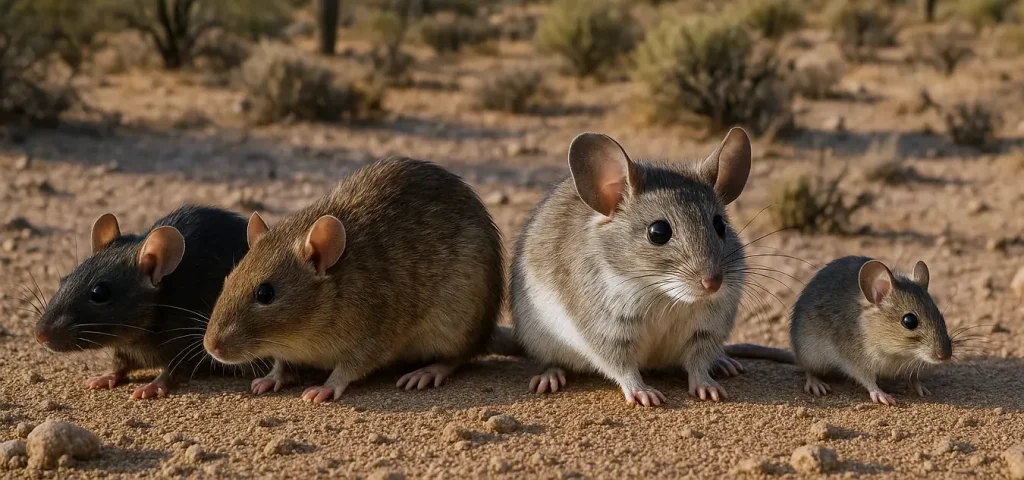
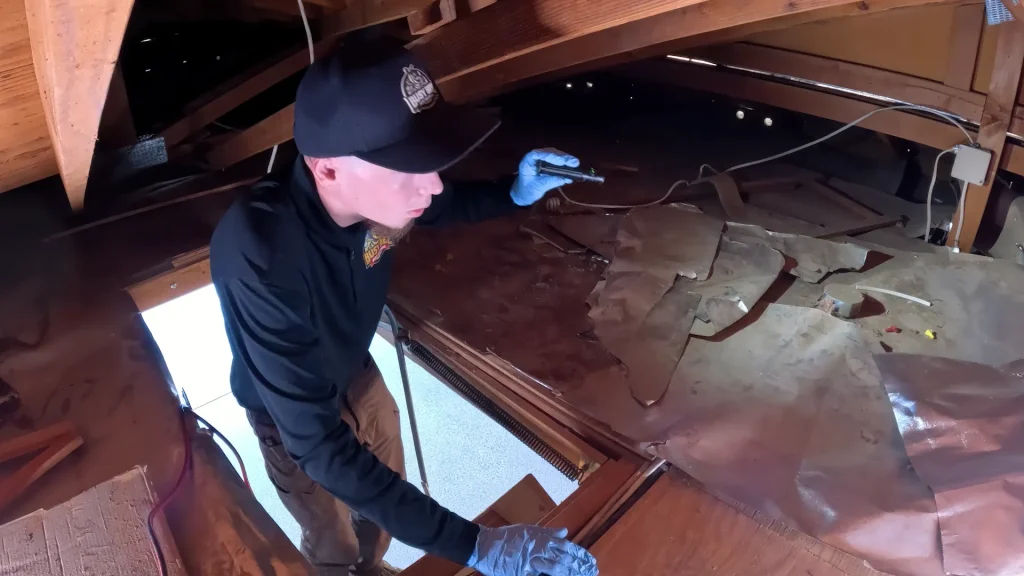
Inside a Phoenix structure we trap rather than bait, and the reason is heat. A rodent that eats bait does not die outside. It dies in a wall void or on top of attic insulation, and in a summer attic running well over 130°F the odour becomes an unreachable problem within days. Exterior bait stations have a legitimate role. Interior bait almost never does. For the full approach, see rat control in Phoenix and our Phoenix rodent control services.
What each method actually does
Snap traps kill quickly and, critically, keep the carcass where you can retrieve it. Every animal is accounted for, which also tells us whether a population is clearing or still active.
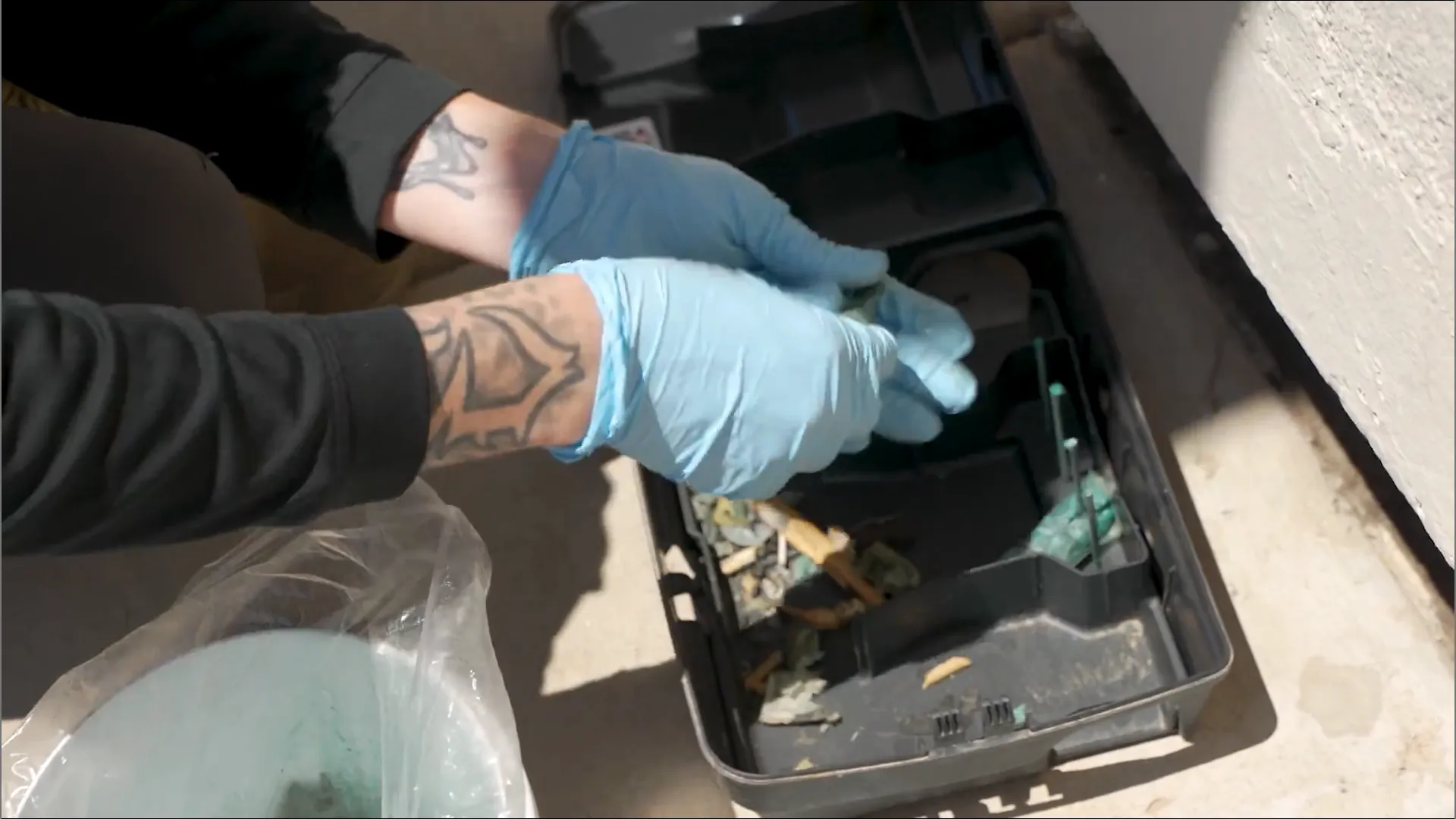
Anticoagulant bait stations work slowly by design, the delay prevents bait shyness. The animal continues moving for several days after feeding, which is exactly why placement location determines where it dies.
Why Arizona heat changes the calculation
Three heat-specific factors drive our approach:
- Decomposition is fast. An attic at 130–150°F accelerates decay dramatically. A carcass in a wall void produces a severe odour within 48 hours and can take three to six weeks to fully dissipate.
- Wax-block baits soften. Standard paraffin blocks slump above roughly 120°F, which is routine on a west-facing wall from June through September. We use heat-stable formulations in shaded, secured placements.
- Water is the real attractant. In a desert, rodents are often seeking moisture more than calories, which makes food-based bait less compelling than it is in wetter climates. Traps placed on established runways outperform bait in a lot of Valley situations.
Where each belongs
- Attics and interior wall voids: monitored snap traps only. No bait, ever.
- Garages and utility rooms: traps, placed in protected locations away from pets and children.
- Exterior perimeter, block walls, alleys: tamper-resistant locked bait stations are appropriate here, targeting the outside population before it reaches the structure.
- Around Norway rat burrows: exterior stations work well, because ground-dwelling rats return to burrows rather than into the building.
- Pack rat middens: neither approach is primary. Midden removal and habitat modification do the work.
Placement beats product
Rats are neophobic, they avoid unfamiliar objects for several days, which means a trap in the wrong place catches nothing and a trap on an established runway catches quickly. We identify runways from the grease rub marks rodents leave on joists, pipe runs and wall junctions, and set along them rather than scattering traps around an attic.
Mice are the opposite: curious rather than cautious, but with a very small home range, rarely travelling more than twenty feet from the nest. Mouse work is dense trapping in a tight footprint, not broad coverage.
What about glue boards and ultrasonic devices?
We do not use glue boards for rats. They are inhumane, frequently fail to hold an adult rat, and the animal often drags the board into an inaccessible space. Ultrasonic repellers have not produced reliable results in our field experience, rodents habituate to them quickly.
Safety around children and pets
This is a large part of why our default is trapping. Interior traps are placed in enclosed and elevated locations that pets cannot reach. Where exterior bait is used it is always in locked, tamper-resistant stations secured to a fixed point, placed along walls and out of the areas where pets range. If you have a dog that patrols the yard perimeter, tell us at the inspection. It changes our placement plan.
Frequently Asked Questions
Should I use bait or traps for rats in Phoenix?
Traps inside the structure, bait only outside if at all. A baited rodent typically dies in a wall void or attic, and in Arizona heat that produces a severe odour problem that can take three to six weeks to resolve and may require opening drywall.
Does rat poison melt in Arizona heat?
Standard paraffin wax-block baits soften and slump above roughly 120°F, which is common on sun-exposed Valley walls in summer. We use heat-stable formulations and place stations in shade, and we do not place bait in attics at any time of year.
How long does a dead rat smell last in a wall?
In Phoenix summer conditions, typically three to six weeks, with the worst intensity in the first one to two weeks. Cooler months extend the timeline but reduce the intensity. This is the outcome interior baiting risks and trapping avoids.
Are snap traps safe with pets in the house?
When placed correctly, yes. We set interior traps in enclosed, elevated or otherwise inaccessible locations, attic runways, behind appliances, inside protected stations. Tell your technician about pets at the inspection so placement can be planned around them.
Do ultrasonic rodent repellers work?
Not in our experience. Rodents habituate to ultrasonic output quickly, and the sound does not pass through walls or insulation, so coverage in a real structure is poor. We have never seen one resolve an active infestation.