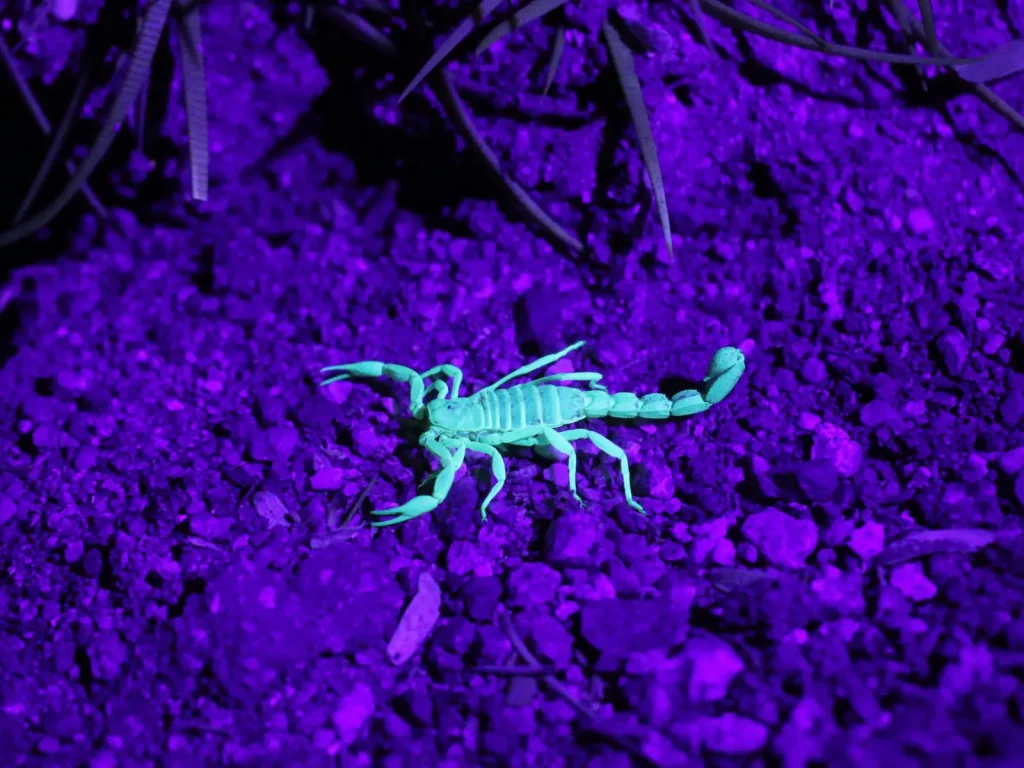
The scorpion that turns up in a hallway in January did not come in from the yard that night. Bark scorpions do not hibernate and they do not migrate. What they do as the cold arrives is find harborage, slow right down, and sit the winter out somewhere that holds a little warmth, frequently in groups. In a Phoenix house that somewhere is often a block wall cavity, an expansion joint or the space behind a garage door seal, which means the scorpion you find in February has probably been close by since November.
Our article on scorpions in a Phoenix fall covers the weeks before this, when cooler nights bring them toward the house.
What overwintering actually looks like
Bark scorpions become inactive rather than dormant. Their metabolism drops, they stop hunting, and they tuck into a crevice and wait. On a warm winter day they will move.
Two things about that behavior matter for a homeowner.
The first is that they aggregate. Bark scorpions are unusual among Arizona scorpions in that they will overwinter in groups, sometimes in significant numbers in one crevice. Finding one in a particular spot is not the same as finding one anywhere else.
The second is that a heated house is the warmest harborage on the property, so anything that has found its way into a wall cavity has found the best available option and has no reason to leave.
Where they sit it out
| Location | Why it works for them |
|---|---|
| Block wall cavities | Hollow, insulated by the block, and connected along the whole wall |
| Expansion joints in slabs and driveways | A continuous crevice at exactly the right width |
| Under pavers and stepping stones | Thermal mass above, soil below |
| Behind a weep screed | Direct access to the wall cavity from ground level |
| Garage door seal and track | Warm from the house, sheltered, and rarely disturbed |
| Stacked material against the house | Spare roof tiles, bricks, lumber, pots |
| Woodpiles | Endless crevices and insect prey in the same place |
The pattern is consistent. They want a gap of roughly the right width, some thermal mass, and no traffic.
What to close, and in what order
A bark scorpion is flat enough to get through a gap about the thickness of a credit card, and it climbs walls and can hang upside down from a ceiling. Height is not a barrier.
- Door sweeps. Every exterior door, including the one from the garage into the house. Stand inside with the lights off and look for daylight.
- The garage door seal. Bottom edge and both bottom corners, which are where it fails.
- Weep screed at the base of the stucco. It has to breathe, so this is a screening job rather than a sealing one.
- Hose bibs, conduit and pipe penetrations. Pack and seal properly rather than using foam.
- Window screens and frames. Particularly on windows that get opened in a warm spell.
- Expansion joints against the house. Backer rod and sealant.
Do the doors first. They are the cheapest, easiest and highest yield item on the list, and no amount of yard treatment compensates for a gap under a door.
Clearing harborage without making it worse
Moving a woodpile or a stack of pavers in winter will disturb whatever is overwintering in it. That is the point, but it is also a hazard.
- Wear leather gloves, not fabric
- Tip things away from you rather than toward you
- Work in daylight
- Do not put a hand where you cannot see
- Move material away from the house wall permanently rather than restacking it
What not to do
Do not treat the yard and skip the gaps. A treated perimeter does very little about an animal that is already overwintering inside the wall cavity, and nothing at all about a half inch gap under a patio door.
The other one is about identification. Do not assume every scorpion in the house is a bark scorpion. Arizona has several species and most are far less medically significant. A bark scorpion is slender, light tan, with thin pincers and a thin tail, and it is the one that climbs. If somebody has been stung, Poison Control (1-800-222-1222) is the right call and they take calls around the clock.
Why the blacklight still works in winter
They fluoresce whatever the season, so a UV survey on a mild winter evening is still worth doing. Expect fewer at the surface and expect them close to harborage rather than out in the open.
A winter survey is actually more useful than a summer one for a different reason. What you find in December is sitting on or near its overwintering site, so it tells you where to work rather than just how many there are.
The short answer
Scorpions do not leave for the winter. They move into harborage, often in groups, and the warmest harborage on the property is usually the house. Close the door sweeps and the garage seal first, screen the weep screed, and move the stacked material off the wall. Do that before the cold sets in and the one in the hallway in January has far fewer ways in.
Frequently Asked Questions
Where do scorpions go in winter in Arizona?
Into harborage, and often in company. Bark scorpions are unusual among Arizona scorpions in that they will overwinter in groups, sometimes in significant numbers in one crevice. Block wall cavities, expansion joints, the underside of pavers and the space behind a garage door seal are all warmer than open ground.
Why do I find one indoors in January?
Because it did not come in from the yard that night. A heated house is the warmest harborage on the property, so anything that found its way into a wall cavity in autumn has no reason to leave. What you find in January has often been close by since November.
What should I close first?
Door sweeps on every exterior door, including the one from the garage into the house. They are the cheapest, easiest and highest yield item on the list, and no amount of yard treatment compensates for a gap under a door.
Is it safe to move a woodpile in winter?
It will disturb whatever is overwintering in it, which is the point, but wear leather gloves rather than fabric, tip things away from you rather than toward you, work in daylight, and do not put a hand where you cannot see. Move the material away from the house wall permanently rather than restacking it.
Is every scorpion in the house a bark scorpion?
No. Arizona has several species and most are far less medically significant. A bark scorpion is slender and light tan with thin pincers and a thin tail, and it is the one that climbs. If somebody has been stung, Poison Control (1-800-222-1222) takes calls around the clock.