

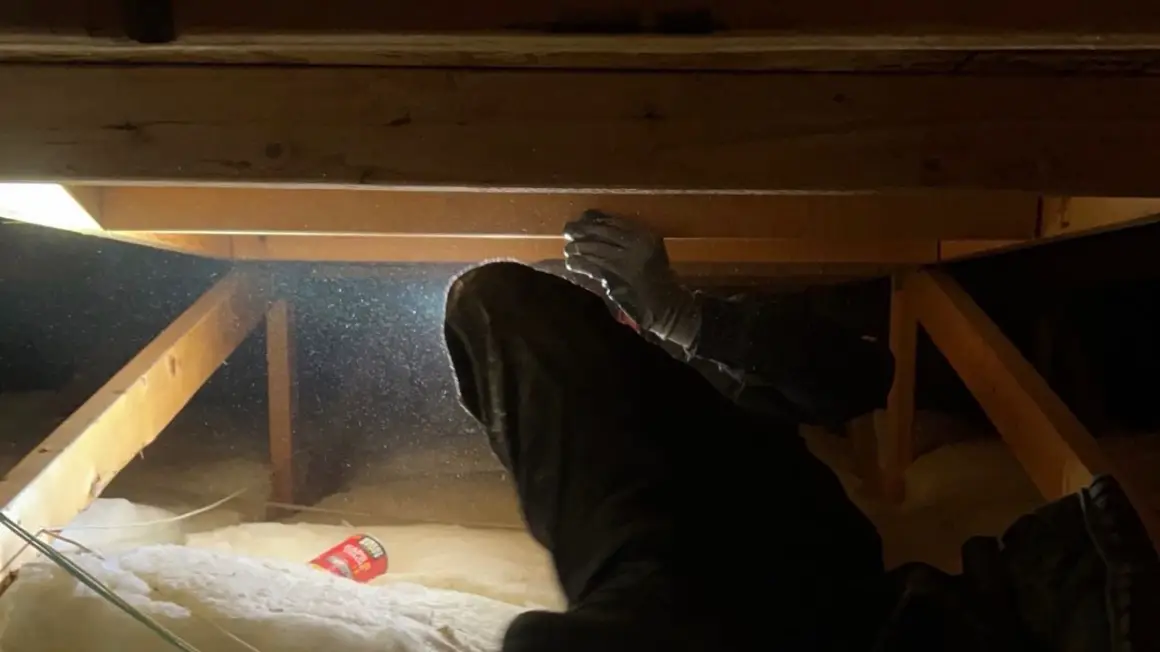
When Is Rodent Season in Phoenix? A Month-by-Month Calendar
Rodents are active in the Valley all year. Here is when roof rats, mice and pack rats move in, what drives each wave, and what to do in each season.
Hearing rats overhead right now? See roof rat removal in Phoenix.
Rodent season in Phoenix runs all year, but the stretch most homeowners notice is October through March, when cooler nights push roof rats and mice indoors for warmth and food. Roof rats move from citrus and palms into attics as overnight temperatures drop in October and November, and Maricopa County Vector Control lists them as most active from November through May. A second wave follows the monsoon storms (June 15 to September 30), when runoff floods burrows and washes and pushes pack rats and Norway rats toward homes.
Our own calls about rats in attics follow the same pattern: they build through the fall and are busiest in the winter months.
Rodent season in Phoenix at a glance
- Roof rats: in attics mainly from October through March, peaking in mid-winter while nights are coolest and citrus is on the trees.
- House mice: move indoors in fall as nights cool, and breed year-round once inside.
- Pack rats: active at night all year, with a spike after monsoon flows push them out of washes.
- Norway rats: ground-level burrowers that move indoors fastest when monsoon storms flood their burrows.
- When to seal: before the cool nights arrive, and only after any rodents already inside have been trapped out.
Phoenix Rodent Calendar: Month by Month
What rodents are doing in the Valley each month, and the one job worth doing that month.
January: peak roof rat season
Cool nights and ripe citrus keep roof rats in attics, and January is one of our busiest months for attic calls. Roof rats are active mostly at night, so the usual sign is running or scratching overhead between dusk and dawn, plus droppings about half an inch long with pointed ends. House mice that moved in during the fall keep breeding indoors.
Do this: trap the rats already inside with snap traps on their runways, and keep poison out of the attic and walls.
February: citrus still feeding roof rats
Different citrus varieties ripen at different times, so a yard with mixed citrus can feed roof rats from roughly November through May. Fallen fruit matters even more than fruit on the tree, because it gives rats food and water in one place.
Do this: pick ripe citrus promptly, pick up fallen fruit, and do not compost citrus in an open pile near the house.
March: the last of the cool nights
Cooler nights through March still push rodents indoors. Roof rats that moved in over the winter are nesting in the attic insulation, soiling it with droppings and urine and flattening it along their runways.
Do this: once trapping has the attic quiet, seal the roofline: tile edges, soffit returns, roof vents and the AC line-set penetration.
April: roof rats still active
Spring is not the end of the season: Maricopa County lists roof rats as most active through May. Late citrus is still on the trees, and unskirted fan palms give roof rats dense, shaded nest sites within jumping distance of the roof.
Do this: skirt fan palms by removing the dead frond thatch, and cut branches back at least four feet from the roof (six feet is better).
May: the citrus season ends
The citrus that fed roof rats through the winter runs out around May, and they switch food: Maricopa County notes that roof rats eat queen palm fruit in summer when citrus is not available. As the heat builds, water becomes the limiting factor, and drip emitters and pool equipment pads are the steadiest water on many Phoenix lots.
Do this: get attic cleanup and new insulation done before summer, once the rats are out and the roofline is sealed.
June: heat, empty homes and rodents looking for water
In the summer heat, rodents look for water and cool shelter. The monsoon officially starts June 15. Homes closed up for the summer, common in Sun City, can host an infestation that starts in June and is not found until the owners return.
Do this: before leaving for the summer, have the attic, garage and roofline checked and any gaps sealed.
July: monsoon storms move rodents
July and August are typically the wettest months of the monsoon. Storm runoff floods ground burrows and wash-bottom middens, so Norway rats and pack rats that were living outside move to the edge of the house and then inside. Wind lifts roof tile, tears vent screens and loosens fascia, and each of those can open a gap of half an inch or more, which is all a rat needs.
Do this: walk the property in the week after a big storm: roof tile and eaves, vent screens, fascia, garage door seals and the weep screed line.
August: pack rats and car wiring
Pack rats whose middens wash out rebuild somewhere higher and drier: under a stored trailer, in a planter, behind pool equipment or in an engine bay. Chewed car wiring in August and September is almost always a pack rat, and homes near a wash or at the desert edge see the sharpest spike.
Do this: clear debris piles and blown palm fronds stacked against walls, and check under the hood of any car that sits unused.
September: storm damage shows up
The monsoon ends September 30. In the irrigated older neighborhoods, roof rat activity tends to show up two to six weeks after the storms, and the growth flush after the rains means branches that were a foot clear of the roof in June can be touching it by September.
Do this: trim the new growth back from the roofline and seal any storm gaps before the cool nights arrive.
October: rodent season begins
The first cool nights arrive, and roof rats start moving from the landscaping toward the house. House mice move indoors as nights cool, too. This is when our calls about rats in attics start to build.
Do this: book a free inspection. Anything already inside is trapped out before the gaps are sealed.
November: citrus ripens and attics fill
Citrus begins to ripen, and roof rats hollow out oranges and grapefruit from the side, leaving the empty rind hanging on the branch. November is also when Maricopa County's most active months for roof rats begin. Homes that sat closed all summer are often where the first droppings turn up as owners return.
Do this: check the attic. Listen after dark, and look for droppings, dark grease rub marks on rafters and pipes, and shredded insulation.
December: peak season
Cool nights, citrus on the trees and warm attics make December one of the busiest months for roof rats in Phoenix homes. Roof rats have three to five litters a year with up to eight young per litter, so waiting for an attic to go quiet on its own rarely works.
Do this: trap first, seal second, then clean the attic. Sealing before the rats are out shuts them inside.
What Drives Rodent Season in Phoenix
- Cool nights (October to March). Cooler nights push roof rats and mice indoors for warmth and food. Roof rats climb block walls, citrus and palms onto tile roofs and get in through tile edges, soffit returns, roof vents and AC line-set penetrations, so the noise is overhead after dark.
- Citrus (roughly November to May). Roof rats prefer fruit, and Maricopa County Vector Control notes that citrus gives them food and water at once. A yard with mixed varieties can feed them from roughly November through May, and unskirted fan palms next to the house give them a place to nest. See roof rats in citrus trees and palms.
- Monsoon storms (June 15 to September 30). Water is the limiting factor for rodents in the desert. Storms flood burrows and middens, open gaps in roofs and vents, and set off a growth flush that bridges trees to rooflines. See rodents after monsoon storms.
- Empty summer homes. Homes closed up for the summer, common in Sun City, give rodents months without disturbance, and the problem is found only when the owners come back.
- Water on the lot all year. Drip emitters, pool equipment pads and irrigation keep water available in the older irrigated neighborhoods, which is how roof rats spread through citrus corridors such as Arcadia.
Rodent Season by Species
Roof rats: October to March, in the attic
Roof rats are the most common rat in Phoenix homes, and the attic is where they spend the cool season. Maricopa County lists November through May as their most active months. Monsoon storms bring a smaller, later rise in the irrigated older neighborhoods (Arcadia, central Tempe, west Mesa, Old Town Scottsdale), two to six weeks after the storms. See roof rat removal in Phoenix or our guide on how to get rid of roof rats.
Pack rats: all year, with a monsoon spike
Pack rats (white-throated woodrats) are active at night all year. They build middens of sticks and cactus under sheds, boulders, AC units and parked cars, and their activity spikes after monsoon flows push them out of washes. The University of Arizona Cooperative Extension notes that woodrats can also nest in attics, garages and the engine compartments of seldom-driven cars. See pack rat removal in Phoenix.
House mice: fall into winter
In Arizona, mouse activity climbs in fall when nights cool and mice move indoors. A house mouse gets through a gap about a quarter inch wide, and once inside it breeds year-round, so a pair of mice can turn into dozens within a few months. See mouse control in Phoenix.
Norway rats: when the monsoon floods their burrows
Norway rats live in ground burrows along foundations, block walls and irrigation lines. When monsoon storms flood those burrows, they move indoors faster than any other species here, because they are already at the base of the house, and they get in through garage door corners, weep screed openings and unsealed utility penetrations. See Norway rat removal in Phoenix.
What to Do in Each Season
Late summer: seal before fall
The best time to seal a house is before the cool nights arrive, so the roof rats moving out of the landscaping in October find nothing open. Seal only once any rodents already inside have been trapped out. A proper seal resets open bird-stops under the first course of tile, screens soffit and gable vents with heavy-gauge hardware cloth, flashes tile-to-fascia transitions and closes the AC line-set penetration with chew-resistant materials and sealants rated for Arizona heat and UV, not foam alone. Most homes are sealed in one visit; complex tile roofs may need two. See rodent exclusion in Phoenix.
Fall: check the attic
From October on, listen for running or scratching overhead between dusk and dawn. In the attic, look for droppings about half an inch long with pointed ends, dark grease rub marks on rafters and pipes, gnawed wood or wiring and shredded insulation. Droppings in the garage or near the water heater are a common sign that rats are already inside, and citrus hollowed out on the tree is a sign outside.
All season: trim citrus and palms
Rats do not need to climb the house if the landscaping hands them a bridge. Cut citrus and other branches back at least four feet from the roof (six feet is better), skirt fan palms every year, keep vines and tall hedges off block walls and fascia, and harvest citrus promptly. Trimming is prevention, not treatment: it does not remove rats already in the attic.
Winter: trap, do not poison
Set snap traps on the runways the rats already use, along the rub marks and near the entry points. Keep poison bait out of the attic and walls: a poisoned rat keeps moving for days and dies wherever it stops, and a dead rat in a wall smells for about three to six weeks. Bait belongs outside only, in locked, tamper-resistant stations. Our guide to getting rid of roof rats walks through each step.
Spring: put the attic right before summer
Once the rats are out and the roofline is sealed, clean the attic and bring the insulation back to depth before the summer heat. The attic section below explains what that involves.
After monsoon storms: check for rodent entry points
In the week after a big storm, check roof tile and the eave line, vent screens, fascia and flashing, the bottom corners of garage door seals and the weep screed line, and clear standing water and debris piles. Rodent entry after a storm is opportunistic: the gap opens, and something finds it within days.


After Roof Rat Season: Attic Cleanup and Insulation
A winter of roof rats leaves its mark on the attic. Rats nest in the insulation and run the same paths every night, soiling it with droppings and urine, flattening it along their runways so it holds odor and loses much of its insulating value, and shredding it for nest material. The droppings and urine also leave scent trails that draw new rodents back to the same attic.
Clean the attic once the rats are out and the roofline is sealed. Dried droppings should never be swept or vacuumed with a household vacuum. Our attic cleanup removes droppings, nests and contaminated dust with HEPA equipment, cuts out the soiled sections of insulation and fogs the attic with a hospital-grade disinfectant.
Then bring the insulation back to depth before summer. TAP insulation is a borate-treated cellulose that also treats the attic for insects, and it lowers the summer cooling load. It does not control rats or mice; trapping and sealing are what keep them out. Attic cleanup and new insulation are what our Restore package adds to trapping and sealing, and both can also be quoted on their own after the inspection.
What Rodent Control Costs, in Any Season
Rodent season does not change our pricing. Every rodent job starts with a free 61-point inspection of the attic, roofline, garage and exterior, with a written quote before any work. On the Control package, rodent control is $245 for the initial service and $95 per follow-up visit. Full exclusion (the Solve package) and attic cleanup with new insulation (the Restore package) are quoted after the inspection. See what rodent control costs in Phoenix, or start with rodent control in Phoenix.
Rodent Season Questions
Q: When is roof rat season in Phoenix?
A: Roof rats are active in Phoenix all year, but the season most homeowners notice runs from October through March, when cooler nights and ripening citrus bring them from the yard into attics. Maricopa County Vector Control lists November through May as their most active months, and a smaller rise follows the monsoon storms by two to six weeks. See roof rat removal in Phoenix.
Q: Is there a rodent season in Arizona?
A: Yes, and it depends on the rodent. In the Phoenix area, roof rats and house mice move indoors as nights cool from October through March, while pack rats and Norway rats are pushed toward homes by monsoon storms between June 15 and September 30, when runoff floods their burrows and middens. There is no month without rodent activity somewhere in the Valley.
Q: Do rodents come inside in the Phoenix winter?
A: Yes. Phoenix winters are mild, but cooler nights push roof rats and mice indoors for warmth and food, and citrus on the trees feeds roof rats through the winter. Roof rats head for the attic; mice come in low, through gaps about a quarter inch wide at the slab, plumbing and utility penetrations and garage door corners. Winter is our busiest time for rodent calls about attics. See mouse control in Phoenix.
Q: Does monsoon season bring rodents into Phoenix homes?
A: It changes where rodents are more than how many there are. Storm runoff floods ground burrows and wash-bottom middens, so pack rats and Norway rats move to the edge of buildings and then inside, and wind damage to roof tile, vents and door seals opens the gaps that let them in. See rodents after monsoon storms.
Q: When should I seal my home against roof rats?
A: Before the cool nights arrive in October, and only after any rats already inside have been trapped out. Sealing with rats still in the attic shuts them inside, where they cause odors and more damage. Most homes are sealed in one visit; complex tile roofs may need two. See rodent exclusion in Phoenix.
Q: When are pack rats most active in Phoenix?
A: Pack rats are active at night all year, but activity spikes after monsoon flows push them out of washes, especially for homes near a wash or at the desert edge. Chewed car wiring in August and September is almost always a pack rat. See pack rat removal in Phoenix.
Q: Do I need attic cleanup after a winter of roof rats?
A: Yes, if droppings, nests or soiled insulation are left in the attic. They are removed with HEPA equipment instead of being swept, the attic is disinfected, and the soiled insulation is cut out. TAP insulation, a borate-treated cellulose that also treats the attic for insects, then brings the attic back to depth; it does not control rats or mice. See attic cleanup in Phoenix and TAP insulation in Phoenix.
Q: Does rodent control cost more during rodent season?
A: No. Rodent season does not change our pricing. The inspection is free, and rodent control is $245 for the initial service and $95 per follow-up visit. Exclusion and attic work are quoted after the free inspection. See what rodent control costs in Phoenix.
More answers about roof rats, mice, cost and attic cleanup are in our Phoenix rodent control FAQ.
Get a free rodent inspection
Tell us what you are hearing and where you are hearing it. A technician calls you back the same day, and the inspection is free.