“Killer bees” is the popular name for Africanized honey bees, a cross between African and European honey bees that escaped a breeding program in Brazil in 1957 and reached Arizona in 1993. Today nearly every wild honey bee colony in the Phoenix area carries Africanized genetics. They look like ordinary honey bees and their venom is the same. What changed is how many bees respond when a colony is disturbed, and how far they follow you. This guide covers where they came from, how they spread north, why Arizona suited them, how they differ from European bees, and what to do if you meet a defensive colony.
Where killer bees came from
In 1956 a breeding program near São Paulo, Brazil, led by the geneticist Warwick Kerr, began crossing the European honey bee, Apis mellifera, with the African subspecies Apis mellifera scutellata. The goal was a bee that would keep producing honey in the tropics, where European stock struggled. The African bees were strong flyers, quick to swarm and hard to discourage, and the hybrids took after that side of the family.
In 1957, 26 swarms escaped from the research apiary. Wild colonies were breeding with them within a few seasons, and the hybrid turned out to be better suited to life in the wild than either parent. It swarmed more often, grew a colony from a fist-sized cluster in weeks, and abandoned a nest at the first sign of trouble instead of dying with it.
The spread north
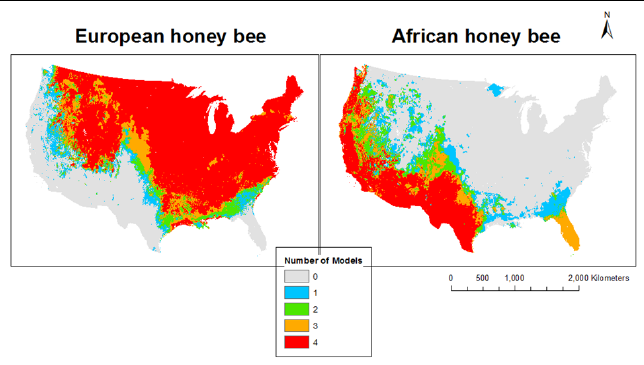
From São Paulo the bees moved through Brazil and then up through South America at a pace of a few hundred miles a year. They crossed Central America in the 1970s, reached Mexico by the mid-1980s, and were confirmed in the United States in October 1990 at Hidalgo, Texas. By 1993 they were in Arizona, and within a decade they had replaced most wild European colonies across the low desert. By the mid-1990s established populations were living in Phoenix, Tucson and Yuma as well as in the open desert between them.
The takeover happened faster than anyone expected because of how honey bees mate. A queen mates in flight with a dozen or more drones, and Africanized drones fly earlier, farther and in larger numbers than European drones. Even a managed European hive drifts toward Africanized genetics within a few generations unless the beekeeper replaces the queen.
Why Arizona suited them
The Sonoran Desert gave Africanized bees the conditions they were bred for: long hot seasons, no real winter, and year-round forage from irrigated landscaping, citrus and desert bloom. A European colony needs a large store of honey to survive a cold winter. An Africanized colony does not, so it can stay small, split often and start new colonies all year. In the Phoenix area there is rarely a month without some brood in the nest.
They also nest in almost anything with a cavity: block walls, roof tiles, irrigation valve boxes, water meter boxes, saguaro hollows, sheds and the eaves of a house. A European swarm looks for a large, dry, sheltered cavity. An Africanized swarm will settle for a hole in a wall the size of a fist. That is why Valley homeowners find colonies in places a beekeeper would never expect.
How they differ from European honey bees
- Same venom, more stings. The sting of an Africanized bee is no stronger than a European bee’s. The difference is numbers. A disturbed European colony may send a few dozen guards; an Africanized colony can send hundreds, and they pursue for a quarter mile or more.
- Faster to react, slower to settle. They respond to vibration, dark clothing and breath from farther away, and a colony can stay agitated for hours after it is disturbed.
- Smaller bodies, faster colonies. They are slightly smaller, they swarm several times a year instead of once or twice, and they abscond, leaving a nest entirely, when food or water runs short.
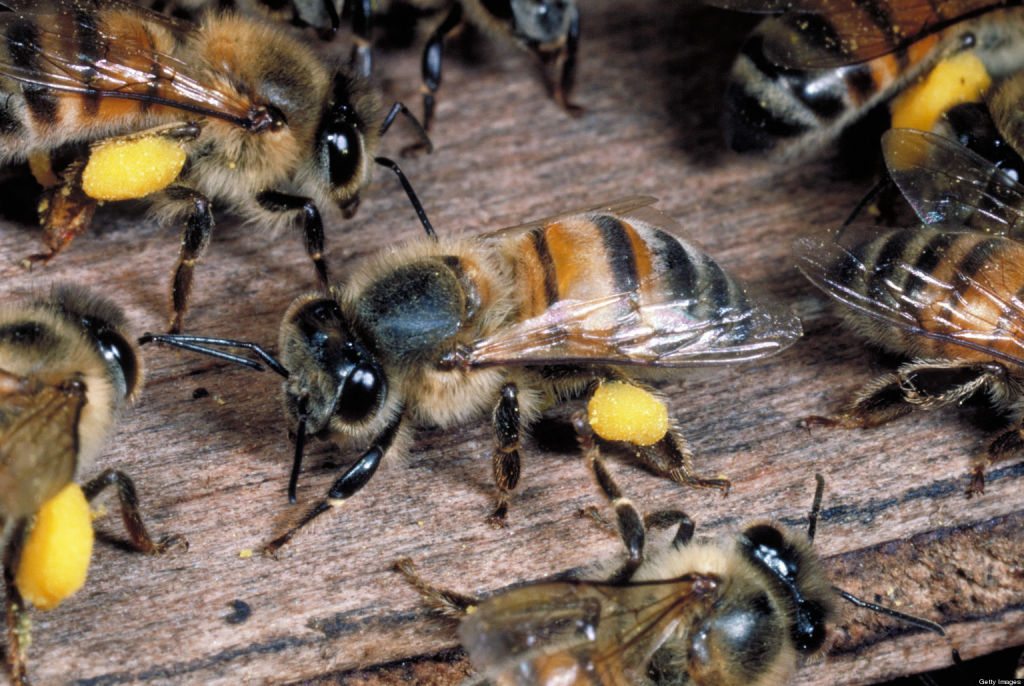
- You cannot tell them apart by eye. Identification takes a laboratory measurement or a DNA test, which is why every wild colony in Arizona is treated as Africanized until proven otherwise.

Why they are called killer bees
The name came from newspaper coverage in the 1960s and 1970s, as the bees spread through South America and fatal attacks were reported. It stuck because the danger is real, even though the bees are not looking for people. Fatal attacks are rare and almost always involve someone who could not get away: a person working close to a hidden colony, a tied dog, a horse in a corral. In July 2025 a Scottsdale man died after a swarm attacked him, one of the worst bee incidents in Arizona’s history, and the same month four people were hospitalized after disturbing a colony in Tempe. Our coverage of those attacks explains why professional removal matters.
What to do near a defensive colony
- Run, and keep running. Get 200 yards away or indoors; do not stop to swat.
- Cover your face and nose with a shirt or your hands; the bees aim for the head.
- Get inside a house or a car and close the doors. A few bees will follow you in; deal with them once the doors are shut.
- Do not jump into a pool. The bees wait above the water.
- Once safe, scrape stingers out with a card or a fingernail rather than pinching them. Call 911 for dozens of stings, for any trouble breathing, or for a known allergy.
- Keep pets and children inside until the colony is removed. A colony that has attacked once will attack again.
The full guide to surviving an attack is here: Africanized bee attack survival in Arizona.
Killer bee questions we hear most
Where did killer bees come from? A 1956 breeding program in Brazil that crossed African and European honey bees; 26 swarms escaped in 1957 and spread through the Americas from there.
When did killer bees reach Arizona? 1993. Texas recorded the first colonies in the United States in 1990; Arizona followed three years later, and by the mid-1990s they were established in Phoenix, Tucson and Yuma.
Are killer bees still in Arizona? Yes. Nearly every wild honey bee colony in the Phoenix area now carries Africanized genetics, which is why we treat every structural hive as defensive until it is confirmed otherwise.
Are killer bees more venomous than regular honey bees? No. The venom is the same; the danger is the number of stings and the distance they pursue.