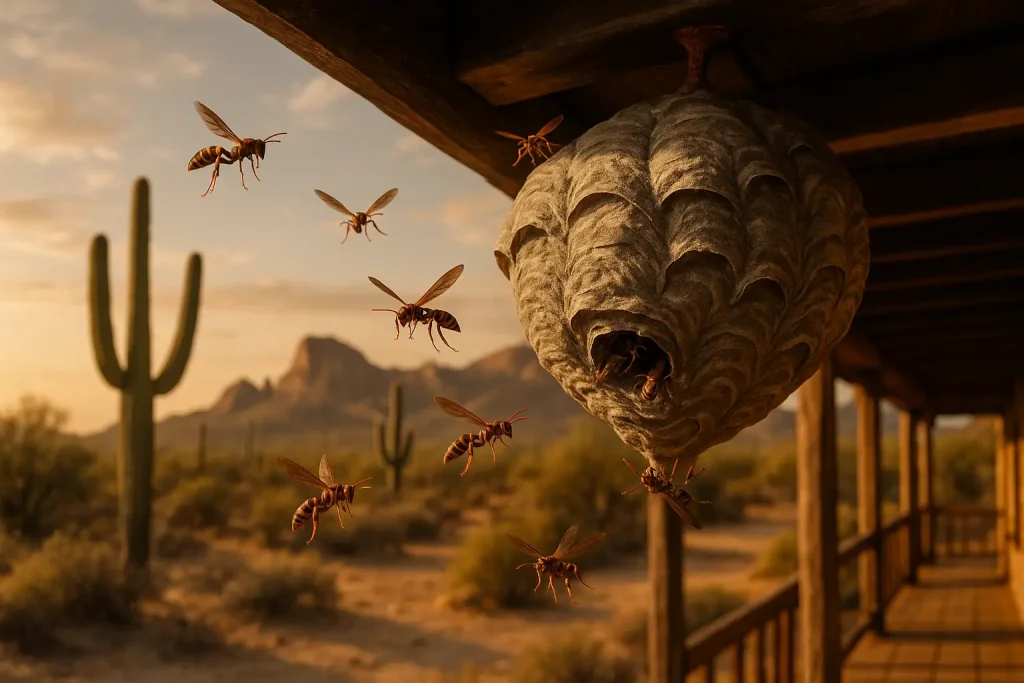
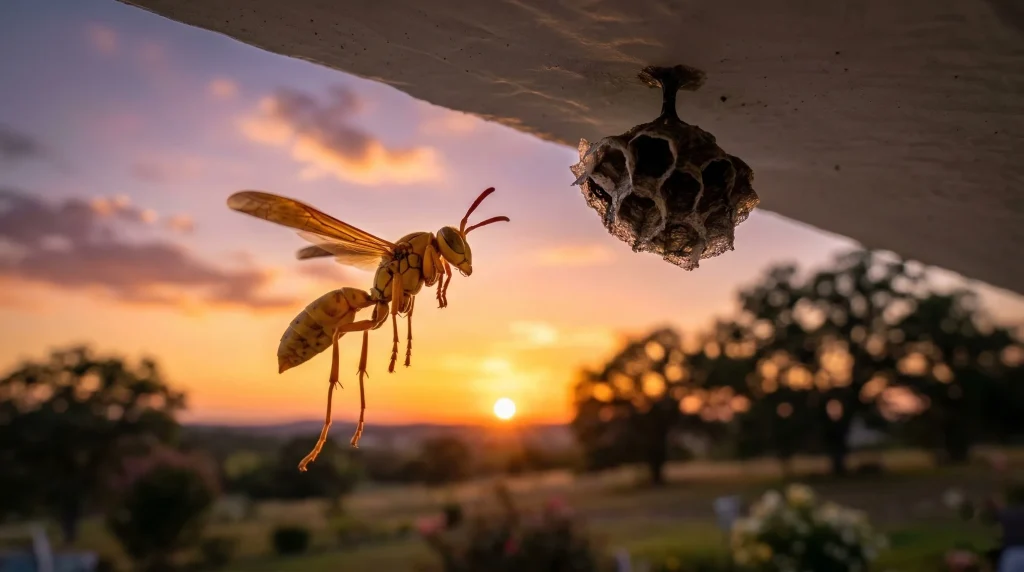
In the Arizona desert, “wasp season” isn’t just a summer headline. It ramps up earlier and lasts longer than in many other states. For homeowners in Phoenix, Scottsdale, and Mesa, a few wasps in spring can turn into a serious problem by early summer.
Understanding early “scouting” behaviors. Especially from Golden Paper Wasps and Yellowjackets. Can be the difference between a quick, simple removal and a larger, higher-risk situation.
How Do I Know If Wasps Are Building a Nest Near My Home?
- A single wasp repeatedly inspects the same roofline, beam, or patio corner
- A small gray paper comb starts forming under an overhang (often “umbrella-shaped”)
- Multiple wasps enter the same crack or hole in a wall, vent, or block void (yellowjacket warning)
- Consistent wasp activity around pools or irrigation boxes, especially in shade
If you’re seeing steady activity now, it’s usually easier (and safer) to handle before the colony grows.

1. Decoding the “Scout” Phase (The Pre-Nest Warning)
Before a nest is built, a queen wasp scouts protected locations as temperatures rise. In the Valley, this often begins when daytime temps become consistently warm.
- The “slow patrol”: A single wasp flies slowly along rooflines, patio covers, soffits, and balcony undersides. Checking for protected spots.
- The landing test: A wasp lands, walks a short distance, flies off, and returns to the same place repeatedly. This is classic site selection behavior.
- Window hovering: Wasps may hover near windows or trim where cool air leaks from seals, often near ideal nest locations like eaves or voids.
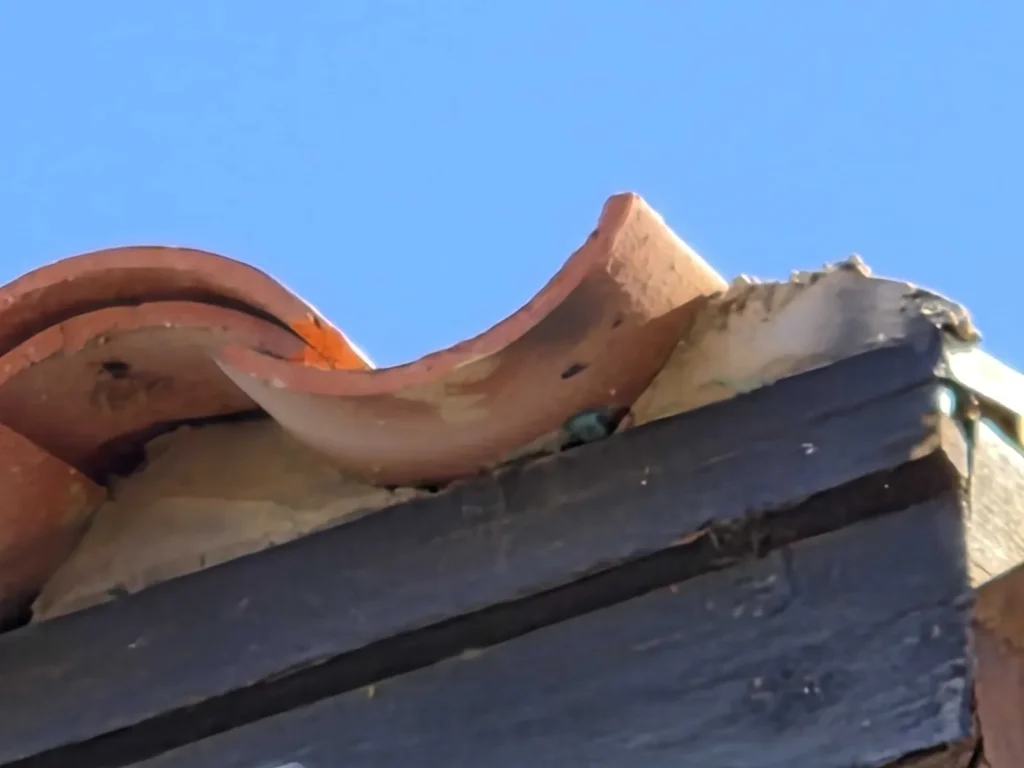
Local tip: If you see a wasp disappear under roof tile edges or into small gaps near the fascia, you may already have early nesting activity.

2. Early Architecture: The “Umbrella” Starter Nest (Golden Paper Wasps)
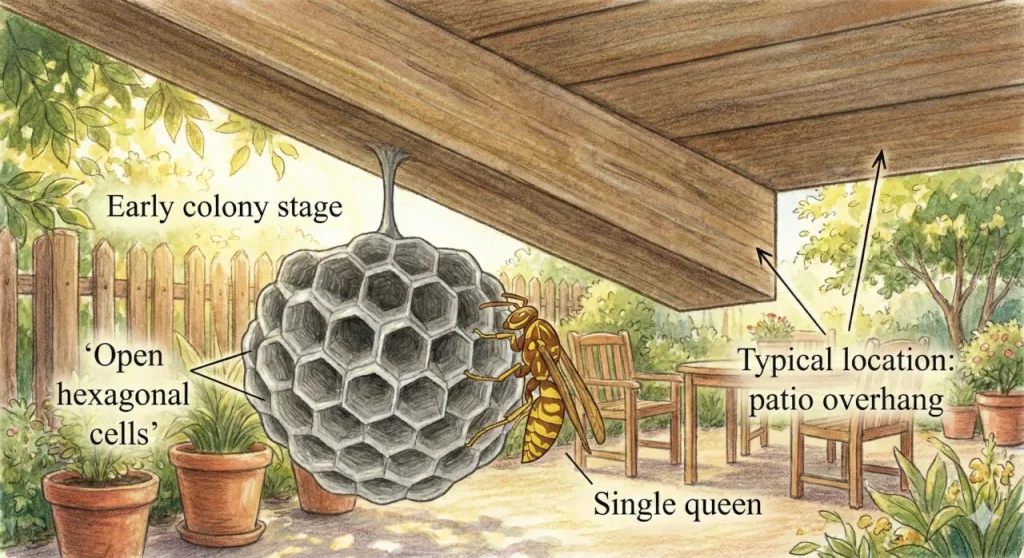
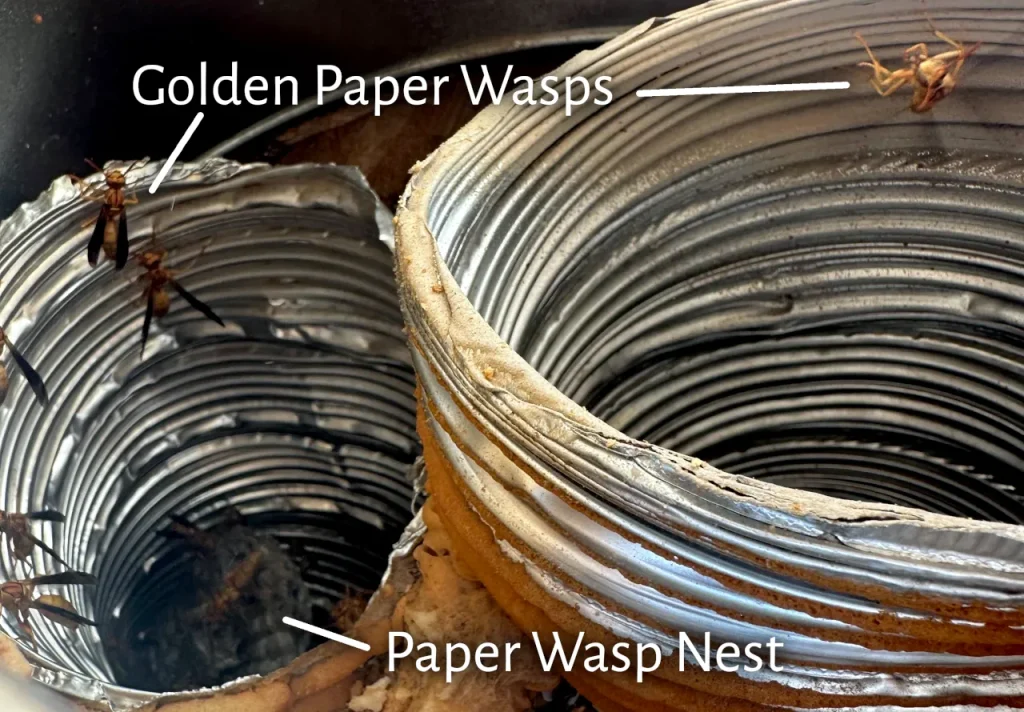
Golden paper wasps often build exposed open-comb nests under protected overhangs. These start small and can expand quickly as workers emerge.
Where to look in Phoenix, Scottsdale & Mesa
- Tile roof eave gaps: Arizona S-tile roofs create countless sheltered edges and voids.
- Pergolas and patio covers: Beam corners and ceiling corners are prime nesting spots.
- Decorative shutters and trim gaps: Tight protected spaces between stucco and decorative features are common nest zones.
What it looks like
Early nests often look like a small gray paper comb. An upside-down “umbrella” with open hexagonal cells. If it’s still very small, removal is typically simpler and less risky than waiting until the colony grows.
3. The Hidden Threat: Yellowjackets in Block Walls and Voids
Yellowjackets are typically more aggressive than paper wasps and commonly nest in protected cavities. Especially wall voids, attics, and ground cavities.
- Block wall vulnerability: Hollow block walls, mortar cracks, and small gaps can become entry points.
- “Flight path” behavior: If wasps fly in a straight line to one specific hole repeatedly (every 10-60 seconds), that often indicates an established colony inside a void.
- Irrigation boxes: Yellowjackets frequently take over irrigation control boxes. Especially in shaded landscaping.
Important: If you suspect a void nest, avoid blocking entry holes. That can redirect wasps into interior spaces and increase risk.

4. The Arizona Wasp Timeline: When to Be Most Vigilant
Arizona’s climate can accelerate colony growth compared to cooler regions.
| Month | Wasp Activity Level | What’s Happening? |
|---|---|---|
| Feb – March | Scouting | Queens search for nesting sites; best time to address early activity. |
| April – June | Rapid growth | Workers emerge; nests expand quickly in protected areas. |
| July – Sept | Peak population | Colonies are larger and more defensive; sting risk increases. |
| Oct – Nov | Shift to sugars | Wasps seek sweet foods/drinks as prey sources change. |
5. Why DIY Wasp Removal Can Be High-Risk in the Valley
Many homeowners reach for sprays immediately. In some situations, DIY attempts can make the problem worse. Especially if the nest is in a void.
- Void nesting: Spraying an entry point in a block wall or attic vent may not reach the colony and can push activity deeper into the structure.
- Heat + defensiveness: High temperatures can increase defensive behavior around nests, especially midday.
- Ladder risk: Many nests are at rooflines. A sting while on a ladder can cause falls and serious injury.
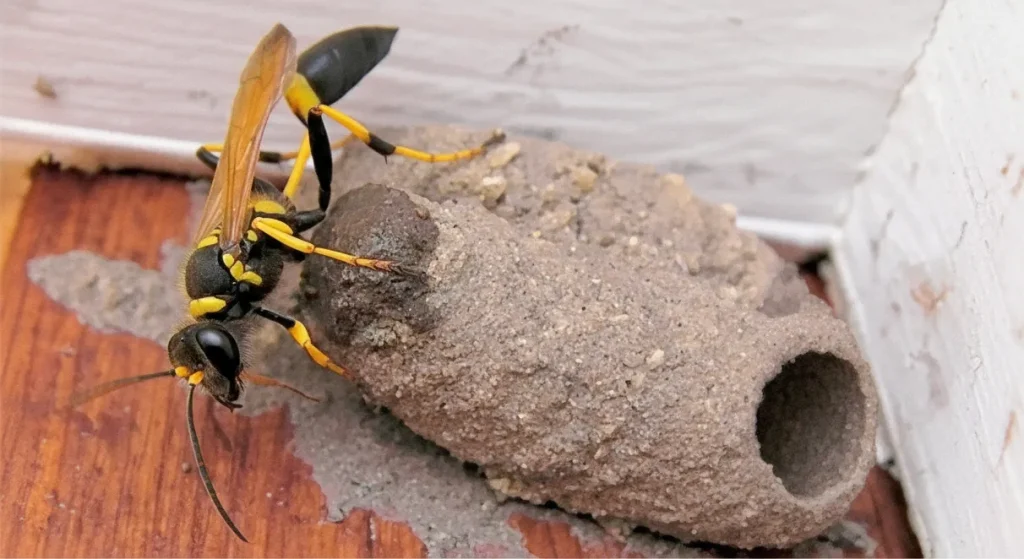
6. Mud Daubers: Usually Not the Main Concern
Mud daubers are commonly mistaken for more aggressive wasps. They are typically solitary and rarely defensive. Their mud tubes can be scraped off if needed, but they’re not usually the cause of swarm-style incidents near homes.
Quick Wasp Answers (Phoenix, Scottsdale & Mesa)
🦟 Why are there so many golden wasps around my pool?
In the Phoenix metro area, golden paper wasps often gather near pools because they need water in extreme heat and may be collecting moisture to help with nest-building. If you’re seeing repeated activity in the same spot, there’s often a nest nearby. Commonly under a patio cover, tile roof edge, soffit, or pergola beam.
🦟 Does a golden paper wasp sting hurt?
Yes. Most people feel a sharp burning pain, followed by localized swelling and redness. While golden paper wasps are usually less aggressive than yellowjackets, they can sting if they feel threatened. Especially if you’re close to the nest.
🦟 How long does it take for a wasp nest to build up?
In Arizona’s warm climate, nests can grow quickly. A queen may start a small nest in early spring, with workers emerging within a few weeks. By late spring or summer, a colony can become much larger and more defensive. Especially if the nest is protected under an overhang or inside a void.
🦟 Are wasps good for the environment?
Yes. Wasps help control other insects and can contribute to pollination. The problem is location: nests near entryways, patios, garages, or pools can create a real sting risk. Removing a problem nest near your home doesn’t harm the overall ecosystem.
🦟 Can I spray them myself?
DIY sprays can be risky. Spraying an active nest can increase aggression and may not eliminate the colony. Especially if the nest is in a wall void, roofline, or other hidden area. Professional treatment is safer when activity is heavy or the nest location isn’t fully visible.
🦟 Does hairspray kill wasps?
Hairspray can sometimes immobilize an individual wasp, but it does not reliably eliminate a nest or colony. Spraying an active nest can trigger defensive behavior and increase sting risk.
🦟 Can I use fire to get rid of a wasp nest?
No. Do not use open flame or attempt to burn out a nest. This can cause serious injury and property damage and does not reliably eliminate the colony. Especially if wasps are nesting in a wall void or roofline.
🦟 What’s the difference between golden paper wasps and yellowjackets?
Golden paper wasps commonly build visible open-comb nests under overhangs. Yellowjackets often nest in hidden areas like wall voids or underground and tend to be more aggressive and more likely to swarm in defense.