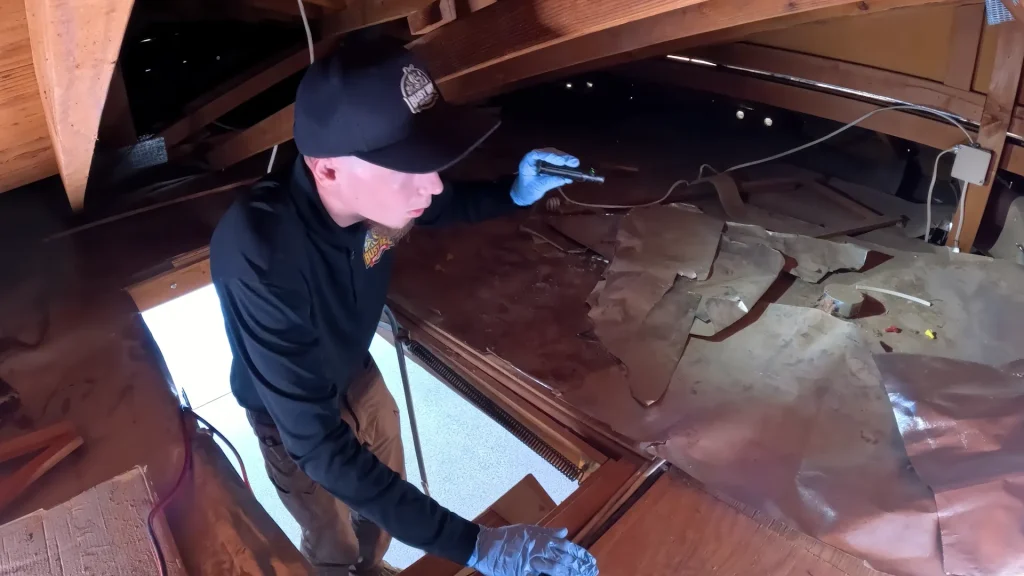
Many people with rats never actually see one. They have heard them overhead after dark, found droppings in the garage, or noticed fruit hollowed out on the tree. Rats are mostly active at night, and they are good at staying out of sight.
So when someone sees a rat in broad daylight, running along the top of a block wall at noon or crossing the patio in the middle of the afternoon, it is worth asking why. A daytime rat is not proof of a disaster, but it usually tells you something.
First, was it a rat?
Plenty of animals that are active by day in the Valley get mistaken for rats.
| What you saw | Most likely |
|---|---|
| A tan or gray animal sitting upright near a hole in the ground | A ground squirrel |
| A small striped animal darting with its tail curled over its back | An antelope ground squirrel |
| Fresh mounds of soil in the lawn but no animal | A gopher |
| A slender dark animal with a tail longer than its body, on a wall, wire or roof | A roof rat |
| A heavier brown animal close to the ground, with a thick tail shorter than its body | A Norway rat |
| A softer-looking animal with large ears near a pile of sticks | A pack rat |
Ground squirrels are active by day and live in burrows. They are a yard problem rather than an attic problem. The rest of this article is about rats.
What a daytime rat usually means
Rats come out in daylight when something has pushed them to. These are the common reasons.
There are a lot of them. When a large population is competing for the same food and shelter, some rats end up foraging at riskier times and in more exposed places. A rat seen by day is often the visible edge of a much bigger group.
Their shelter was disturbed. Tree trimming, palm skinning, roof repairs, a landscaping crew clearing a hedge or construction next door can flush rats out of where they were living in the middle of the day. If you saw one right after work in the yard, this is the likely reason.
They have found a reliable food or water source. A rat that knows where food appears every day, such as spilled bird seed, pet food on a patio or fallen fruit, may visit it at odd hours. Our article on bird feeders and rats covers one of the most common.
It is sick or poisoned. A rat that moves slowly, wanders in the open or does not run from people may have eaten poison bait somewhere in the neighborhood. Anticoagulant bait acts slowly, so the animal keeps moving for days after feeding. Do not handle it, and keep pets and children away from it.
Where you saw it matters
- On a block wall, fence top or utility line. That is a travel route. Roof rats use walls and lines to move between yards, trees and rooflines.
- In or under a citrus tree or palm. That is food and shelter. Look for hollowed-out fruit still hanging on the tree and runways under it. Our article on roof rats in citrus trees and palms explains why these two matter so much here.
- On the roof or at the eaves. That is the route into the attic, and worth an inspection soon.
- In the garage. Check for droppings along the base of the walls, gnawed bags, and daylight at the bottom corners of the garage door when it is closed.
- Inside the living space. A rat indoors in daylight usually points to an established problem in the house.
What to do next
- Note the time, the place and the direction it was heading. That tells an inspector where to start.
- Look for the other signs: droppings, greasy rub marks along walls and fascia, gnawing, hollowed fruit, and noise overhead after dark. Our guide to signs of rodents in the wall cavity shows what to look for indoors.
- Take away easy food and water tonight: pick up pet food, bring in the bird feeder, clear fallen fruit and fix any drips.
- Check the obvious gaps at ground level: the garage door corners, gaps under doors, and the gaps around pipes and cables where they enter the walls.
- Have the roofline and attic inspected if the rat was on the roof, on a wall next to the house, or inside.
What not to do
Do not try to corner or catch it. A cornered rat will bite, and handling rodents is a health risk.
Do not put out loose poison. A poisoned rat can die inside your wall or attic, and the smell of a dead rat in a wall lasts about three to six weeks. Our article on a dead rat smell in a wall covers what that involves. Loose bait is also a hazard to pets and wildlife. Busy Bee uses snap traps indoors and locked, tamper-resistant stations outside, with no poison bait in attics or walls.
Do not assume one rat means one rat. A daytime sighting is more often a sign of a group than of a lone animal.
Why it matters more in winter
In the Valley, roof rats spend the hottest months outdoors in palms, citrus and dense trees, then move into rooflines and attics as the nights cool. A rat seen on a wall or roof in November or December is often on its way in, or already living in a roofline nearby. That makes a daytime sighting at this time of year a good reason to look at your own roofline sooner rather than later.
The short answer
Rats are mostly active at night, so one seen in daylight usually means there are a lot of them, their shelter was disturbed, they have found a reliable food or water source, or the rat is sick, often from poison. Make sure it was a rat and not a ground squirrel, note where it was and where it went, look for droppings, rub marks and gnawing, take away food and water, and have the house inspected if it was on the roof, next to the house or inside.
Frequently Asked Questions
Is it bad to see a rat during the day?
It is worth acting on. Rats are mostly active at night, so a daytime sighting often means a large population, disturbed shelter or a reliable food source nearby.
Does seeing one rat mean there are more?
Usually. Rats live in groups, and a rat seen in daylight is more often the visible edge of a group than a lone animal.
Why would a rat be out in the daytime and moving slowly?
It may be sick, and a common cause is poison bait put out somewhere nearby. Keep pets and children away and do not handle it.
Could it have been a squirrel?
In the Valley, often. Ground squirrels are active by day, live in burrows and are often seen sitting upright near a hole. Roof rats are slender and dark, with a tail longer than the body.
What should I do after seeing a rat?
Note where it was and where it went, look for droppings, rub marks and gnawing, remove food and water sources, and have the roofline and attic checked if it was near or in the house.
Saw one in daylight?
A free inspection finds where they are living and how they are getting in. See rat control in Phoenix. Free inspection: 623-289-3375.