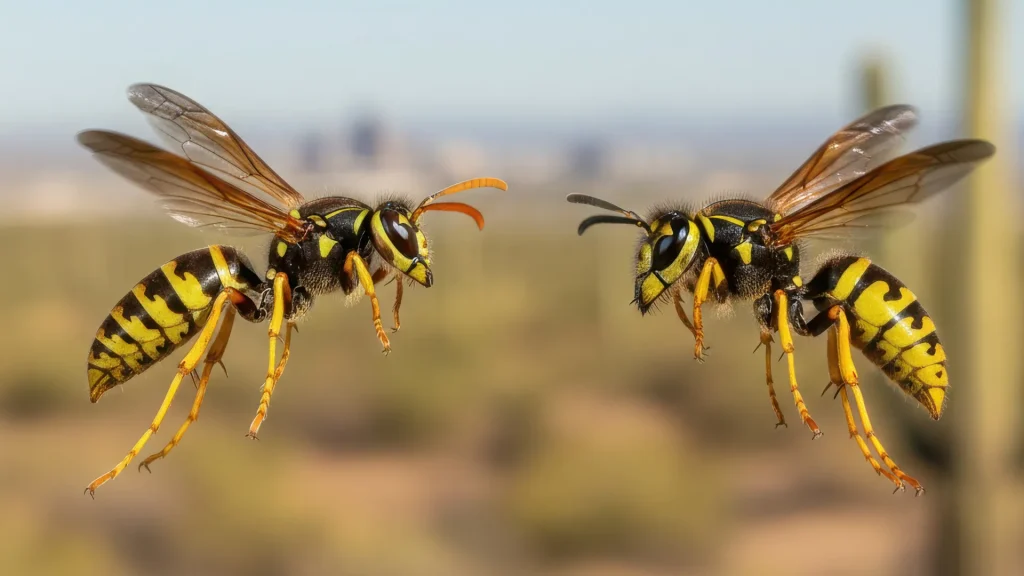
Arizona’s Wasp Season: A Month-by-Month Timeline
It begins not with a sting, but with silence. Picture the cold, clear Arizona winter. In a forgotten crevice of a roofline or a silent shed, a queen sleeps. She is a living vessel, the sole, slumbering architect of a future kingdom. What we call “wasp season” is not merely a nuisance; it is a predictable and brutal epic of creation, conquest, and decay, dictated by the unforgiving rhythm of the Sonoran sun.
This post will follow the journey of a common protagonist in this annual drama: the Arizona Paper Wasp. We will chart the rise and fall of her short-lived dynasty. But when that dynasty chooses your property for its stage, the epic can feel a little too close to home. Understanding their cycle is the first step to coexisting peacefully, or deciding when intervention is necessary. If you find their kingdom expanding beyond your comfort, professional wasp removal in Phoenix is the most direct path to reclaiming your peace.
For now, let us begin our chronicle. And should you have questions at any point in this tale, you need only contact us.
If you’d prefer to listen to this chronicle rather than read it, an audio narration is available just below.
Act I: The Solitary Queen (Late Winter – Early Spring | February to April)
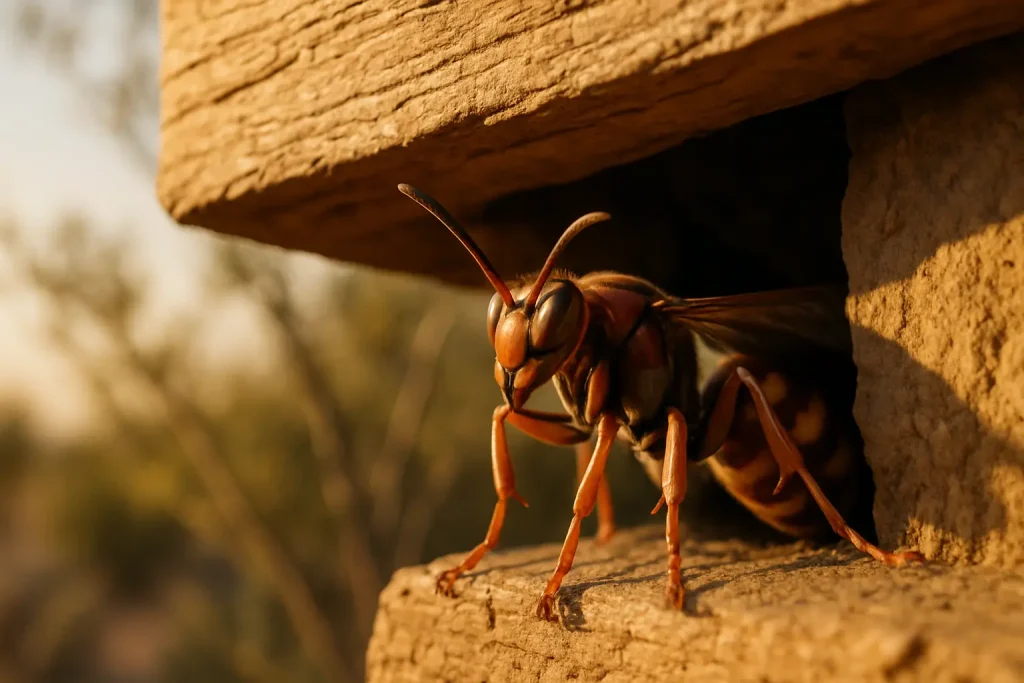
As the Arizona sun begins to reclaim its dominion over the sky, something stirs in the silent, forgotten spaces. In a hollow reed, beneath the peeling bark of a palo verde, or tucked deep within a dusty attic, a lone, mated queen awakens from her long winter torpor. She is the sole survivor of last year’s fallen kingdom, a monarch in exile, carrying the entire genetic future of her dynasty within her.
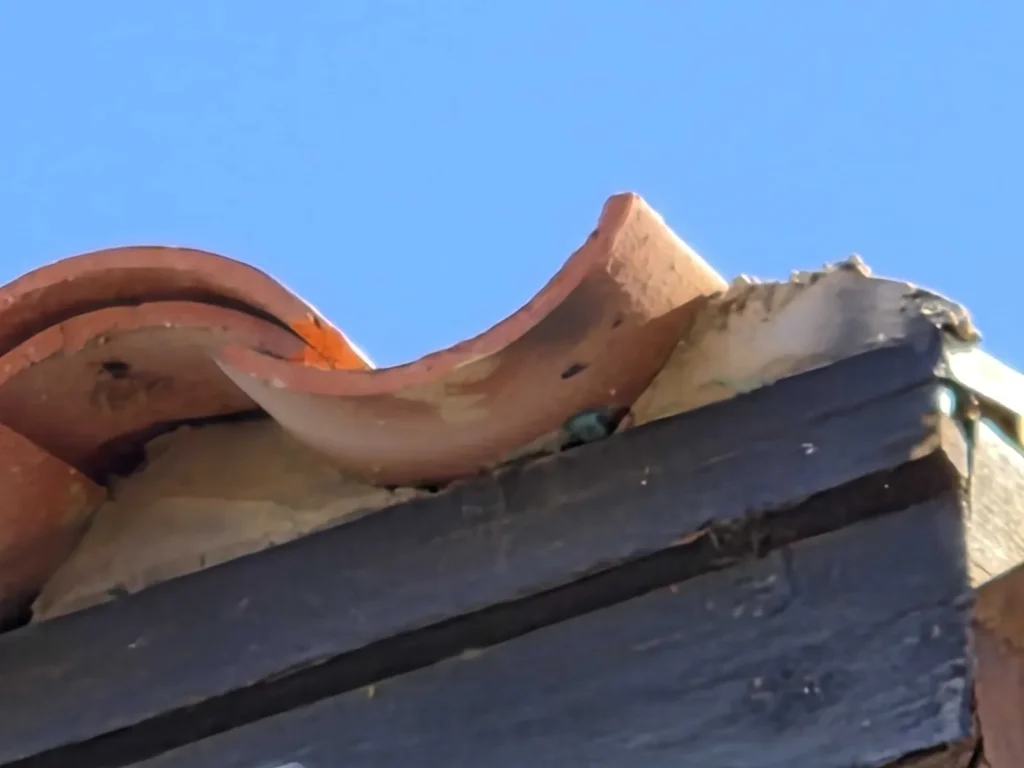
Her first flight is a reconnaissance mission. She is architect, laborer, and hunter, all embodied in one fragile form. She surveys the landscape, seeking the perfect location to establish her throne. The sheltered eave of a house, the sturdy arm of a saguaro, the dark corner of a porch ceiling. This initial, solitary phase is the most vulnerable point in the entire wasp life cycle. As the University of Arizona’s Cooperative Extension details, the entire colony’s future rests on the survival of this single foundress.
Once a site is chosen, the genesis begins. She scrapes away weathered wood fibers from fences, dead branches, or even cardboard, chewing them into a fine pulp. With this paper-mâché, crafted from saliva and cellulose, she meticulously constructs the first hexagonal cell and attaches it to the surface with a thin stalk, or petiole. Into this cradle, she lays a single egg.
This pattern of a solitary queen initiating a colony is a fundamental rhythm of nature, a principle that governs social insects far beyond our desert borders, as noted by federal bodies like the USDA Forest Service. For weeks, she will repeat this process. Foraging for caterpillars to feed her first grubs, expanding the nest cell by painstaking cell, and defending her nascent kingdom with a ferocity born of desperation. If she perishes now, the dynasty dies before it is ever truly born.
Act II: The Kingdom Rises (Late Spring – Mid-Summer | May to July)
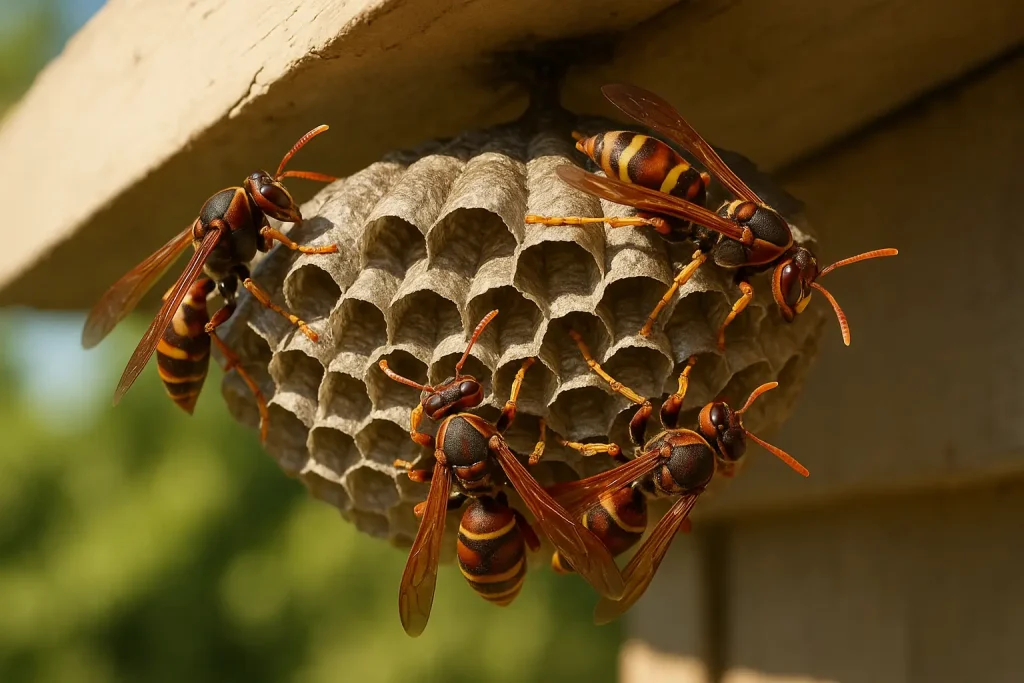
The queen’s solitary reign is over. From the first capped cells emerge her daughters. An army of sterile female workers, born into a life of ceaseless labor. With their arrival, the queen’s role shifts dramatically. She retreats to the heart of the nest, becoming a dedicated matriarch, an egg-laying engine whose sole purpose is to swell the ranks of the burgeoning city-state.
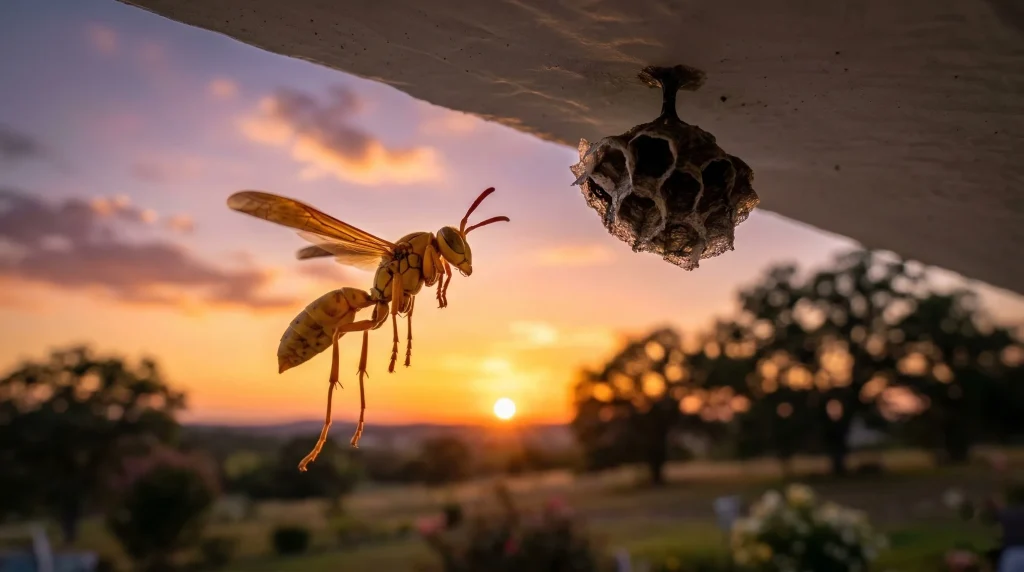
This is the moment “wasp season” truly begins for most Arizonans. The workers, driven by an ancient and implacable instinct, assume all duties. The nest expands with astonishing speed, growing from a small, delicate saucer into the iconic, open-faced umbrella comb, a marvel of paper architecture. The population explodes. Some workers forage endlessly, hunting caterpillars and other soft-bodied insects to feed the insatiable larvae waiting in their hexagonal cradles. Others become masons, adding new cells to the comb. And a dedicated guard stands ready, defending the colony with a suicidal ferocity that has earned them their fearsome reputation.
During this growth phase, the colony functions as a single, perfectly unified organism. As the University of California’s Integrated Pest Management program explains, the workers’ entire focus is on gathering protein to fuel the colony’s expansion. This makes them highly effective, if accidental, garden guardians, controlling many common plant pests. Yet, it is this same disciplined, explosive growth that can bring them into conflict with their human landlords. When a nest that was the size of a quarter in May becomes the size of a fist, or a dinner plate, by July, the kingdom’s borders can feel uncomfortably close.
Act III: The Golden Age & The Inevitable Fall (Late Summer – Early Fall | August to October)
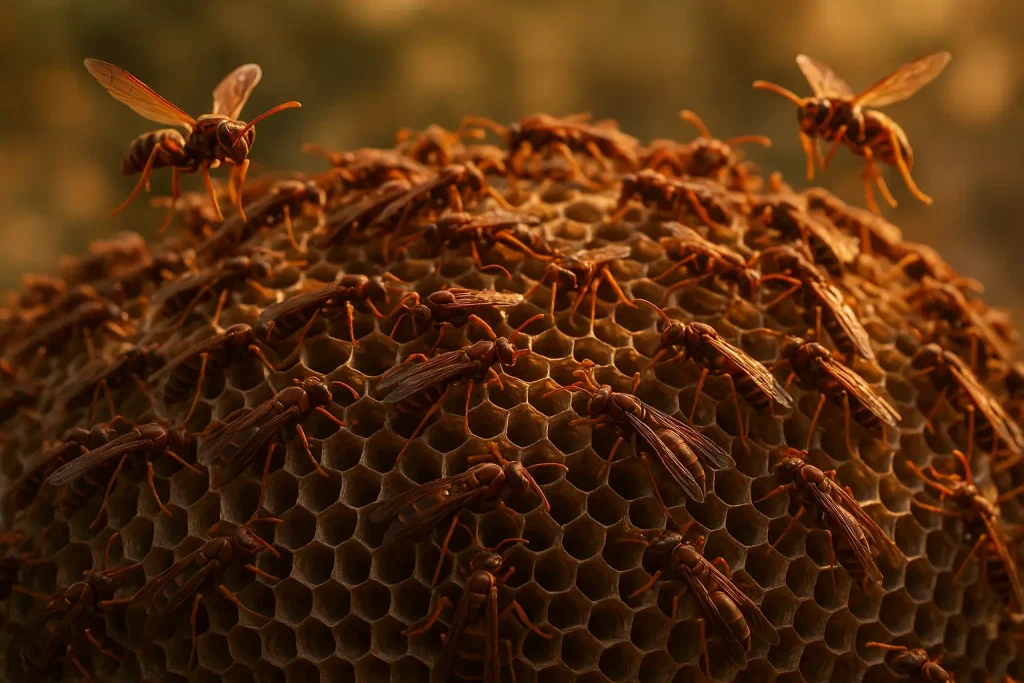
By August, the paper nest is a bustling metropolis, the queen’s dynasty at its absolute zenith. But a profound change is underway. The queen, her life’s great labor nearing its end, makes a final, crucial shift in her production. She ceases laying eggs destined to become sterile workers and instead begins to birth a new generation of royalty: fertile males (drones) and future queens (gynes). The colony’s entire focus pivots from expansion to procreation.
This new aristocracy emerges into a kingdom at its peak, and soon, the air is filled with the purpose of their mating flights. Once the new queens are fertilized, the colony’s ancient contract is fulfilled. Its structure begins to fray and dissolve with astonishing speed. The founding queen, her purpose served and her body spent, dies. Without her pheromonal guidance, the colony’s rigid social order collapses into anarchy.
The remaining workers, their life’s work of raising larvae now complete, become listless and disoriented. As their natural food sources dwindle, they develop a frantic craving for sugar, which is why they become such a notorious nuisance at late-summer picnics and outdoor gatherings. This end-of-season aggression is a well-documented phenomenon; as the University of New Hampshire Extension explains, this desperate, chaotic search for sustenance is the last act for a dying colony. They are doomed, and they seem to know it. The first true cold snap will kill them all. The nest is abandoned, left as a gray, silent monument to a season of relentless, sun-fueled ambition.
Act IV: The Long Sleep (Late Fall – Winter | November to January)
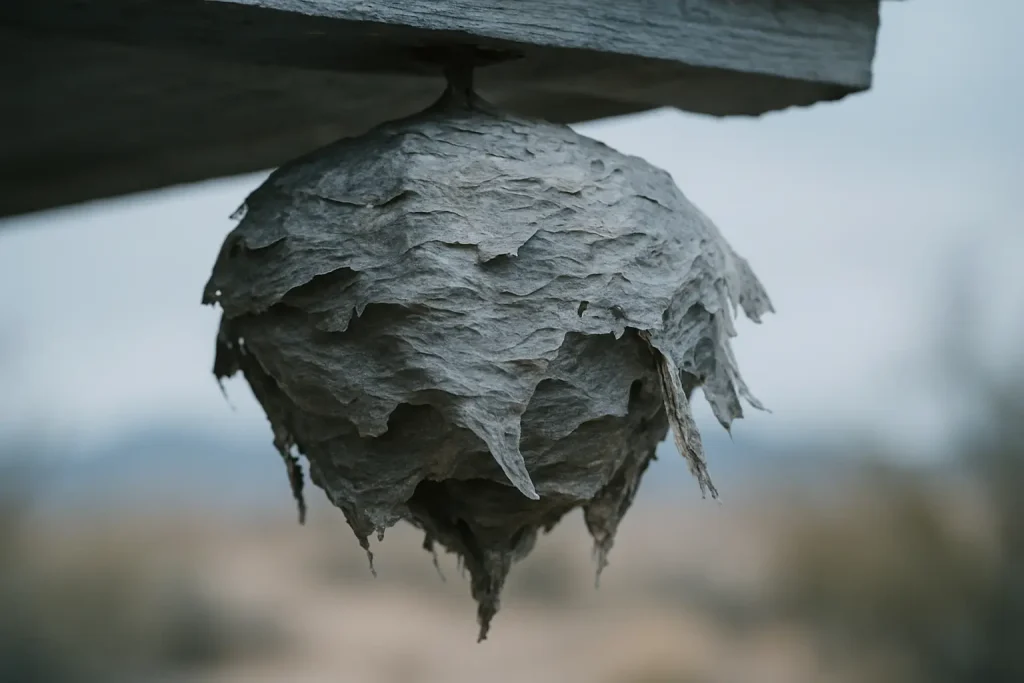
The curtain falls. The desert finally cools, and a profound silence descends upon the eaves and branches. The once-thriving paper metropolises are now just that. Paper. They are empty husks, slowly dissolving back into the elements, ghost cities haunted only by the memory of a summer’s ambition. The great, chaotic drama is over.
Or is it?
This is the Reign of Silence, but it is not an act of finality. It is an act of waiting. Hidden away in the deepest, most insulated crevices they could find, the newly mated queens have entered a state of suspended animation. This process, known as diapause, is a common survival strategy for many insects facing the lean months of winter, as detailed by entomologists at the University of Maryland Extension. Their metabolisms slow to a near-standstill, their life force banked like a coal, preserving a single, precious spark against the cold.
They are the sole inheritors, the living archives of their entire lineage, waiting patiently for the sun to turn the page and command the story to begin once more.
Conclusion: The Cycle Turns
From the solitary ambition of a single queen to the furious industry of her kingdom, through the tragic, inevitable collapse and into the long, silent sleep of her heirs, the wasp’s year is a complete and perfect circle. This rise and fall is not a random nuisance; it is a fundamental rhythm of the Arizona desert, a drama of sun and season that unfolds in our backyards, whether we are watching or not.
Understanding this cycle gives us a new perspective. The next time you see a lone wasp in the early spring, you might see not just a pest, but a queen on a desperate and noble mission. And yet… nobility loses its shine when her paper citadel grows too close to your home, when the air above your patio hums with her loyal guard.
When her kingdom’s borders cross the threshold of your own, perspective must give way to practicality. You don’t have to wait for the final act to play out on your walls.
Frequently Asked Questions About Wasp Season in Arizona
When do wasps become active in Arizona?
Most queens emerge from winter dormancy between late February and April, beginning the search for nesting sites as temperatures rise.
When is peak wasp season in Arizona?
Peak activity usually occurs from late May through early September, when worker populations are highest and nests expand rapidly.
Do wasps die off in winter in Arizona?
Yes. The entire colony dies with the arrival of cold weather, leaving only newly mated queens alive to overwinter in sheltered spaces.
Why are wasps more aggressive in late summer?
By August or September, the colony shifts from raising workers to producing new queens and males. As food sources dwindle, workers seek sugar and become more defensive.
Can I remove a wasp nest myself in Arizona?
Small, early-season nests can sometimes be removed safely with caution and proper protection. However, removal during peak season is risky due to aggressive worker behavior. Professional help is the safest option.
Reclaim Your Space
Whether you’ve spotted the lone founder queen under your eaves in spring or found a sprawling paper fortress humming with life in midsummer, timing is everything. The story of the wasp will continue, but it doesn’t have to be written on your property.
For safe, effective wasp removal in Phoenix, our team is equipped to end the season on your terms. The sooner you act, the easier it is to reclaim your peace.
Contact us today, and let’s draw the curtain on this chapter before it reaches its sting.