

Introduction
There’s a sound that starts soft. A faint hum, like a vibrating phone deep inside your drywall. Most people ignore it at first. But over days or weeks, it grows louder. Then, one day, you glance up and see a dark stain blooming on the ceiling, or a few bees slipping in and out of a wall vent. That’s when you realize: the hive isn’t outside. It’s inside your home.
This blog explores one of the most misunderstood pest problems in Arizona: honey bees nesting in walls, ceilings, and roof cavities. We’ll show you what it looks like, what dangers it poses, and why removing just the bees isn’t enough.
Photo Evidence: Real Hive, Real Home 🌍
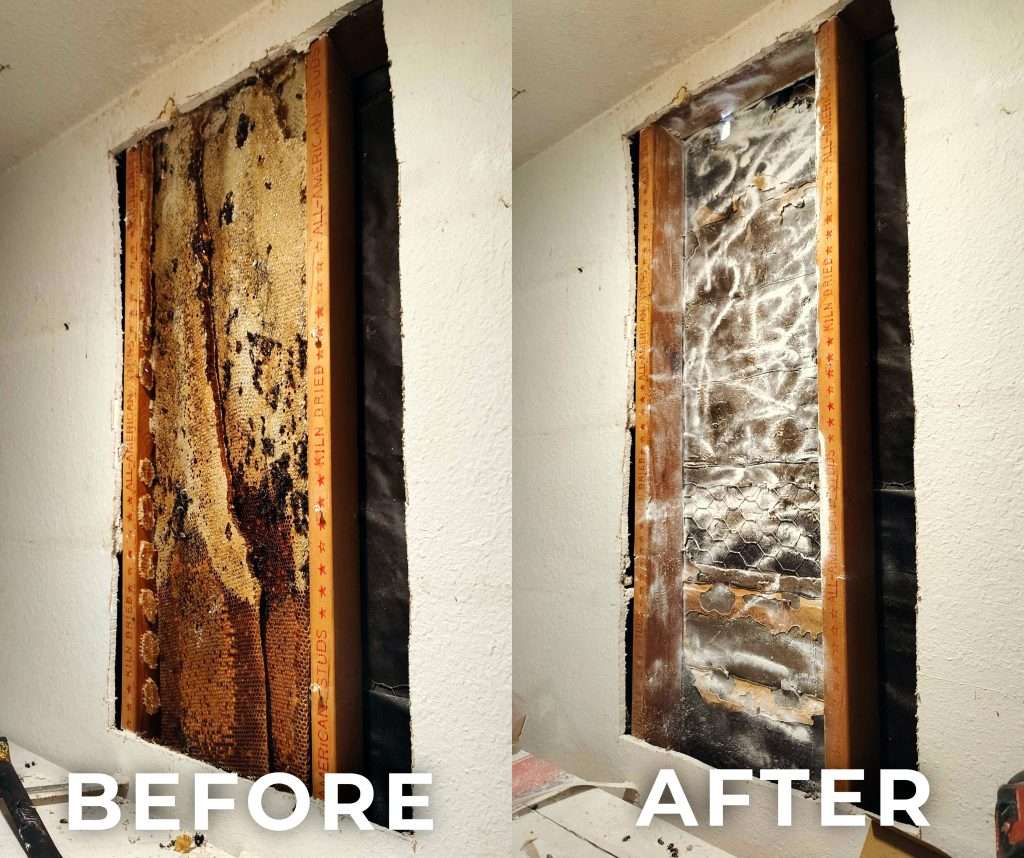
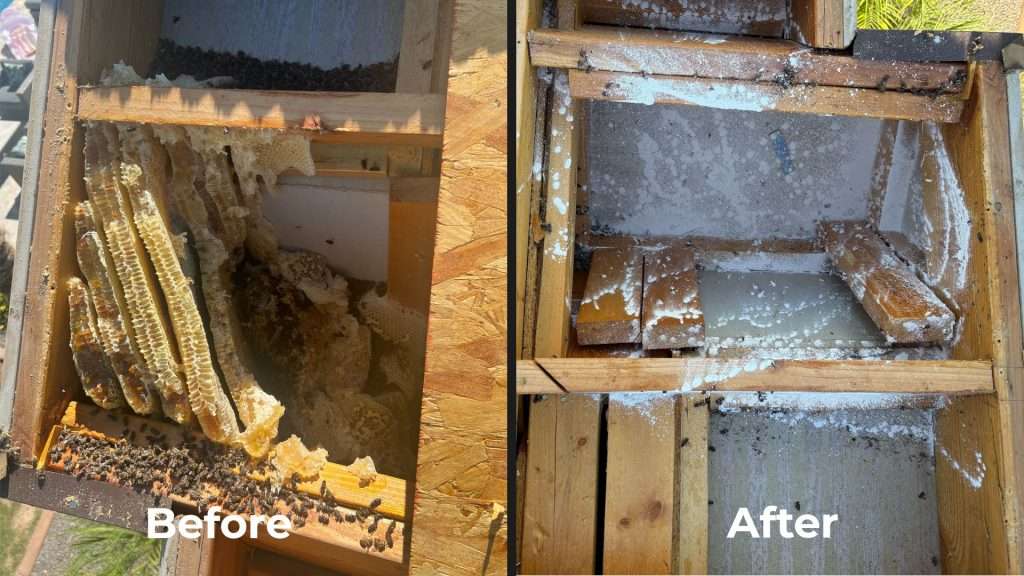
These dramatic before-and-after photos reveal what many homeowners never see. Until a technician cuts open the structure. In one case, a massive hive was hidden behind an interior wall, stretching several feet and dripping with honeycomb. In another, bees had fully colonized a roof cavity, their comb wedged deep into the framing. Both infestations weighed dozens of pounds and had clearly been developing for months. Without full honey removal and proper sanitation, these spaces would remain vulnerable to reinfestation, mold, and odor.
Why Bees Choose Walls and Ceilings 🌳
Bees are opportunistic architects. They typically look for tree hollows, abandoned burrows, or rocky overhangs, but in modern Arizona neighborhoods, walls and ceilings offer the same protection. Wall voids are warm, dry, and shielded from predators. A soffit, attic vent, or weep hole is all it takes for a scout bee to find a perfect cavity.
Once inside, they begin building combs rapidly. Within days, the queen starts laying eggs, and within weeks, thousands of bees may be living just inches behind your drywall.
Why Just Removing the Bees Isn’t Enough ❌
Many pest control companies offer bee extermination. Fewer offer full removal. But here’s the truth:
If you leave the honeycomb in your wall, the problem isn’t over.
Here’s why:
- Melting Honey. In Phoenix’s extreme heat, leftover honey can melt and drip into insulation, framing, and drywall.
- Attracts Pests. Fermenting honey draws ants, cockroaches, moths, and rodents.
- Structural Damage. Bees chew through insulation, wiring, and even plaster to ventilate the hive.
- Pheromone Trails. Residual bee scent can attract new swarms to the same location for years.
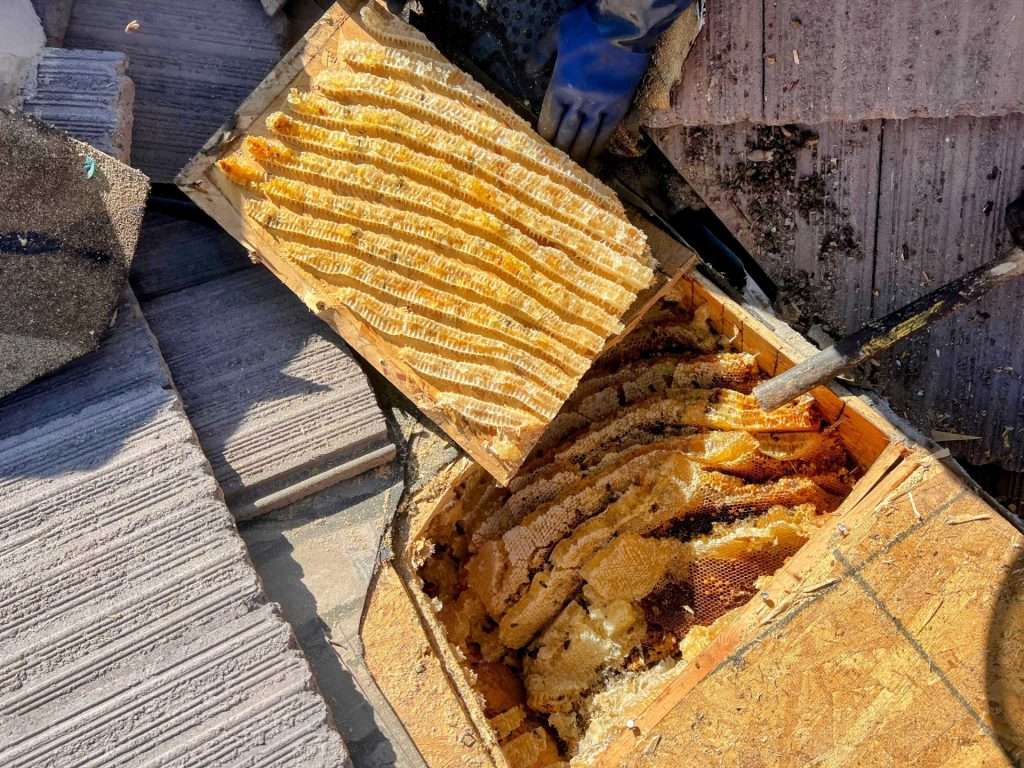
Proper removal includes opening the cavity, extracting all comb and residue, sanitizing the space, and sealing all access points.
Our Live Bee Removal Process ✔️
At Busy Bee Pest Solutions, we specialize in live bee removal whenever possible. Here’s how we do it:
- Thermal Imaging or Audio Scans to locate the hive
- Precision Opening of walls or ceilings to minimize damage
- Safe Extraction of the bees using suction and transport hives
- Comb Removal and Sanitization using eco-friendly cleaners
- Closure and Repairs to restore your property and seal entry points
This method preserves pollinators, protects your home, and prevents reinfestation. Learn more in our post on Live Bee Removal in Phoenix.
Common Hive Locations in Arizona Homes 🏡
In the blazing Arizona heat, bees are incredibly resourceful when it comes to finding shelter. Whether it’s the hollow space inside your wall or the shaded crevice beneath your shed, they’ll seek out any cool, protected cavity to build their hive.
We’ve seen it all. From textbook infestations to the downright bizarre. If there’s a gap, a void, or a cozy corner in your home’s structure, it’s fair game for a colony looking to move in.
- Inside block walls
- Under roof eaves
- Inside ceilings and attic joists
- In pool equipment sheds
- Beneath mobile home floors
- In irrigation boxes
We even documented a case of bees nesting in a ceiling fan!
Explore more strange places bees hide in our guide to where Phoenix bees hide.

FAQ: Do the Bees Come Back? 🤔
Yes. If you don’t remove the honeycomb. Reinfestation is very common in untreated wall voids. Our method ensures bees can’t smell residual pheromones or find easy entry points again.
Why Professional Removal Is Worth It 🚨
Removing bees yourself is dangerous. Not only are Africanized honey bees more aggressive in Arizona, but wall removals require precision tools and experience.
We handle cases across Phoenix, Mesa, Gilbert, and surrounding cities.
Ready to Fix the Buzz in Your Walls? 🌼
If you suspect a bee infestation inside your home, don’t wait for honey to start dripping or drywall to collapse. Call or contact Busy Bee Pest Solutions with our contact form for an inspection and expert bee removal.
Or, explore more tips on How to Spot a Bee Infestation 🐝
Related Articles:
- Bee Removal Tips for the Phoenix Area
- Bee Swarm Phoenix: What to Do
- What Happens to Bees After Removal?
Rooftop solar panels are another common spot. See Bees Under Solar Panels in Phoenix.


