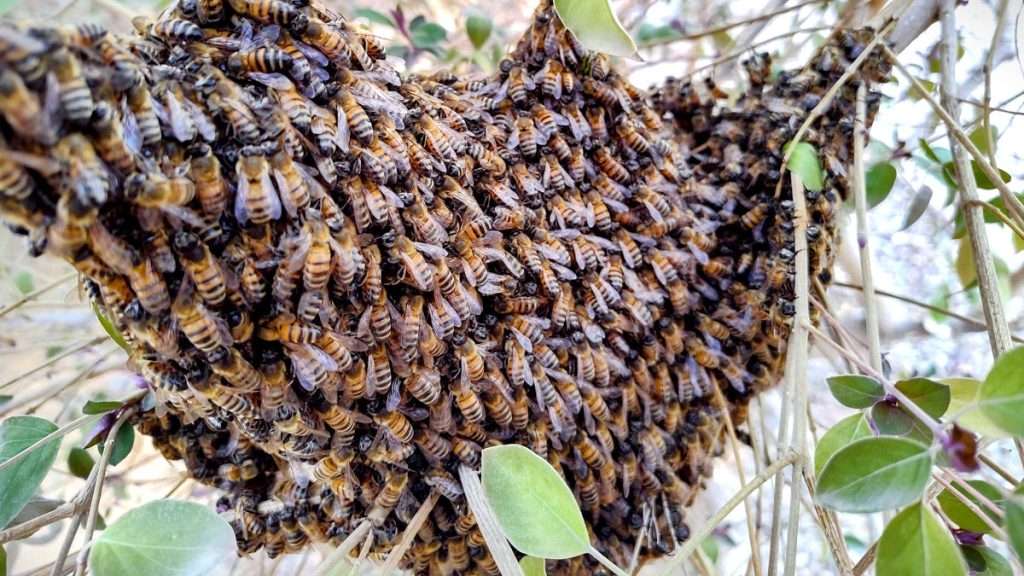
Phoenix homeowners deal with bee activity almost year-round, especially during Arizona swarm season in spring and early summer. While bees are important pollinators, they become a serious problem when they move into walls, attics, rooflines, sheds, or pool equipment.
At Busy Bee Pest Solutions, we regularly remove bee hives from:
- Stucco walls
- Roof eaves
- Irrigation boxes
- Block walls
- Attics
- Pool equipment
- BBQ islands
- Sheds and garages
The problem is that once a colony establishes itself, removal becomes far more expensive and invasive. Preventing bees from nesting in your home is much easier than removing an active hive later.
Here are the most effective ways to bee-proof your Phoenix home and reduce the risk of a bee infestation.
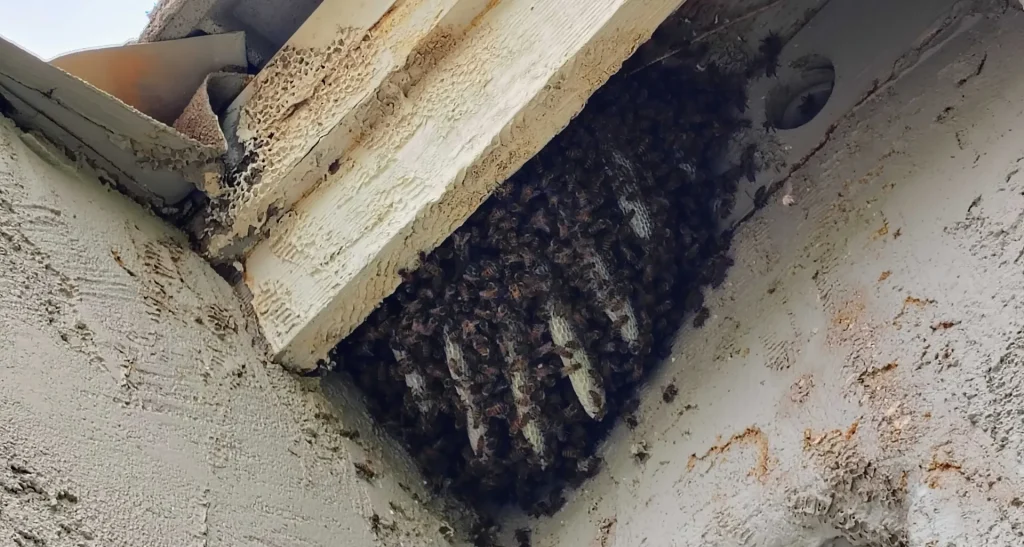
Why Bees Choose Phoenix Homes
Honey bees search for locations that are:
- Dark
- Protected from heat
- Safe from predators
- Near water and flowering plants
Unfortunately, Arizona homes provide perfect nesting conditions.
Common bee nesting areas include:
- Gaps under roof tiles
- Open stucco cracks
- Unscreened vents
- Hollow block walls
- Utility penetrations
- Pool equipment enclosures
- Outdoor storage areas
Once scout bees locate a suitable cavity, an entire swarm can move in surprisingly fast.
Signs Bees May Be Moving Into Your Home
Many homeowners miss the early warning signs of a developing hive.
Watch for:
- Bees repeatedly entering the same hole or crack
- Increased bee activity near the roofline
- Buzzing sounds inside walls or ceilings
- Sticky honey stains on stucco
- A sweet odor near vents or attic spaces
- Bees gathering near irrigation boxes or pool equipment
If you notice consistent bee traffic for more than a day or two, there’s a good chance a colony is beginning to establish itself.
7 Ways to Bee-Proof Your Home in Phoenix
1. Seal Small Cracks and Entry Points
Bees can enter openings as small as a pencil width.
Inspect and seal:
- Stucco cracks
- Gaps around pipes
- Openings around electrical boxes
- Roofline penetrations
- Spaces beneath eaves and soffits
This is one of the most effective ways to prevent bees from entering walls and attics.
2. Install Screens Over Vents
Unscreened vents are one of the most common bee entry points in Arizona homes.
Use fine mesh screens over:
- Attic vents
- Dryer vents
- Chimneys
- Roof ventilation openings
Be sure airflow is not restricted while screening openings.
3. Inspect Pool Equipment Areas
In Phoenix, bees frequently build hives inside pool equipment enclosures because they provide shade, warmth, and protection.
Check:
- Pump housings
- Valve boxes
- Irrigation boxes
- Fake rock covers
These hidden areas are often overlooked until a large colony develops.
4. Reduce Yard Clutter
Unused materials create sheltered spaces bees love.
Remove or organize:
- Wood piles
- Old furniture
- Storage bins
- Junk piles
- Unused grills
- Construction debris
Keeping the yard clean removes potential nesting zones.
5. Trim Trees and Shrubs Away From the House
Overgrown landscaping creates shaded access points near your home.
Trim back:
- Citrus trees
- Bougainvillea
- Dense shrubs
- Palm growth near rooflines
This helps reduce concealed entry areas for scout bees.
6. Watch for Scout Bees During Swarm Season
One or two bees repeatedly inspecting the same area may not be random.
Scout bees often investigate:
- Roof tiles
- Wall voids
- Attic vents
- Block wall gaps
Catching this early can prevent thousands of bees from moving in later.
Phoenix swarm season is especially active during warm spring afternoons.
7. Schedule a Professional Bee Inspection
If your property has had bee problems before, yearly inspections can help catch vulnerabilities early.
Professional inspections can identify:
- Hidden entry points
- Old comb scent attracting new colonies
- Structural vulnerabilities
- Areas prone to repeat infestations
This is especially important for older homes in Phoenix, Scottsdale, Mesa, and Glendale where wall void access is common.
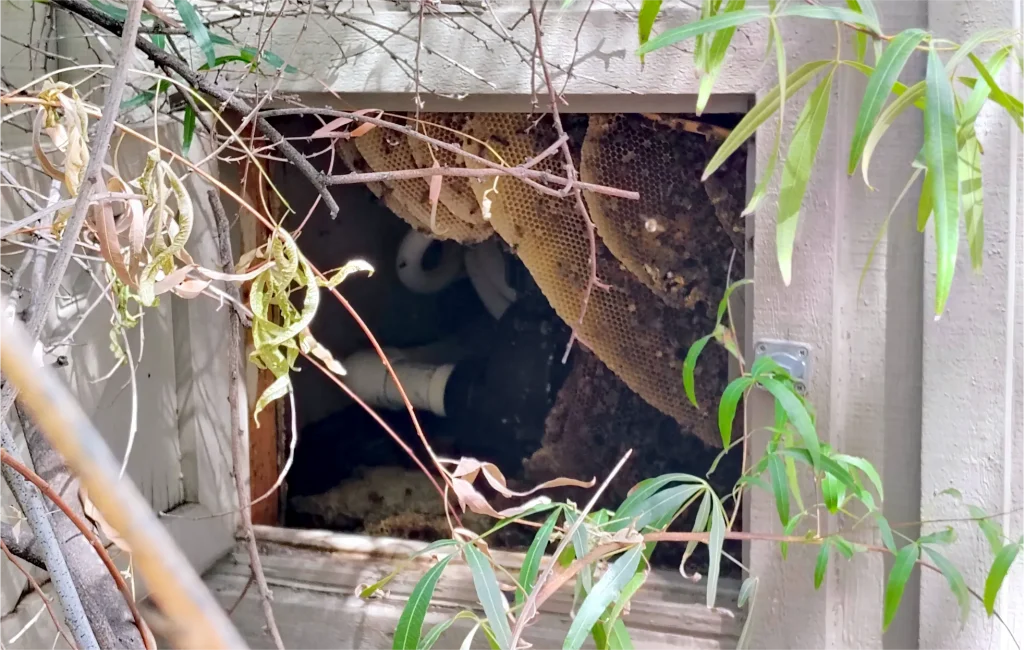
Why DIY Bee Prevention Sometimes Fails
Many homeowners seal visible bee entrances without removing the existing colony or honeycomb inside.
This can create:
- Trapped bees entering the home
- Melting honey inside walls
- Repeat infestations
- Aggressive defensive behavior
If bees are already established, professional removal is usually the safest option.
Professional Bee Removal and Prevention in Phoenix
At Busy Bee Pest Solutions, we provide:
- Same-day bee removal
- Live bee relocation when possible
- Honeycomb cleanup
- Bee-proofing recommendations
- Wall hive removal
- Roof hive removal
- Emergency bee removal
We serve homeowners throughout:
Need Help Preventing Bees From Nesting?
If you’ve noticed scout bees, increased bee activity, or signs of a developing hive, acting early can save you thousands in repairs later.
📞 Call Busy Bee Pest Solutions today for professional bee removal and prevention services in Phoenix.
Safe. Fast. Honest local experts. 🐝