

In Phoenix, bees are some of the cleverest home invaders around. They’ll build hives in spots you’d never expect. Sometimes right under your nose! Here’s a local guide to the weirdest, wildest, and most dangerous places we find bee hives and swarms all over the Valley, with real photos from actual removals by Busy Bee Pest Solutions.
Attics: The Classic Hidden Hive
Attics are hot, dark, and rarely disturbed. Just what bees love for starting a colony. Tile roofs and vents in Phoenix homes make it easy for bees to sneak in. They build honeycomb between rafters, causing honey leaks and expensive repairs if left unchecked.
Why bees choose attics:
- High off the ground (safe from most predators)
- Easy access through roof vents, gaps, or eaves
- Warmth speeds up hive growth
Tip: If you hear buzzing in your ceiling or see bees near your roofline, learn about bee infestation signs here or contact us for an attic inspection.

Irrigation Boxes: Cool, Moist, and Full of Trouble
Irrigation boxes are underground, shaded, and stay cool even during Phoenix’s hottest months. Bees love the stable temperature, and the darkness protects the hive from wind and sun.
Why bees choose irrigation boxes:
- Moisture attracts thirsty bees
- Protected from predators, sun, and foot traffic
- Plenty of space for a big hive
Warning: Never open an irrigation box if you see bees entering or leaving, here’s how to handle bees in a pool or irrigation box.

Old Yard Junk, Vehicles, and Abandoned Items
That forgotten car, trailer, or pile of wood can quickly become a bee hotel. We’ve removed hives from inside old car trunks, junk piles, and unused equipment. The shelter, shade, and protection from rain make these irresistible.
Why bees choose junk:
- Undisturbed for long periods
- Shade and shelter from weather
- Unique shapes perfect for honeycomb
Pro tip: Clean out unused yard items each spring to prevent squatters!

Saguaro Cacti & Native Plants
Nothing says “Arizona” like a beehive in a saguaro cactus! Bees use old bird holes and natural hollows for instant protection. These hives are hard to spot until a swarm appears.
Why bees choose saguaros and trees:
- Ready-made cavities and natural insulation
- High up for safety
- Near blooming flowers for easy food
If you see bees around a saguaro, don’t approach, call our bee removal team for safe relocation.
Trees and Shrubs: Swarm Central
Bees often swarm in trees before settling or searching for a new home. Dense branches offer shade, security, and a launching pad for scouting bees.
Why bees choose trees:
- Natural cover from sun and wind
- Branches allow easy clustering
- Proximity to flowers and water
See a hanging cluster? Here’s what to do with bee swarms in Phoenix.


On Walls, Stucco, and Fountains
Cracks or voids in stucco walls or block fences become prime bee real estate. Fountains and decorative features, especially those with small cavities, also attract bees for water and shelter.
Why bees choose walls and fountains:
- Tiny gaps lead to large interior cavities
- Stucco, block, and stone provide insulation
- Running water attracts for hydration
See bees disappearing into a wall? Don’t try to seal it, call a pro to avoid trapping them inside.

Under Patios and Decks
The shaded, protected space under a patio or deck is perfect for bees escaping Phoenix’s brutal sun. Once established, hives here can quickly grow out of control.
Why bees choose patios:
- Shade from direct sunlight
- Protection from rain and wind
- Hidden from most human and animal activity
Bees under your patio? See our emergency guide for fast help.
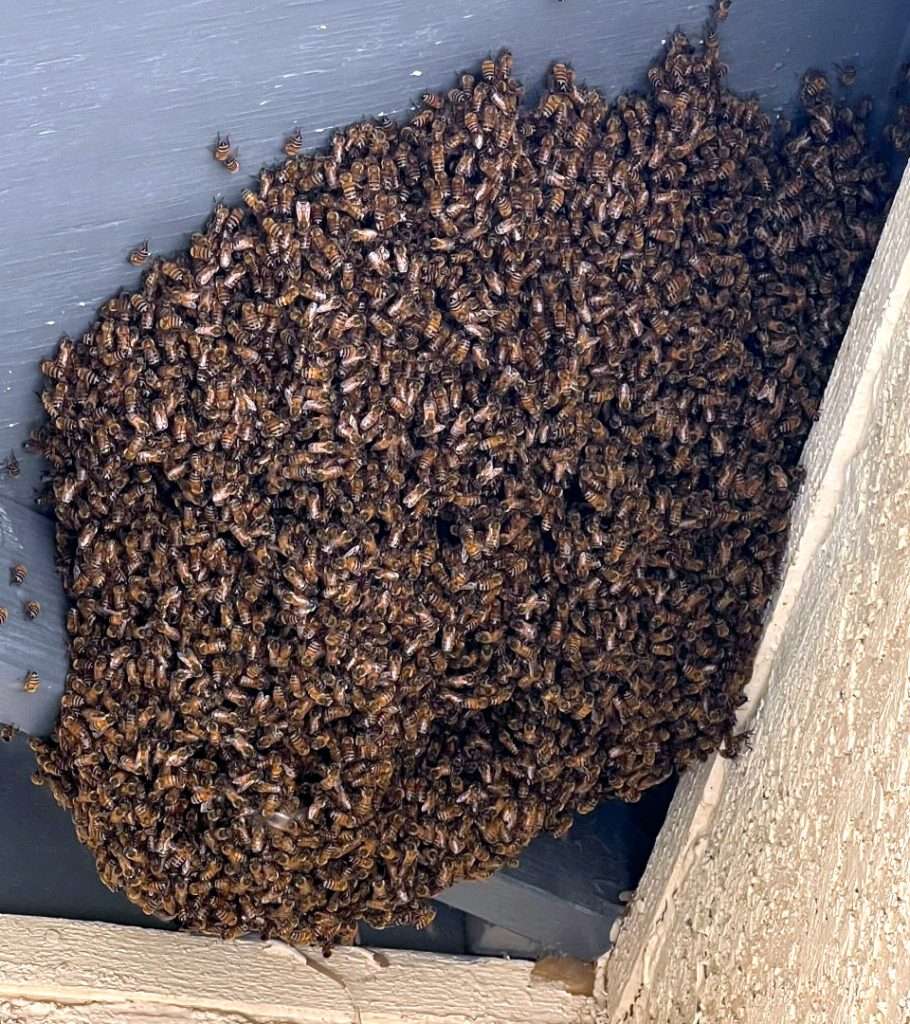

Pet Enclosures and Tortoise Pens
Bee hives in or under dog houses, tortoise pens, or rabbit hutches are more common than you’d think. These spots are rarely disturbed but offer shelter and safety.
Why bees choose pet enclosures:
- Low human disturbance
- Shade, cover, and a “roof”
- Sometimes a convenient water source nearby
Warning: Bees in pet enclosures can be extremely dangerous for your animals! Contact us for immediate removal.
Under Roof Eaves
Bees love to tuck themselves right under roof edges or in soffit vents. Eaves offer protection from rain and direct sun, while providing a sturdy structure for honeycomb.
Why bees choose eaves:
- Easy entry through vent holes
- Protection from Phoenix storms
- Height offers safety from ground-level threats

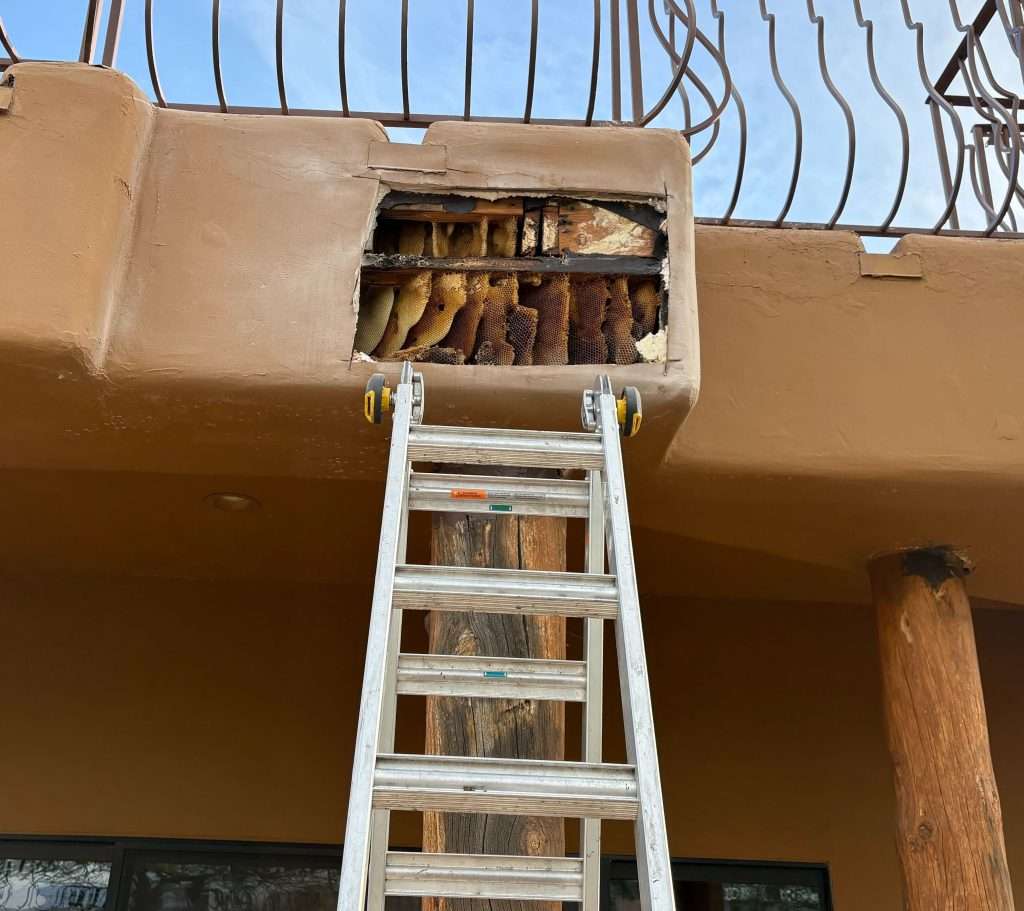
Giant Hives in Unbelievable Places (Bonus!)
Some hives are so big or so well hidden, we only find them after honey starts dripping through the ceiling or a wall!
We’ve seen combs several feet long in attics, walls, and even inside furniture.
How Do Bees Pick Their Hiding Places in Phoenix?
- Shelter from sun and storms: Phoenix’s summer heat is no joke. Bees need shady, insulated places to survive.
- Access to water: Fountains, irrigation, and shaded equipment boxes draw bees looking to cool the hive.
- Safety from predators and humans: High, hidden, or enclosed spots keep the hive protected.
- Room to grow: Once the queen decides it’s a good spot, the colony expands quickly. Sometimes right under your nose.
Signs You Might Have a Hidden Hive
- Increased bee activity near a specific spot
- Faint buzzing from walls, ceilings, or the yard
- Honey stains or dark spots on stucco or ceilings
- Swarms clustering on branches, fences, or patio covers
What To Do (And What Not To Do)
- Do NOT spray, seal, or disturb the bees.
- Africanized bees are common in Phoenix. Disturbing a hive can make things dangerous fast.
- Keep pets and kids away from the area until professionals arrive.
- Call Busy Bee Pest Solutions for expert bee removal and hive cleanup, no matter how hidden or strange the hive’s location!
Phoenix’s Bee Problem-Solvers. Here For You
With decades of experience and thousands of hives removed all over Phoenix, we’ve seen bees in every hiding spot you can imagine. If you’re not sure what you’re dealing with, send us a photo or book an inspection.
For more tips, check out our Bee Removal FAQ,
or see our full blog for the latest advice.


