

You finally handled the bees. Whether you chose live bee removal or a standard treatment, the buzzing has stopped, the flight path is gone, and things feel quiet again.
So… problem solved, right?
Not quite.
One of the most common questions homeowners in Phoenix, Mesa, and Scottsdale ask is:
“Can I just leave the honeycomb in the wall?”
The short answer is simple: No.
In Arizona’s extreme climate, leaving honeycomb behind can actually cause more damage than the bees themselves. What looks like an “empty hive” is often a hidden, slow-developing problem that can impact your home for months, or even years.
Let’s break down exactly why honeycomb removal is a critical step, not an optional one.
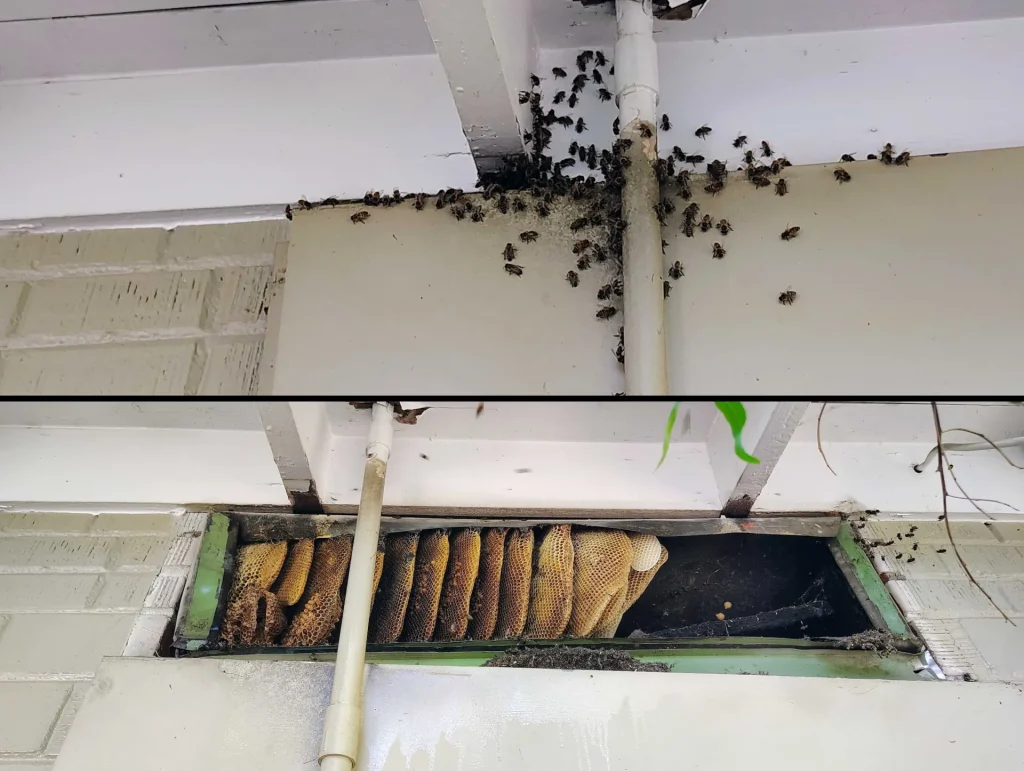
1. The Arizona Heat Problem: When Honey Turns Into a Structural Threat
A healthy hive is surprisingly well-regulated. Thousands of bees work together to maintain internal temperature, fanning their wings to keep the wax comb stable. Even in 110°F+ heat.
But once the bees are gone, that natural cooling system disappears instantly.
What’s left behind is often 20 to 80 pounds of honey and wax, sitting inside your walls, attic, or roofline.
In Arizona’s summer heat:
- The wax softens and collapses
- The honey liquefies and begins to flow
- Gravity takes over
This leads to:
- Drywall staining: Sticky, dark patches that bleed through paint
- Insulation damage: Honey saturation that ruins thermal efficiency
- Wood rot: Fermenting organic material breaking down structural elements
- Persistent odor: A sour, decaying smell from old honey, pollen, and larvae
What started as a bee issue can quickly turn into a costly home repair problem.
If you’re already dealing with activity in hidden spaces, check out why bees choose these areas in our guide on why bees nest in walls, roofs, and valve boxes.
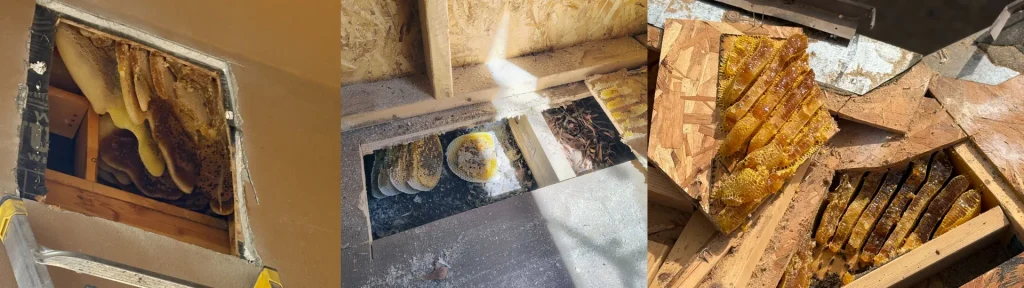
2. The “Move-In Ready” Effect: Why Bees Keep Coming Back
Bees don’t randomly choose locations. They rely heavily on scent. Especially pheromones embedded in wax and honeycomb.
Even after removal, leftover comb acts like a signal to future swarms:
“This location worked before. It’s safe. It’s ready.”
To a passing bee swarm, your wall or attic becomes a fully furnished home.
This is why homeowners often experience repeat infestations in the exact same spot.
If the comb isn’t removed and the area isn’t cleaned properly, you’re not preventing the problem. You’re just delaying the next one.
Searching for bee removal near me again next season becomes very likely.
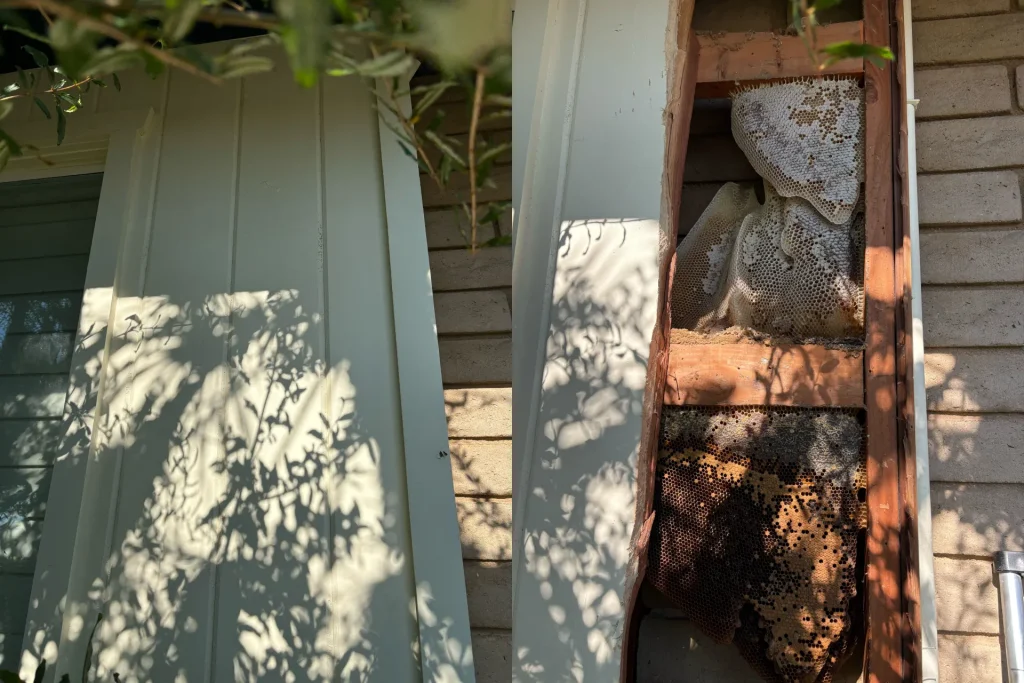
3. Secondary Pest Infestations: A Hidden Domino Effect
Once bees are gone, the hive becomes unguarded.
What remains is a dense source of:
- sugar (honey)
- protein (pollen and brood)
This combination attracts a wide range of pests almost immediately:
- Ants and roaches establish feeding trails within days
- Wax moths and hive beetles invade and break down the comb into a foul, webbed mess
- Rodents are drawn to the calorie-dense food source and may chew wires or insulation
An abandoned hive essentially becomes a self-contained ecosystem for pests, expanding your problem beyond bees.
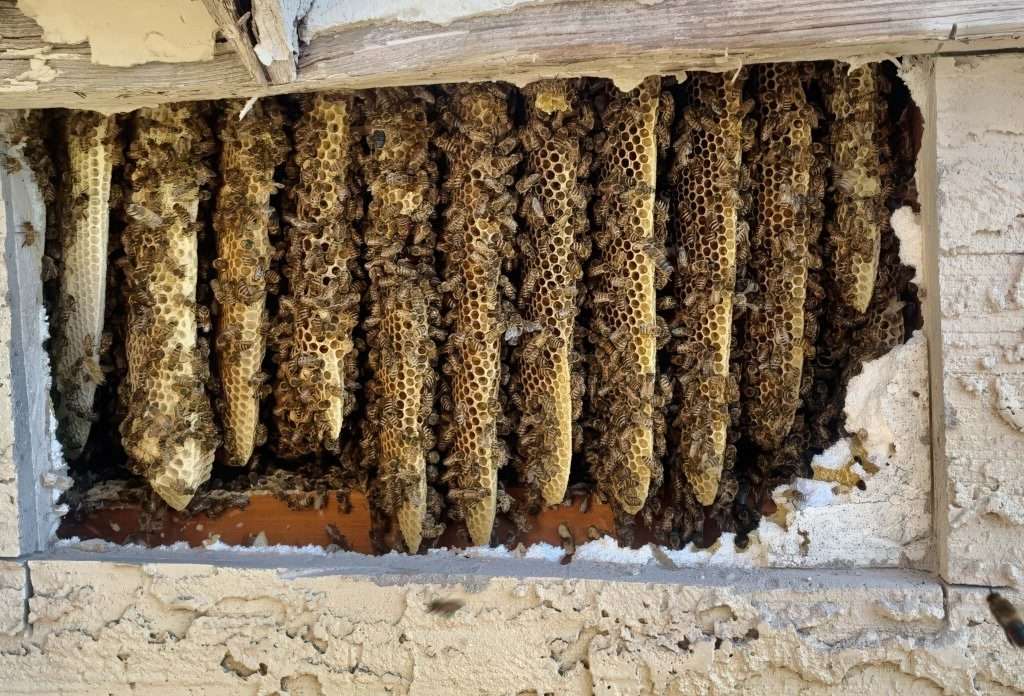
4. The Difference Between “Killing Bees” and Solving the Problem
One of the biggest misconceptions in pest control is that removing the bees is the entire job.
In reality, that’s only step one.
Low-cost services or DIY attempts often involve:
- spraying pesticide into a wall
- eliminating visible bee activity
- leaving everything else behind
This approach can create worse long-term consequences than doing nothing at all.
If you’re considering handling it yourself, it’s worth understanding the risks in our guide on the dangers of DIY beehive removal.
True resolution requires:
- removing the bees
- extracting all honeycomb and organic material
- eliminating scent markers
- sealing entry points
Anything less leaves the job unfinished.
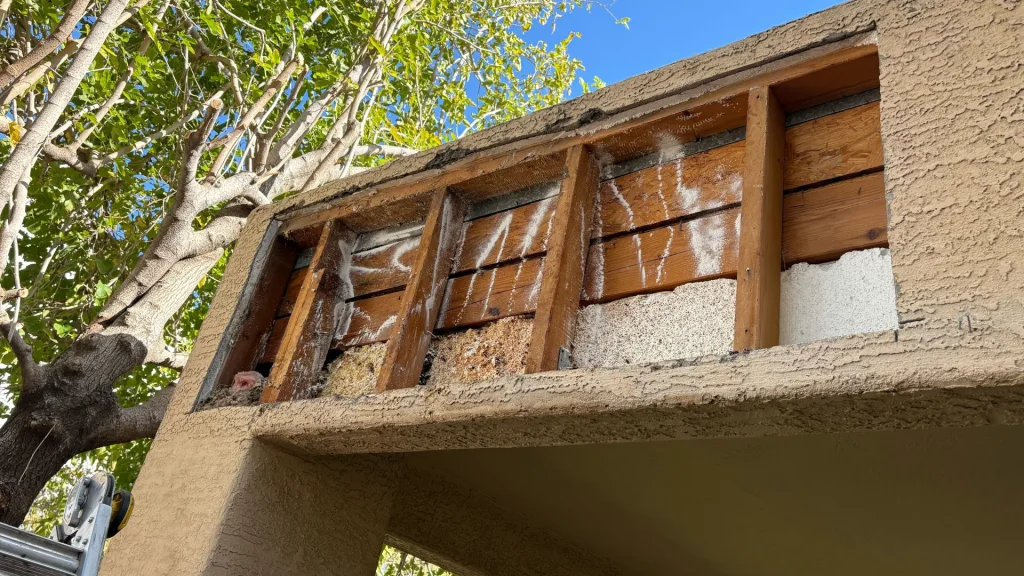
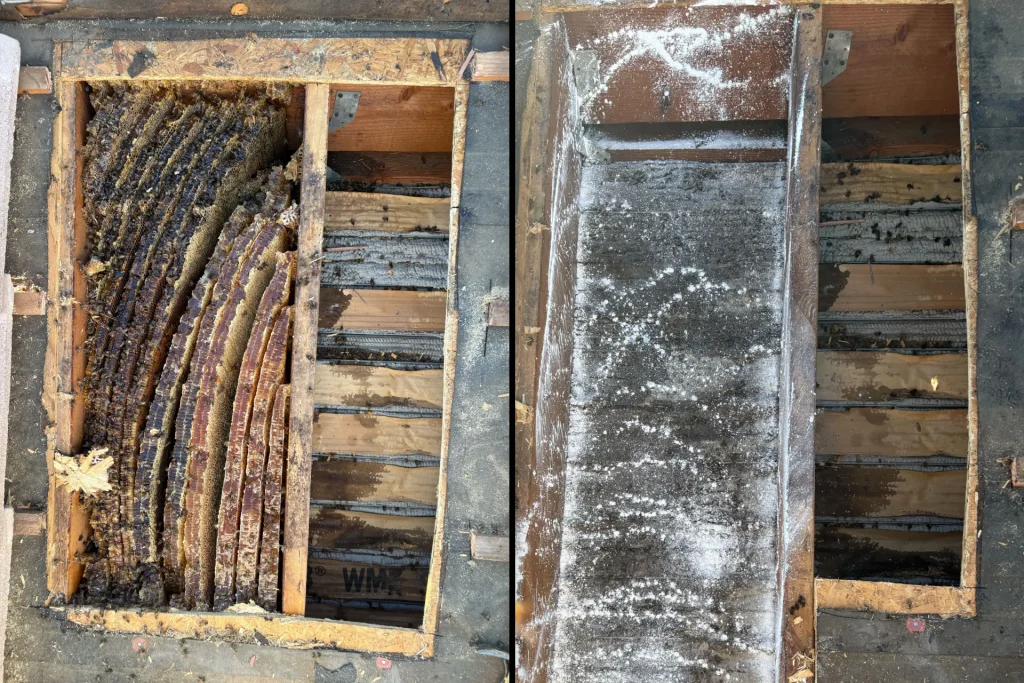
What Professional Honeycomb Removal Looks Like
At Busy Bee Pest Solutions, we take a full-scope approach to every job. Whether it’s standard honeybees or aggressive Africanized bees in Arizona.
Our process includes:
1. Full Extraction
We access the affected area (walls, ceilings, eaves, or rooflines) and remove:
- all wax comb
- all honey
- all remaining hive material
You can see real examples in our image gallery.
2. Cleaning & Pheromone Neutralization
We thoroughly clean the cavity to remove:
- honey residue
- pheromones
- organic debris
This step is critical to prevent future swarms from detecting the location.
3. Repair & Bee-Proofing
We seal entry points and reinforce vulnerable areas.
For additional prevention tips, see our guide on bee-proofing your home in Phoenix.
Not Sure If It’s Bees or Wasps?
Not every nest involves honeycomb.
If you’re unsure what you’re dealing with, visit our Bee and Wasp Identification Guide.
For example, yellow paper wasps build very different structures and require a different treatment approach.
Don’t Leave a Hidden Problem Behind
An abandoned hive inside your home isn’t harmless. It’s a ticking time bomb.
What starts as a resolved bee issue can turn into:
- structural damage
- recurring infestations
- secondary pest problems
If you suspect there’s still honeycomb in your walls, attic, or even near areas like pool equipment, it’s best to address it before the damage begins.
For expert help in your area:
You can also browse our Busy Bee FAQ or explore more articles on our pest control blog.
Final Thoughts
Removing bees is only half the job.
Removing the honeycomb is what actually protects your home.
If it’s left behind, the problem doesn’t disappear. It just changes form.
Stop the damage before it starts. Call Busy Bee Pest Solutions today.
Don’t Let a Small Bee Problem Turn Into a Bigger Repair Bill
If you’re seeing bee activity around your home, hearing buzzing in a wall, or spotting a fresh swarm, our team can help fast. Get expert bee removal from a local Arizona company that knows how to solve the problem at the source.


