Introduction: Why You’re Hearing Scratching in Your Attic in Phoenix
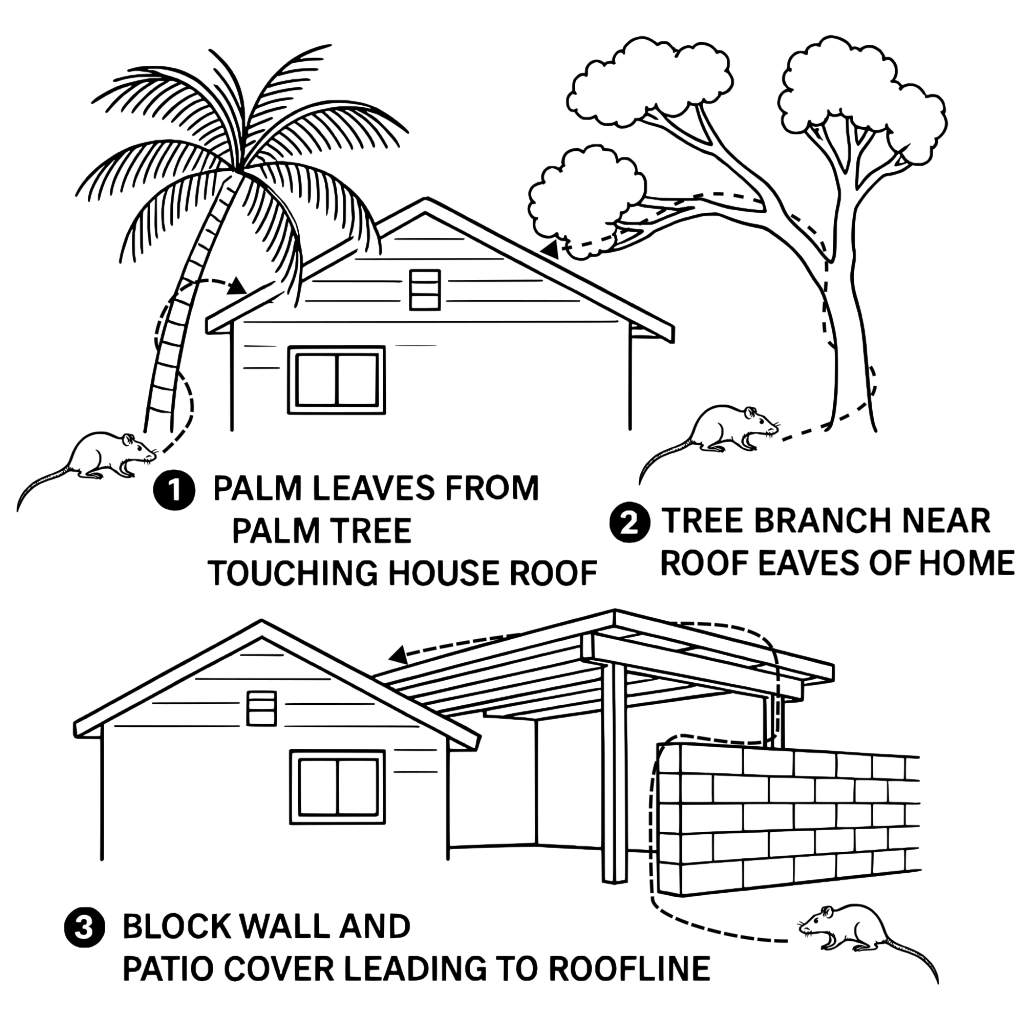
If you’re hearing scratching or scurrying above the ceiling, you’re not imagining it. In Phoenix, attic activity is often tied to roof rats using predictable access points like roofline gaps, vents, and “roof bridges” (trees, block walls, patio covers).
If you’re still confirming what the sound is, start with: Hearing Scratching Sounds in Your Attic? Phoenix Guide to Rodents & Next Steps.
This guide is the next step: how they’re getting in, how to find the entry point without guessing, and the correct order to solve the problem so it doesn’t come back. If you need help right away, you can jump to Rodent Control Phoenix.
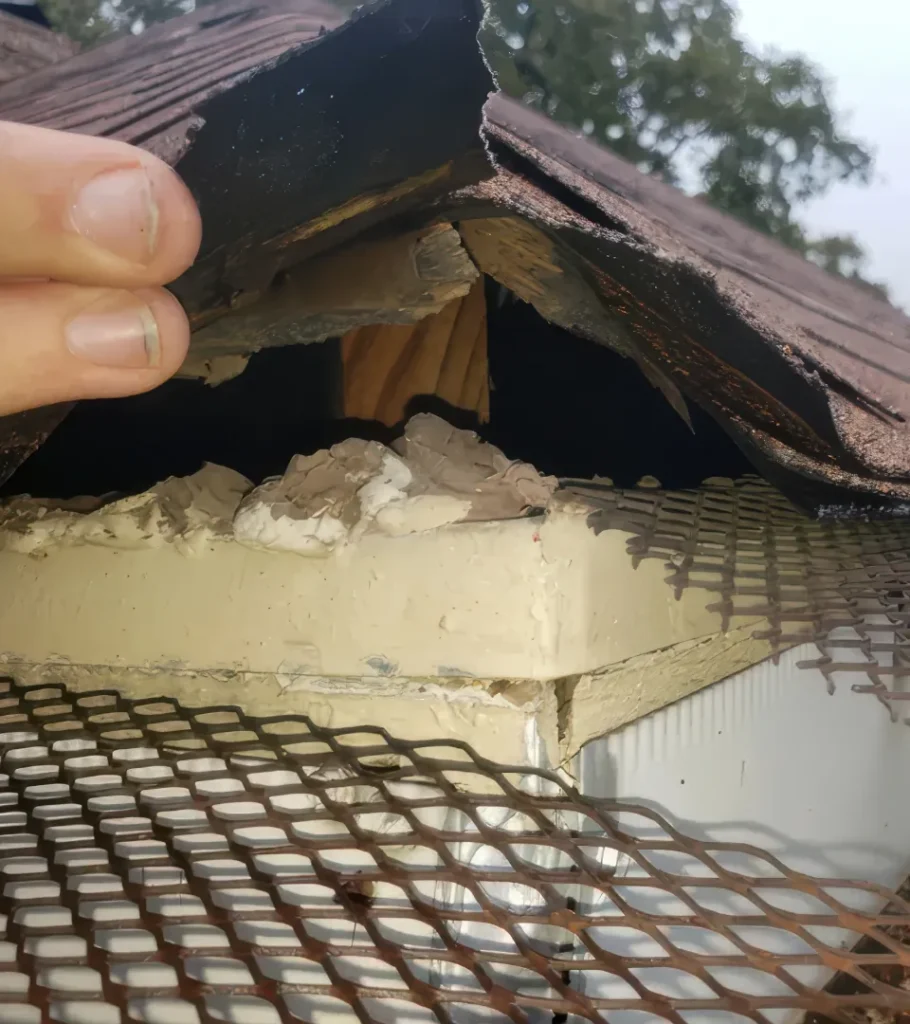
Quick Answer: How Rats Get Into Phoenix Attics (60-Second Summary)
Most Phoenix attic rat problems come from three routes:
- Roofline gaps (fascia/soffit/trim seams)
- Vents/openings (attic vents, roof vents, penetrations)
- Roof access shortcuts (trees, block walls, patio covers, garage transitions)
The safest “do this first” sequence:
- Confirm active activity (night noises, fresh droppings, disturbed insulation).
- Remove the active rats first, then confirm a few quiet nights.
- Seal and reinforce entry points with rodent-proof materials (metal barriers, proper vent reinforcement).
- Reduce roof access so new rats can’t easily reach the roof.
If you want the long-term fix explained clearly: What Is Rodent Exclusion?.
Is It Rats? Quick Phoenix Attic ID Before You Climb Anything
Phoenix attic noises are most often roof rats, but homeowners also confuse them with mice, pack rats, and sometimes larger animals.
Fast clues:
- Mostly at night: roof rats rise to the top of the suspect list.
- Droppings in attic pathways: common with rodents (avoid touching, avoid dry sweeping).
- Very heavy “stomping” sounds: consider a larger animal.
If you want quick species context (so you don’t solve the wrong problem): Arizona Rodent Identification Guide. And if roof rats are your likely culprit, this pairs well with: Roof Rat Signs in Attic Phoenix.

The Most Common Phoenix Attic Entry Points (Where Rats Usually Get In)
Most attic rat problems aren’t mysterious. They’re small gaps in predictable places. Use this as your checklist.
Roofline gaps: fascia, soffit, trim seams
These are the #1 offenders. Look at corners, returns, and any place trim meets stucco or roofline pieces meet unevenly. Rats don’t need much, just a neglected seam.
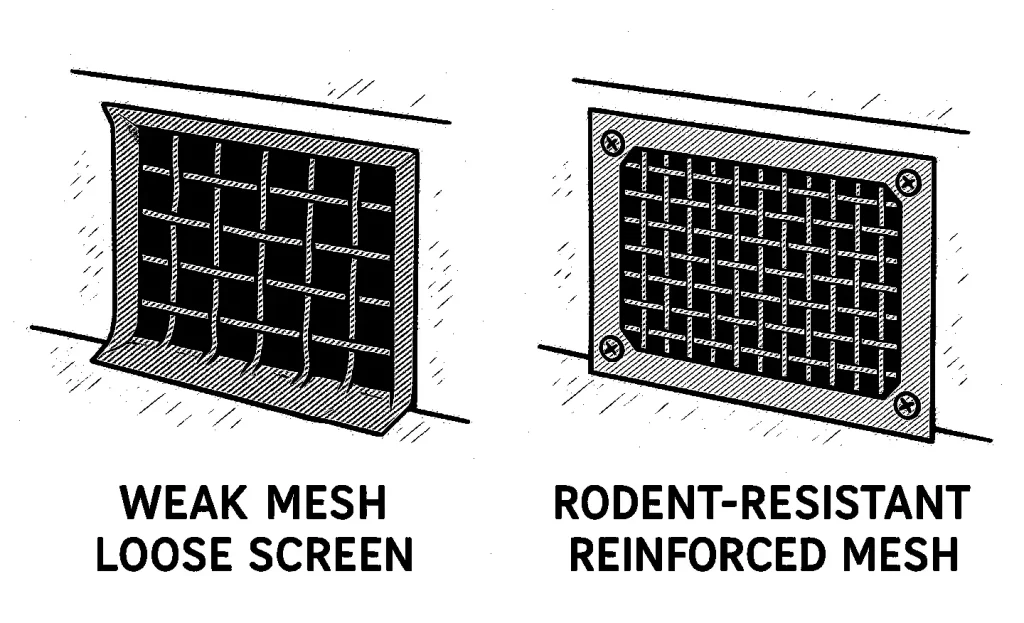
Attic vents and roof vents
Screens loosen, warp, or use weak mesh. Rats test edges until something gives. Vents are “normal” until they become a doorway.
Tile roof edges and roof details
Tile transitions and roof penetrations can create small access points. If activity feels concentrated on one side of the home, this is a common reason.

Garage-to-attic pathways
Rodents often enter low (garage), then move up into attic spaces through gaps and framing routes. This is why attic problems sometimes persist even when the attic itself looks “sealed.”
Roof bridges: trees, block walls, patio covers
If branches touch the roof, or a block wall/patio cover gives easy roof access, rats can reach your roof without “climbing” the house.
For what a true “seal it so it stops” approach includes: Rodent Exclusion Phoenix.
How to Find Where Rats Are Getting In (Without Guessing)
Guessing is how you get stuck in the loop. Here’s the practical method:
1) Daylight roofline scan (binoculars help)
Walk the perimeter and look for small dark gaps at fascia/soffit seams, corners, and vents with damaged screening.
2) Identify roof bridges first
Check trees/palm fronds, block walls near the roofline, and patio covers that connect to the home. If these exist, roof access is not a question, it’s a guarantee.
3) Dusk watch (low-tech, high value)
Stand back around sunset and watch the roofline where you suspect activity. Repeated movement often reveals the route.
4) Attic check only if safe
You’re looking for concentrated droppings, flattened insulation trails, and activity near roof edges. Don’t step where you shouldn’t.

If you suspect contamination or damaged insulation after the entry points are handled: Attic Cleanup Phoenix.
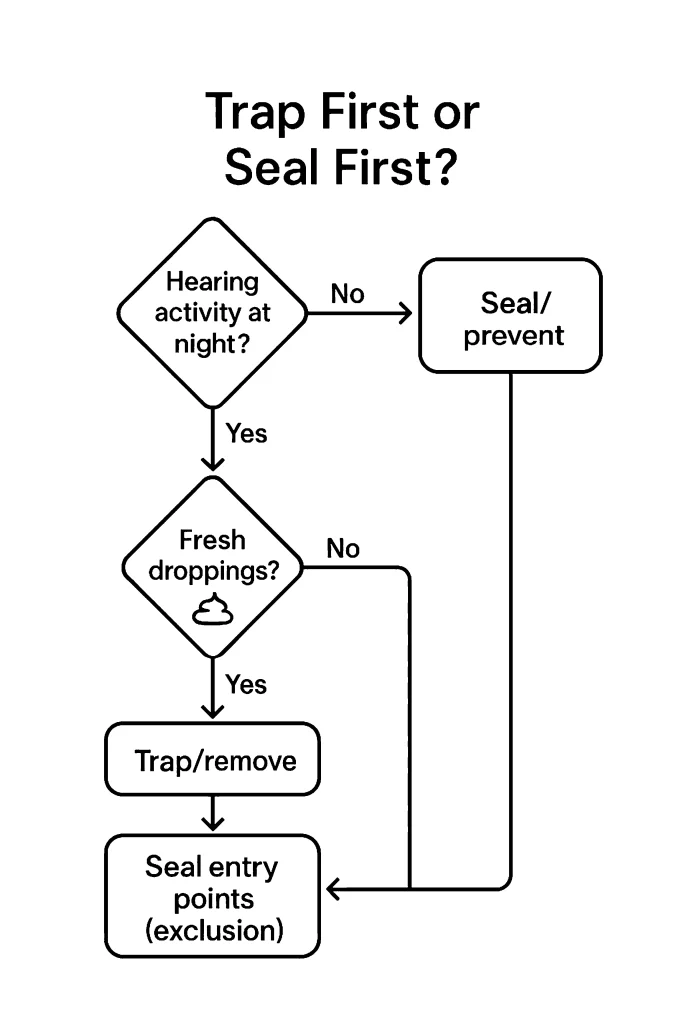
Trap First or Seal First? The Order That Actually Works in Phoenix
If you still hear fresh nighttime activity, trap first. Sealing too early can trap rats inside and lead to chewing, odor, and new damage.
A solid sequence:
- Confirm active activity and likely entry zones.
- Remove the active rats (trapping plan).
- Confirm a few quiet nights.
- Seal and reinforce entry points (exclusion).
This is why “remove only” often turns into repeat problems: removal solves today, exclusion prevents tomorrow. Here’s the plain-English overview: What Is Rodent Exclusion?.
What to Seal With (and What Fails in Phoenix Heat)
The goal is simple: use chew-proof materials, installed so they don’t loosen in sun, wind, and weather.
What works best:
- Metal mesh / hardware cloth: great for vents and many gaps when properly secured.
- Sheet metal flashing: best for bigger gaps and hard edges/corners.
- Reinforced vent solutions: vents are a top entry point unless hardened.
About spray foam: it can help seal air gaps or support a layered repair, but foam alone isn’t rodent-proof. Think of foam as “caulk,” not a lock.
For what a full exclusion scope includes: Rodent Exclusion Phoenix.
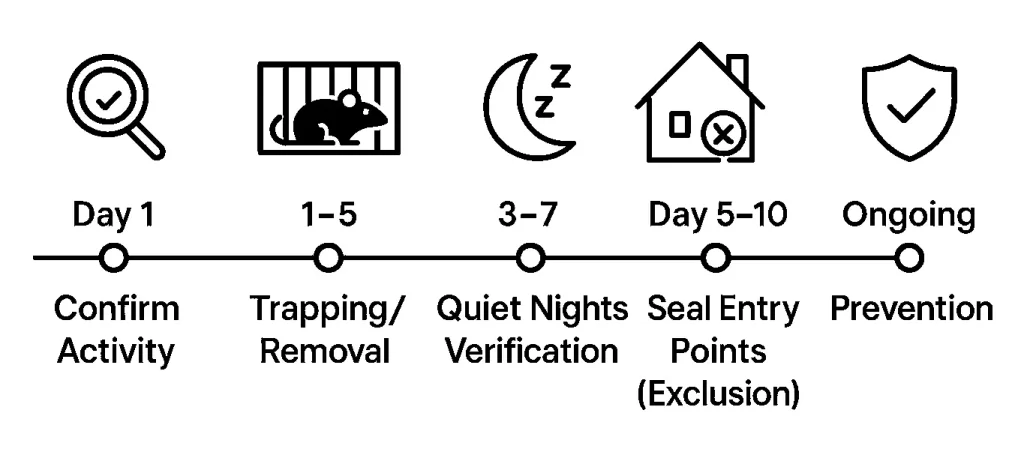
How Long It Takes to Solve Attic Rats in Phoenix (Realistic Timeline)
Once you remove the active rats and close the entry points, most attic situations resolve quickly.
Typical pattern:
- First few nights: activity often drops fast once trapping is effective.
- Within 1–2 weeks: many homes stabilize if exclusion is completed.
- Longer timelines: usually mean multiple entry points, easy roof access (trees/walls), or delayed exclusion.
If you want the bigger strategy view (without DIY fluff): Why Rodents Invade Phoenix Homes.
Cost Factors: Why Some Phoenix Exclusion Jobs Are Simple (and Others Aren’t)
Costs swing because homes aren’t the same. The biggest drivers are:
- How many entry points need to be sealed and reinforced
- Roof height/complexity (vents, corners, tile transitions)
- Species + nesting behavior (attic vs ground routes)
- Cleanup needs (droppings, insulation damage, odor)
For full ranges and what changes price most: Rodent Control Cost in Phoenix (2025 Guide).

Prevention: Keep Rats Off the Roof (Phoenix Checklist)
Once you’ve removed the active rats and sealed the entry points, the goal is simple: make your roof hard to reach and your home less rewarding. Otherwise, new rats will eventually “test” the same routes again.
Here’s a practical Phoenix prevention checklist:
- Trim roof bridges: Keep branches and palm fronds from touching or hovering near the roofline. Even a short “runway” can be enough for roof rats to hop onto the roof.
- Reduce outdoor food sources: Pick up fallen fruit, keep pet food indoors, and store bird seed securely. Rodents follow predictable meals.
- Tighten garage habits: Keep garage doors closed when possible, reduce clutter along walls, and store items in sealed bins. Garages often become the staging area before attic access.
- Watch the roofline after storms: Wind and monsoon weather can loosen vent screens and open small gaps over time. A quick seasonal check helps catch problems early.
If you want the long-term solution spelled out (and what “done” actually means), see: Rodent Exclusion Phoenix.
FAQ: Phoenix Attic Rats (Quick Answers)
How do rats get into attics in Phoenix? Usually through roofline gaps, vents with weak screening, or by using trees/block walls/patio covers to reach the roof. Once they’re on the roof, they probe seams and corners until they find an opening.
How small of a hole can a rat fit through? Smaller than most homeowners expect. If you can fit the tip of your thumb into a gap along the roofline, treat it as “worth checking,” especially near vents and corners.
Should I trap first or seal first? If you still hear activity at night, trap first. Sealing too early can trap rats inside and lead to new damage. After removal, seal and reinforce the entry points so it doesn’t come back. (Overview: What Is Rodent Exclusion?)
Is spray foam enough to stop rats? No. Foam can help seal air gaps, but rats can chew or push through it. Use chew-resistant materials (metal mesh, flashing) as the barrier, with foam only as a support layer.
Do ultrasonic rodent repellers work? Sometimes they change behavior briefly, but they rarely solve an attic infestation by themselves. If there’s access + shelter, rodents usually adapt. The reliable fix is removal plus exclusion.
How long does it take to get rid of attic rats? If trapping is done correctly and entry points are sealed, many homes stabilize within 1–2 weeks. Longer timelines usually mean multiple entry points or easy roof access that hasn’t been addressed.
When should I call a professional? If you’re hearing repeated activity, can’t safely inspect the roofline/attic, or the problem keeps returning after DIY attempts, it’s time. Most repeat infestations happen because the real entry points never got sealed.
Conclusion: The Fastest Way to Stop Attic Rats for Good
In Phoenix, attic rats usually aren’t random. They’re using a small set of predictable entry points: roofline gaps, vents, and easy roof access from trees, walls, or patio covers. The fastest path to “done” is the right order: remove the active rats first, then seal and reinforce the entry points, then prevent roof access so it stays solved.
If you’d like help pinpointing the entry points and closing them correctly, start here: Rodent Control Phoenix or go straight to long-term prevention: Rodent Exclusion Phoenix.
What it costs to fix
Once the entry points are mapped, sealing them is the job. Rodent control is $245 for the initial service and $95 per follow-up. The Phoenix rodent control price guide breaks down every line item, including what rodent damage costs to repair if you wait. If you are adding year-round pest control, the initial rodent visit drops to $29 under the $29 rodent special. Trapping ends the infestation you have now; rodent exclusion is what stops the next one.